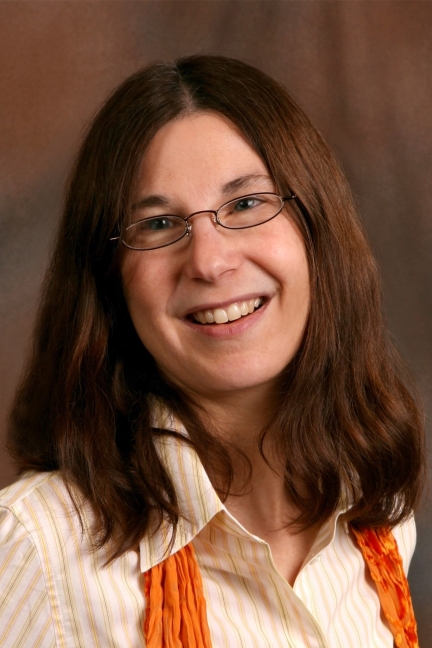
John Schu: Connector of books, readers, empathy, understanding, and joy!

The first thing you notice about John Schu is his smile and the joy that emanates from him. Ask him about what he’s reading, and that smile will widen and he’ll tell you all about it, including how good it smells. In 2011 he was named a Library Journal Mover and Shaker for “his dynamic interactions with students and his passionate adoption of new technologies as a means of connecting authors, illustrators, books, and readers.” He has never stopped being a Mover and Shaker in children’s literature – just follow him on social media and you will see him spotlighting all of the authors and illustrators of the books he reads. He is the children’s librarian for Bookelicious, a part-time lecturer at Rutgers University, and shares his love of reading with countless librarians, educators, and students around the world.   

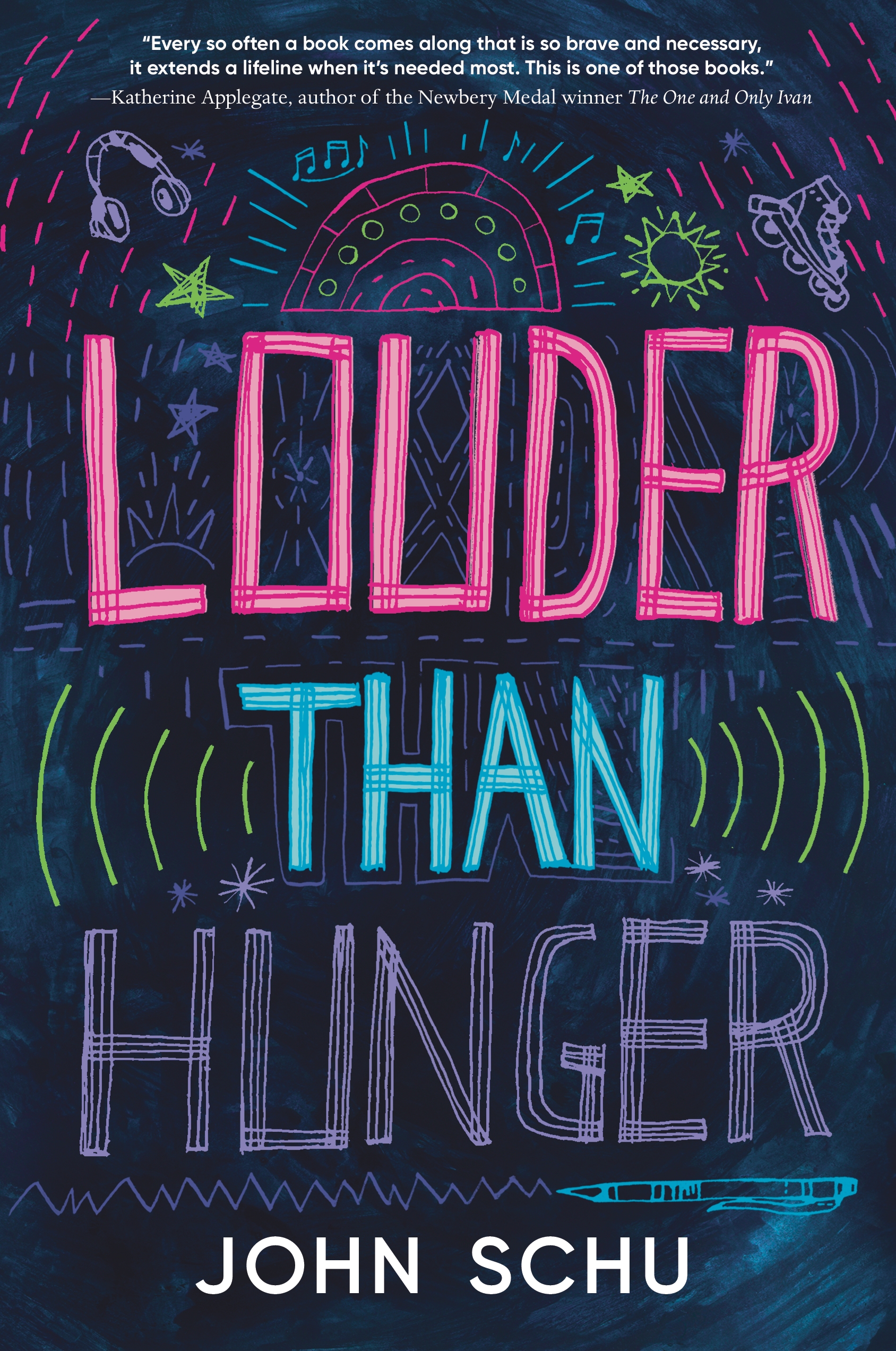
I am thrilled that John Schu will be bringing his important book, Louder Than Hunger, to the 15th Annual  Gaithersburg Book Festival on May 18th at Gaithersburg’s Bohrer Park.  John will be presenting along with Nicole Melleby (Winnie Nash is Not Your Sunshine) in the Nash Young Adult Pavillion beginning at 10:15 am.

John, I met you several years ago, when you were the Ambassador of School Libraries for Scholastic Book Fairs and I enjoyed seeing your genuine book joy then, and how you continue to share joy to this day.  When did you develop your love of, and for, books?

John Schu: Thank you! I always love celebrating stories and books! 

In Louder Than Hunger, Jake thinks about his favorite books a lot. 

This is a passage from pages 173-174. 

Grandma bought me 

Goofy’s Big Race

from the grocery store

when I was six or seven. 

She used a coupon. 

Slow and steady,

steady and slow,

that’s the way to go.

I asked her to read it aloud

over

and

over

and 

over 

again.

Until I memorized it. 

Slow and steady,

steady and slow,

that’s the way to go.

Until it crawled inside my heart

and rested there. 

_________________

Goofy’s Big Race hooked me on reading. It’s tattooed on my heart. 

Louder Than Hunger has had many wonderful, truly outstanding, reviews.  Which has been the most important or meaningful to you?

John Schu: I’m so, so, so grateful for all the outstanding words of praise. 

The most meaningful praise has come in the form of letters from middle schoolers and high schoolers. 

They are sharing their hearts with me. 

They tell me about their favorite parts of the book. 


When they cried. 

How they have struggled with a negative voice in their heads. 

How they better understand what it might feel like to have an eating disorder. 

How they’ve developed more compassion by spending time with Jake. 

You have been very open with your struggles with an eating disorder, and that Louder Than Hunger is a memoir in many ways.  How are you doing today?

John Schu: In Louder Than Hunger, Counselor Ruth says to Jake,

Therapy is a chance to talk with someone about the things that are important to you in an effort to make your life easier, better, and more fun.

I’m living a life that is easier, better, and more fun! 

In your NPR interview you mentioned that the Voice went from having a capital “V’ to a lowercase “v”.  Does the voice ever disappear completely in both Jake’s life, and yours?

John Schu: Thank you for listening to my interview with Scott Simon. It was such an honor to chat with him.

Sometimes I struggle with a lowercase v. Thanks to therapy and strategies that I incorporate into my daily life, I talk back to the voice and figure out why it is talking to me. 

The interactions between Jake and his grandmother were some of my favorites.  Thank you for spotlighting the special bond between grandparents and grandchildren.  What do you think your Grandmother would say to you, had she been alive to read your book and see its widespread acceptance and acclaim?

John Schu: Oh my goodness! This question makes me weepy! 

I think she would say . . . 

You are healthy.

You are loved.

You are strong.

You are determined. 

You are fulfilling your dreams…

(Note: The You are . . . structure will make more sense after you read Louder Than Hunger.) 

Last year, Jarrett Lerner’s novel in verse, prose, and illustration about body dysmorphia, A Work in Progress*, published in 2023 and has had similar success to Louder Than Hunger … why do you think that both books have been embraced so completely? 

John Schu: In the short time Louder Than Hunger has been out in the world, I’ve received MANY email messages from family members of males who are struggling with anorexia and bulimia. I think both books are being embraced by readers of all ages because many people are ready to have these important conversations about disordered eating and mental health.

*(Jarrett was a featured author at the 2023 Gaithersburg Book Festival, where I moderated a panel discussion with two other middle grade authors.  I also interviewed him for my blog  Thankfully, We’re All Works In Progress)

Who is your cover illustrator, and what are your thoughts about the cover art?  Does it express what you hoped it would?

John Schu: I’m SOOOOOO grateful for Grady McFerrin, the cover illustrator, and Maria T. Middleton, the cover designer. The cover—the entire package—expresses everything I hoped for and more! The cover pops on a shelf! It makes me smile! 

Lastly, what message do you have for the readers of your books, specifically Louder Than Hunger, but also your picture books, This is a School and This is a Story?

John Schu: The words connect and connection are always on my heart and mind when I write. 

I hope my books help readers make connections. 

I hope they help build empathy and understanding in readers of all ages.

I hope they help facilitate necessary conversations about schools and libraries and poetry and mental health.

I hope my books inspire readers to write their own stories. 

Thank you, John, for taking time to answer these questions for me!  I look forward to meeting you in May at the Gaithersburg Book Festival, where I will be introducing you and Nicole Melleby.

John Schu: Thank you so much! See you in Gaithersburg! 
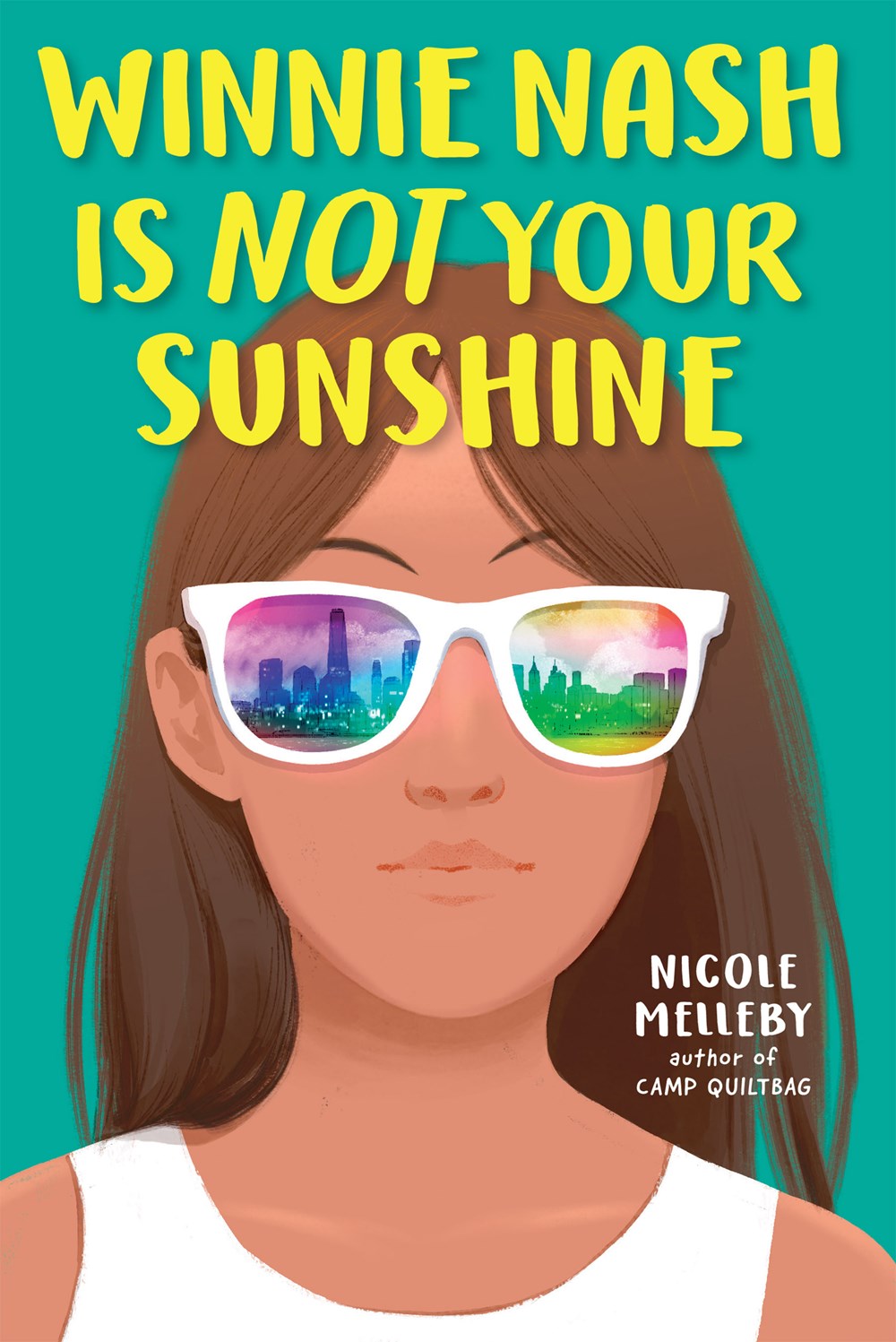
Nicole Melleby is a Ray of Sunshine at GBF #15

As a longtime committee member of the Gaithersburg Book Festival, this time of year is such a special time for me – so many wonderful authors and illustrators descend on Bohrer Park and I get to meet them in person, listen to their presentations, and learn about their creative process.  Such fun for this book-loving librarian! 

I will be introducing both Nicole Melleby and John Schu, who will be featured authors presenting together at 10:15 am in the Ogden Nash Pavilion. After reading Melleby´s Winnie Nash is Not Your Sunshine, I reached out to her for an interview. Booklist describes this middle grade novel as “a tearjerker with heart—a triumphant exploration of lesbianism, extended family, and miscarriage from the eyes of a young, would-be sibling,” – and I would add, exploring depression and the basic need to feel safe and loved.

Can you share your journey to becoming a children’s author?
When I was eight, I saw the Nickelodeon movie Harriet the Spy. I was obsessed, I loved everything about it, but I especially loved the main character, Harriet, and the way she always carried around a notebook to write things in. I used to beg my parents to buy me marble composition notebooks just like the one Harriet had every time they went to a store that carried them, and I would fill those notebooks up with everything. I started off by taking notes about the people around me much like Harriet did while spying, and from there I started writing stories instead. I’ve been writing stories ever since.

The movie also gave me this quote, which I’ve kept in mind ever since, and speaks to why I keep writing: “You know what? You’re an individual, and that makes people nervous. And it’s going to keep making people nervous for the rest of your life.”

Many of your books deal with LGBTQ+ kids discovering their sexuality and understanding their identities. Winnie Nash is Not Your Sunshine has received many wonderful reviews. Kirkus Reviews described it as, “A powerful, emotional look at queerness, pride, and what it truly means to feel held.”  How does this make you feel?

It makes me feel good, of course it does, especially when we’re in an atmosphere right now where LGBTQ+ books like mine are being more and more challenged and banned by school boards all over the place. Getting good reviews is always nice, but now it almost feels like extra validation when someone tries to say that an LGBTQ+ middle grade book “has no literary merit” (a true quote from a school board challenging books of mine) or has no place on a child’s shelves. But I think Kirkus got it right, it got right to the point of what I wanted to do with this book: give a child reader the chance to feel held right alongside Winnie.

Were Winnie’s experiences and feelings reflective of your own growing up? 

Unlike Winnie, I didn’t know I was queer at a young age, but like Winnie, I grew up on the Jersey Shore, looking across the bay at New York City, wondering what it would be like to get there someday. And while I was a lot younger than Winnie and it didn’t affect my life as much as it affects hers, my mom also struggled with miscarriages before my younger brother was born. Winnie, overall, is a sad, confused, angry kid, and I think that I let her feel all of the things I felt at various times; I didn’t want to hold anything back with her. I read an essay in which Kate DiCamillo says, “Let kids be sad” and it’s something I took to heart. I was a sad kid sometimes—I think there are a lot of sad kids out there—I wanted to let Winnie be one, too.


What do you hear from your readers (kids, parents, educators)  after they have finished reading your books?

For all of the book bannings and challenges and, frankly, mean emails I get, I receive about a dozen more from kids and parents and teachers who have found something in my books that they needed. It’s definitely what keeps me positive throughout all of the contention when it comes to queer books for kids. The kids who email me and say how much Winnie or Pluto or Fig mean to them always means more to me than what I can even put into words.

Why do you think it is important to write for the middle grade audience?
Because kids deserve to get lost in the pages of a book just as much as anyone else does, they deserve to see themselves, or kids just like them or their friends or their family, thriving and surviving and going on adventures and being sad and growing and learning and exploring, and falling in love or falling in crush or finding friends or learning how to handle losing friends, too. They deserve to win against the monsters or to learn how to cope when you lose. I think writing for kids is special, because it was as a middle grade reader that I first fell in love with reading and being able to lose myself in a book has always been so important to me.

What message do you have for librarians (and all educators)?
I talk a lot about book challenges and bannings, and I am trying to do what I can from my end, but I know how hard it is for the librarians on the ground level right now doing their best to keep getting these books into their readers’ hands. I respect your work and I see how hard you are all doing what you do—and I really hope you keep pushing and keep fighting for these kids the best you can. It used to be easier to ask that of librarians, and now it’s getting harder, because I know there’s more and more risks these days for them, too. But at the end of the day, I think about the kids first, the ones who need to see us fighting for them to have books with characters they relate to on the shelves. So, basically, my message is: Thank you for all that you are doing. I’m here fighting with you.

What message do you have for your readers?
To the kids (and adults) who pick up my books: I see you, and you are not alone. 

Additional titles by Nicole Melleby:

Middle Grade:

  • Hurricane Season 
  • In the Role of Brie Hutchens 
  • How to Become a Planet
  • The Science of Being Angry
  • Winnie Nash is Not Your Sunshine
  • Dressing Up a Jersey Girl

The House on Sunrise Lagoon Series:

  • Sam Makes a Splashe
  • Marina in the Middle
  • Halfway to Harbor

Jonathan Roth Spashes Down at GBF #15

Jonathan Roth and I are colleagues in the same school district, but do not teach at the same school – we work in a very large district – 211 schools and counting!  He is a vibrant art teacher who encourages his students to authentically express themselves and create bravely.
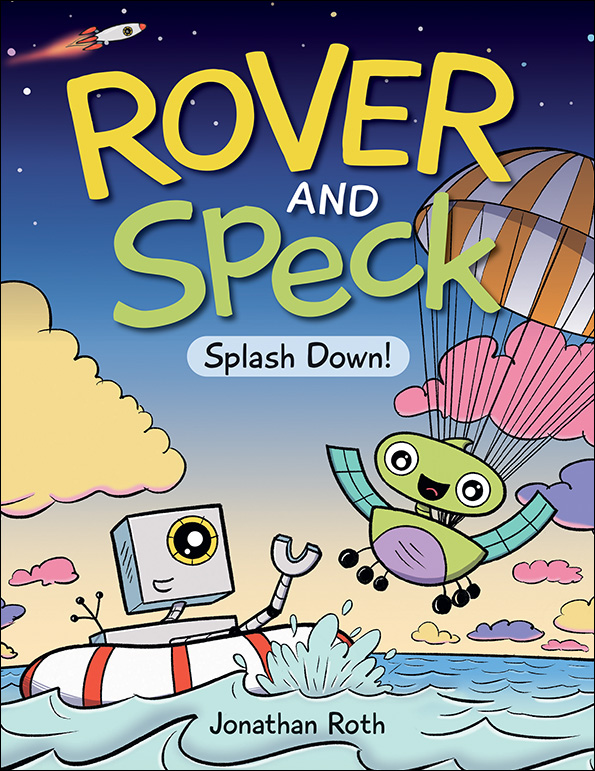
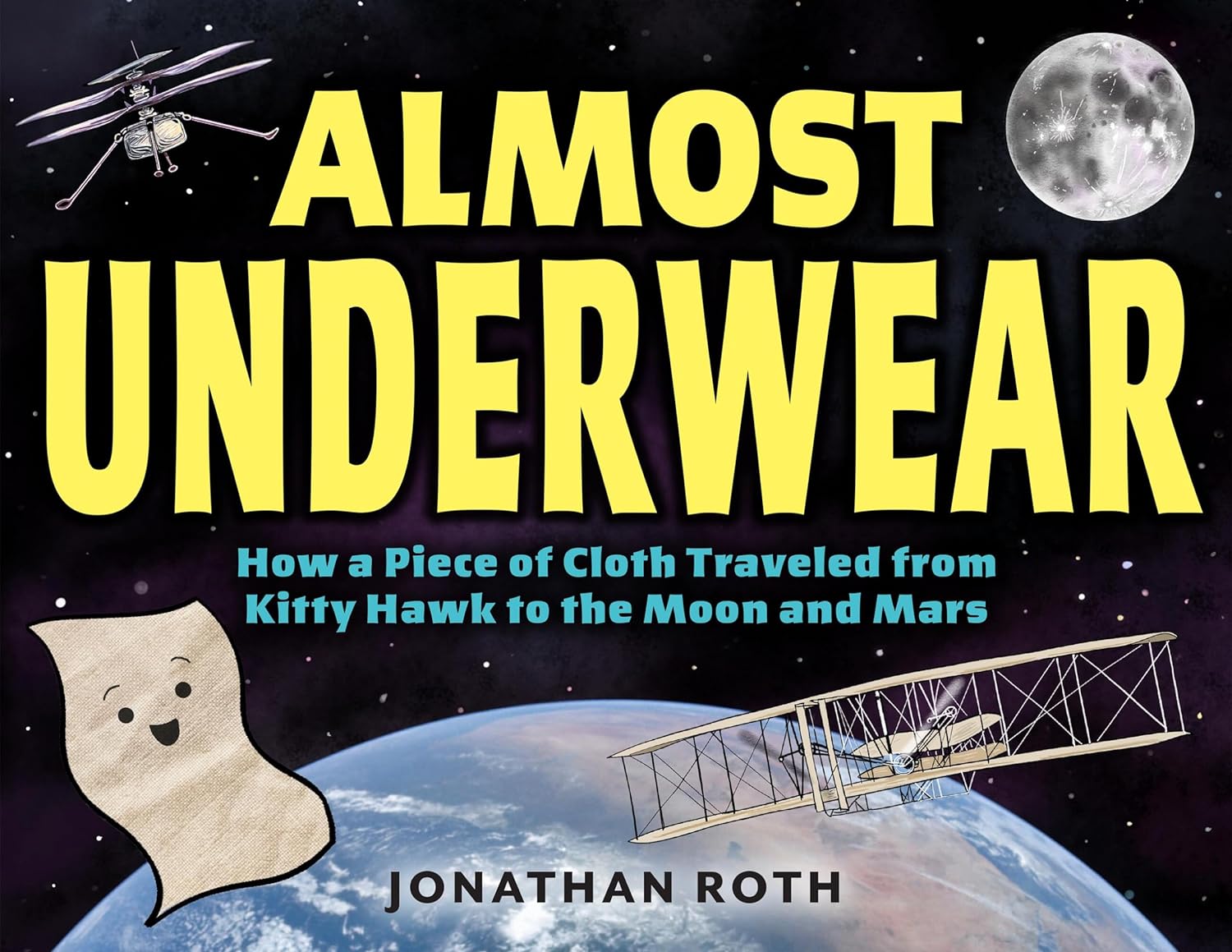
In this busy spring season I was able to catch up with Jonathan to talk about his current book, Rover and Speck: Splash Down and his upcoming book, Almost Underwear: How a Piece of Cloth Traveled from Kitty Hawk to the Moon and Mars (August 2024).  Jonathan will be a featured author at the 15th Annual Gaithersburg Book Festival on May 18, 2024 at 4:15pm in the Jim Henson Pavilion.

Please tell us about your journey to become a children’s author.

Starting from early childhood, there hasn’t been a time when I haven’t been drawing,writing or cartooning. And not a day where I haven’t been reading! Out of art school Iwas revisiting some favorite picture books and discovering new ones, and it hit me that that’s what I really wanted to do. Of course, it took many years of learning and tryingand failing, but then I finally got an agent and…failed some more (not her fault, it’s just super competitive). Finally, with my current agent, I started making sales. And now books 7 and 8 are releasing this year! (though like almost all published authors, I still get rejections too).
How did you create your characters, Rover and Speck?

I’d been following the real Mars rovers Spirit and Opportunity on and off since they landed in 2004. They were designed to last 90 days; Spirit lasted 5 years and Opportunity almost 15! When I read in the paper (yes, paper) in 2019 that Opportunity had finally ‘died’ (lost power for good) on Mars, I instantly knew I wanted to write about a fictional rover who ‘died’ but then was discovered and revived by another rover. Cue un planetary adventures!

How is your creative process different when writing/illustrating the Rover and Speck graphic novels versus writing your Beep and Bob chapter book series?

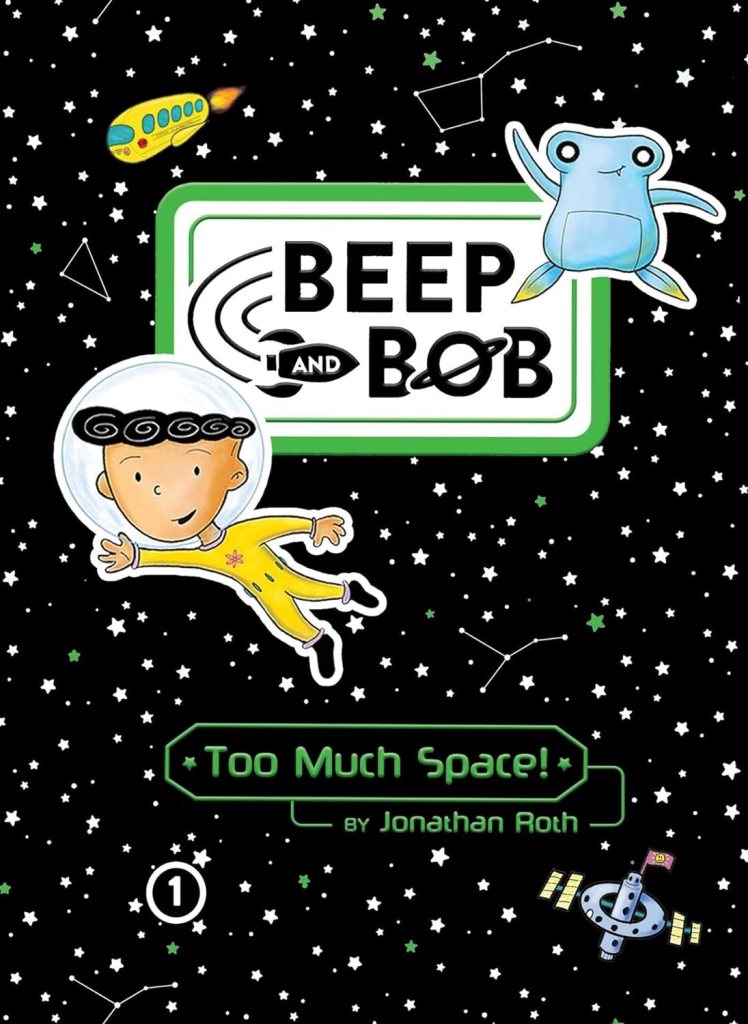
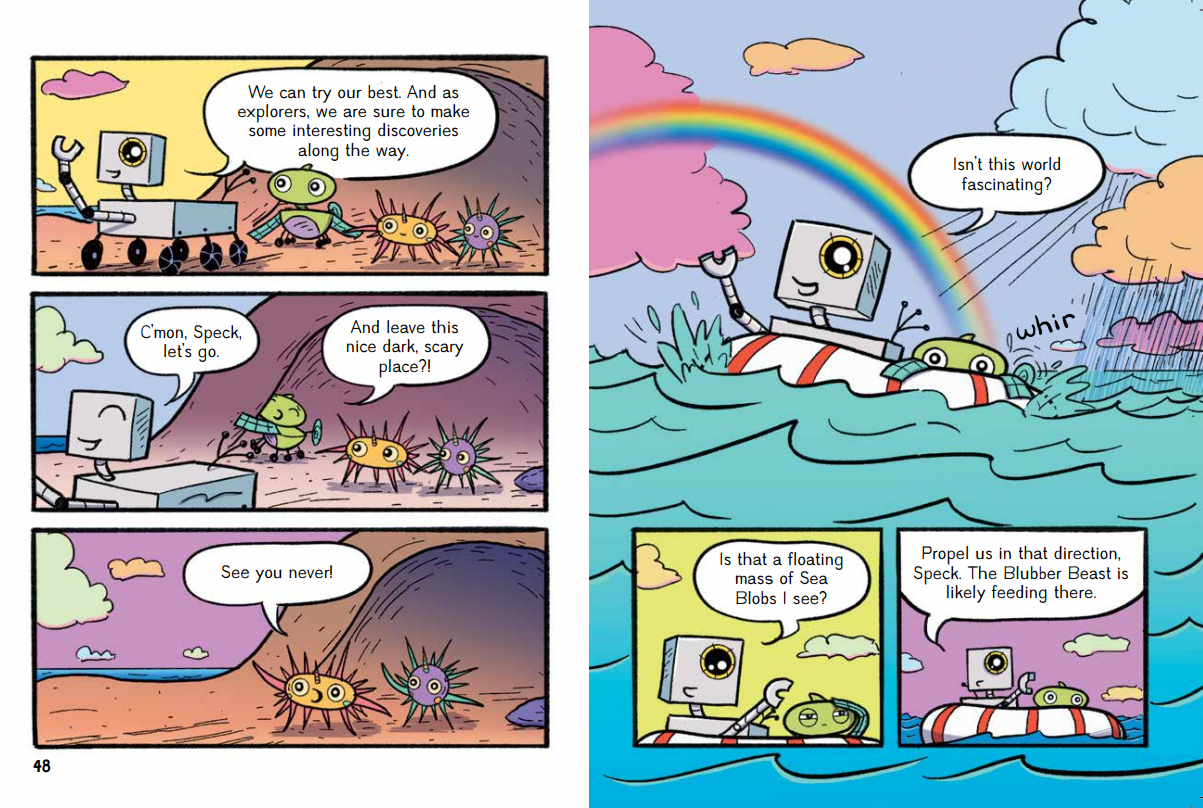
Rover and Speck has full-color comics illustrations taking up every page, and the Beep and Bob books each have only about 20-30 black and white spot illustrations, so the biggest difference is that R&S takes a lot more hours at my drawing board! I’m faster at the writing part.

I know you are coming to Gaithersburg Book Festival #15 to present Rover and Speck: Splash Down, but I am also curious about your upcoming nonfiction picture book, Almost Underwear (book birthday August 20, 2024).

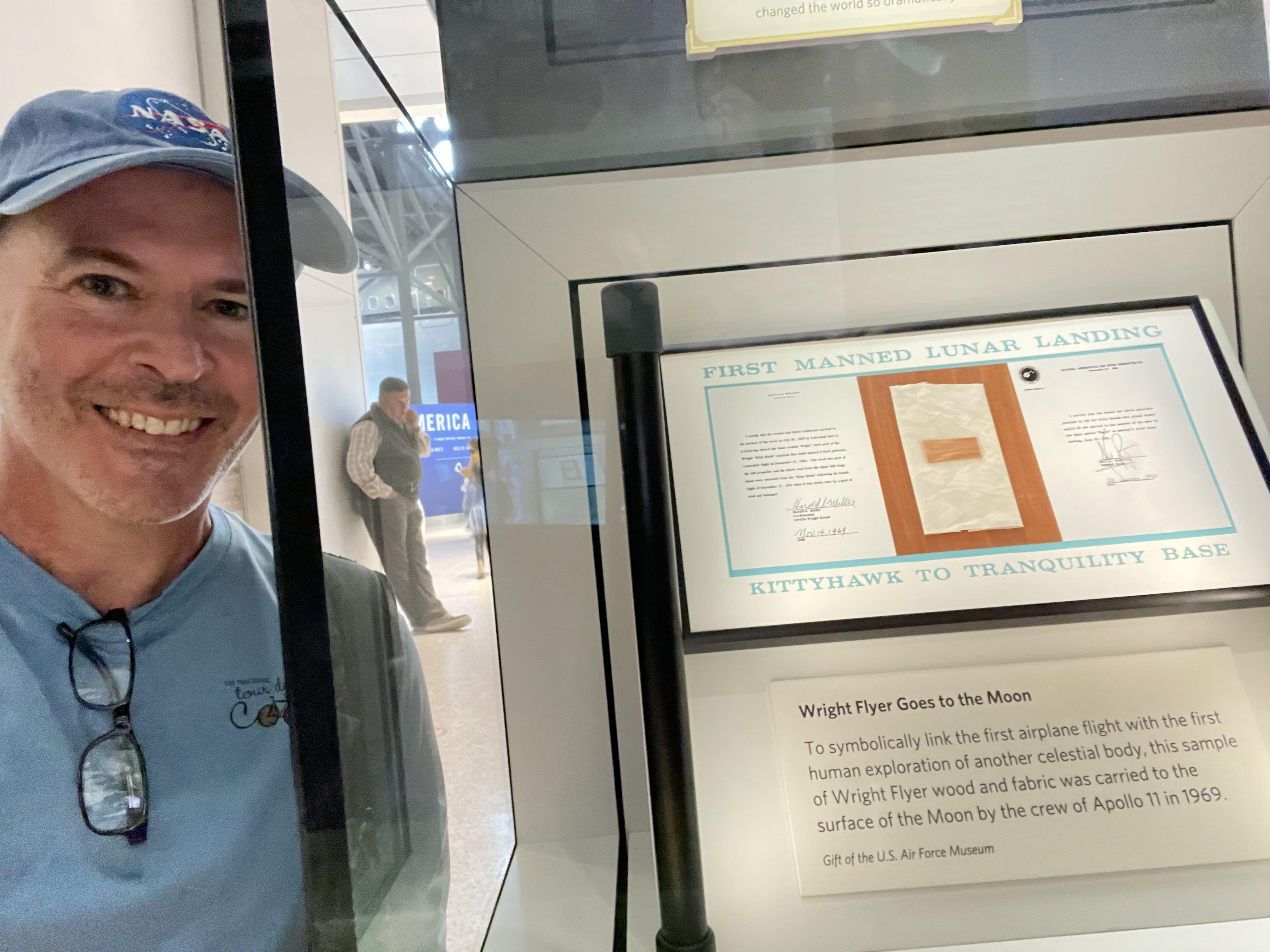
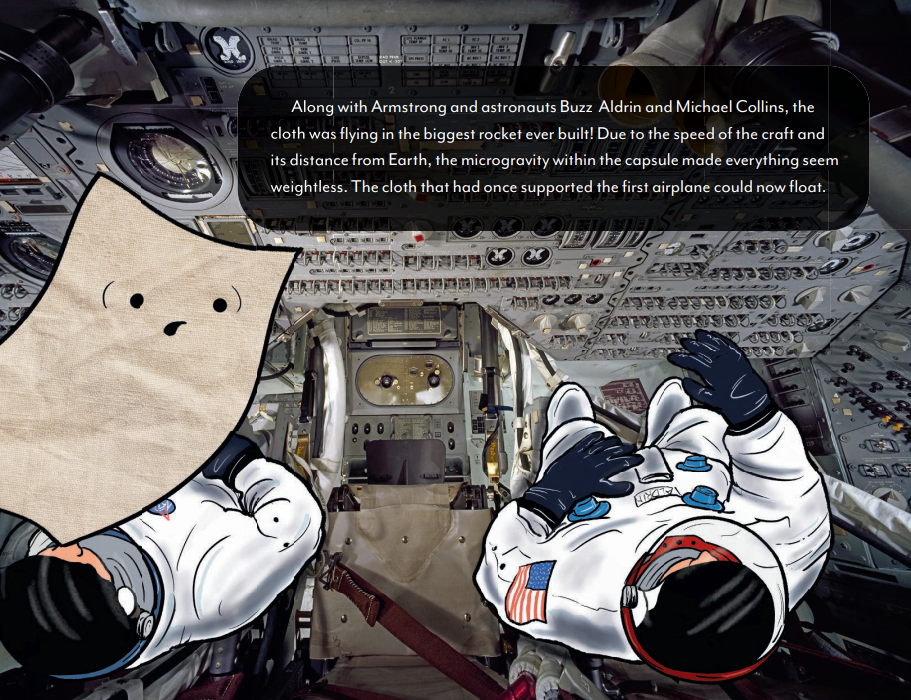
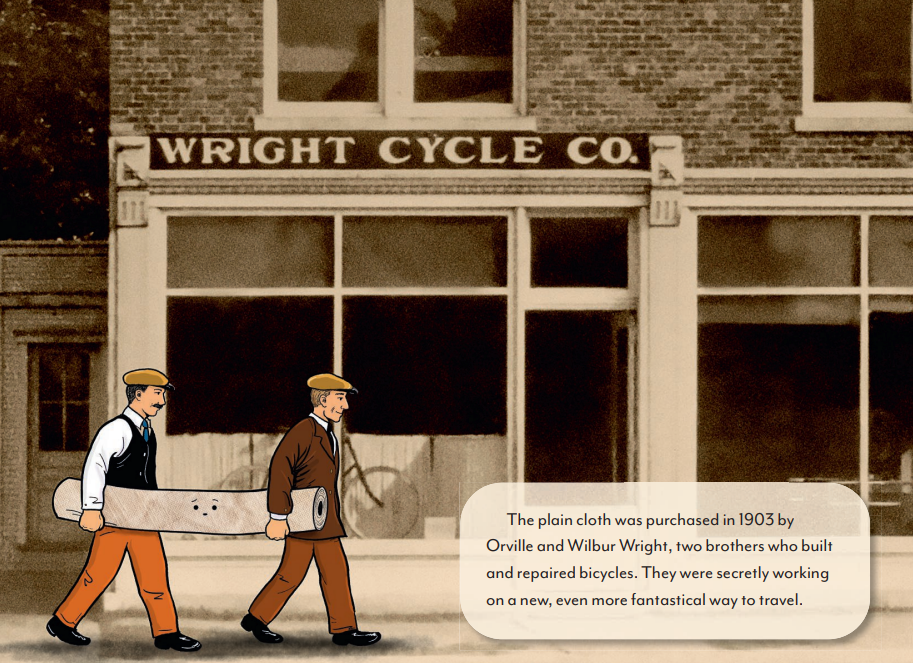
I’ve been attending the GBF since year 1! And this will be my 4 th time speaking there (not including a video for the virtual year), so I’m super excited. Maybe you can expect a little peek at Almost Underwear at this year’s festival, hint hint, but in a nutshell it’s the story about how some ordinary cloth was bought by two brothers in a Dayton department store in 1903, and how various cuts of that cloth became part of the first powered airplane flight on Earth and then also the first moon landing and the first flight on Mars in 2021! It’s a book about innovation and commemoration – and underwear (well, almost underwear).

What is your research process, and when do you decide you have enough background knowledge to begin writing?

Don’t tell anyone, haha, but I start writing well before I know all the facts! With Almost Underwear, once I had the three main historical vantage points (first flight and thencloth from the wing of the Flyer taken to both the moon and Mars) I immediately begana draft from the point of view of the cloth as it was sitting in the store alongside muchfancier cloth, waiting to be purchased. Then as I began to research in earnest, I fleshed out the historic details as I went (with creative license of course – the cloth didn’t actually have a cute face:) I did go into it with a lot of prior knowledge about the Wright Flyer, Apollo 11, and Mars missions, but it was a great excuse to delve into lots of new and review reading.

What is the most fascinating fact that you discovered while researching for Almost Underwear: How a Piece of Cloth Traveled from Kitty Hawk to the Moon and Mars?

I don’t know if it’s the most fascinating fact, but early on, when I read that the type of muslin the Wright Brothers purchased from a Dayton department store was most commonly used at that time to make “ladies undergarments”, I knew I had my fun hook.

What do you love most about writing for children?

I love the KidLit community. Writing can be solitary, with only peeks at the tip of the iceburg ever showing (if you’re lucky!) While I do it for the kids of course, I really value that I’ve been able to build lasting relationships with other creators and book lovers.

What message do you have for librarians? For your readers?

Librarians, you rock! Even in these challenging times, librarians always strive to get the right books in the right hands. And readers: you rock too! With so many choices – and distractions – these days, I am heartened every time I see a young person reading (doubly heartened if it’s one of my books!) Books are little miracles, and we (authors, illustrators, editors, librarians, readers) co-create them together.

If you would like to learn more about Jonathan and his books, please read the following posts:

Rover and Speck: This GBF Rocks! (May 2, 2023)

Outta this World with Jonathan Roth (April 29, 2019)


A Visit with Nicole, Rina, and Victor

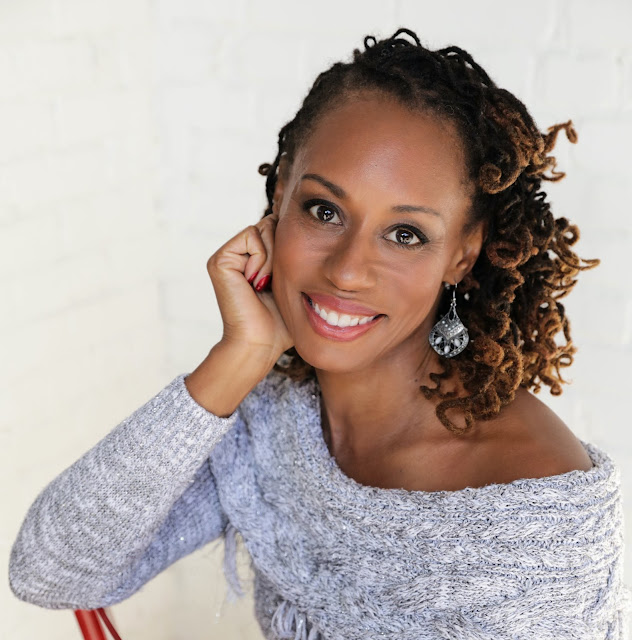
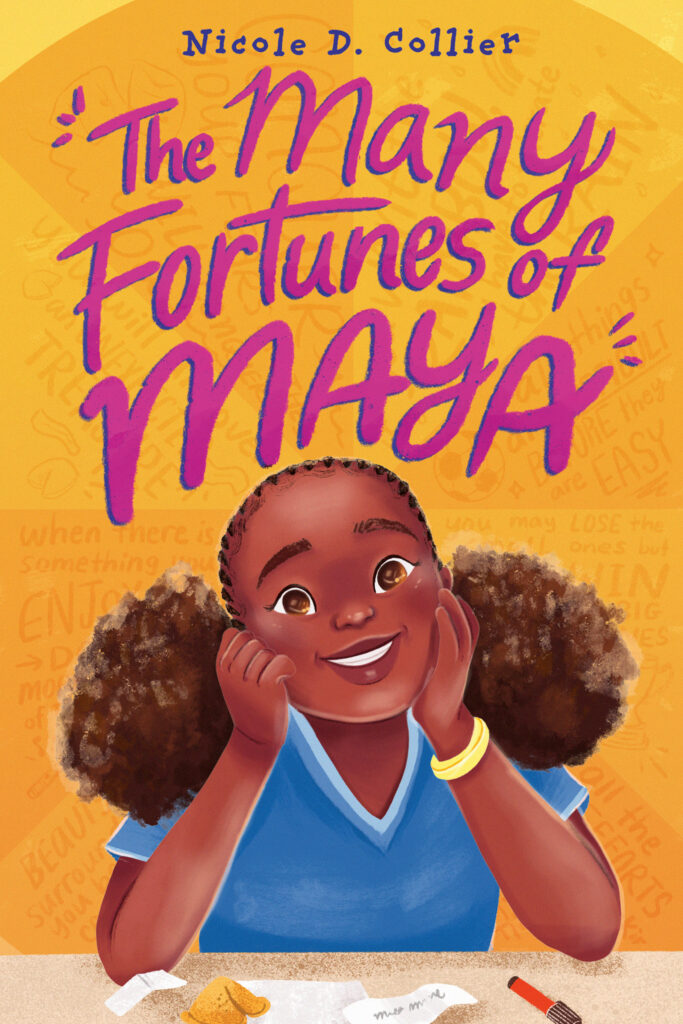
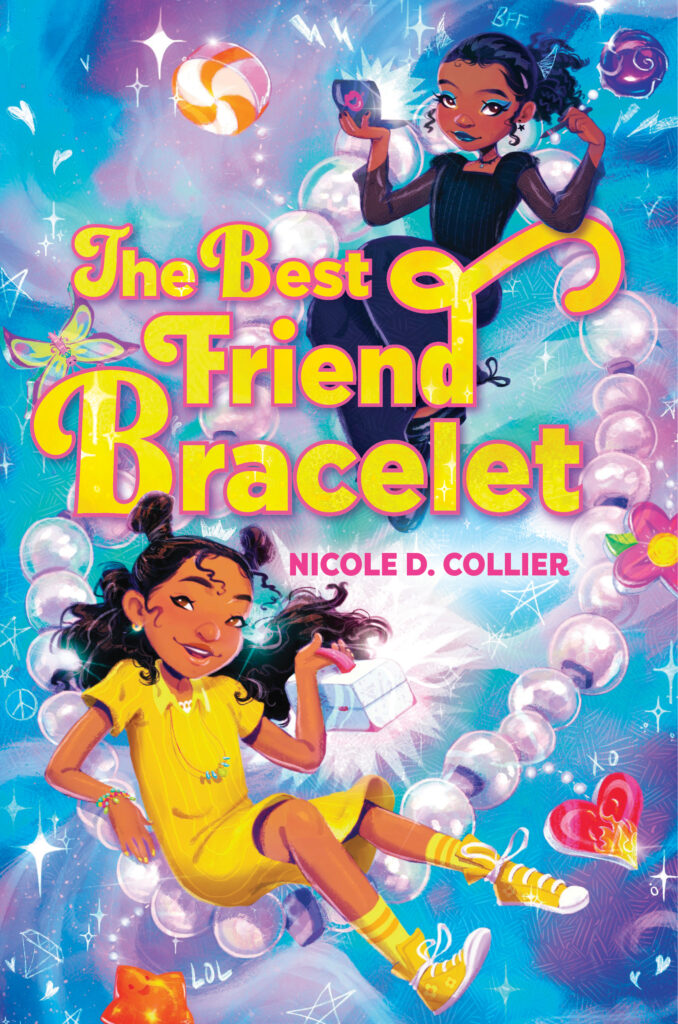
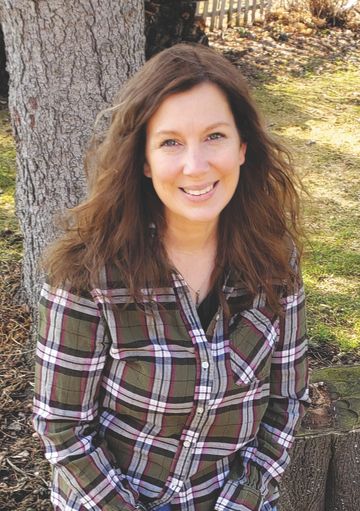
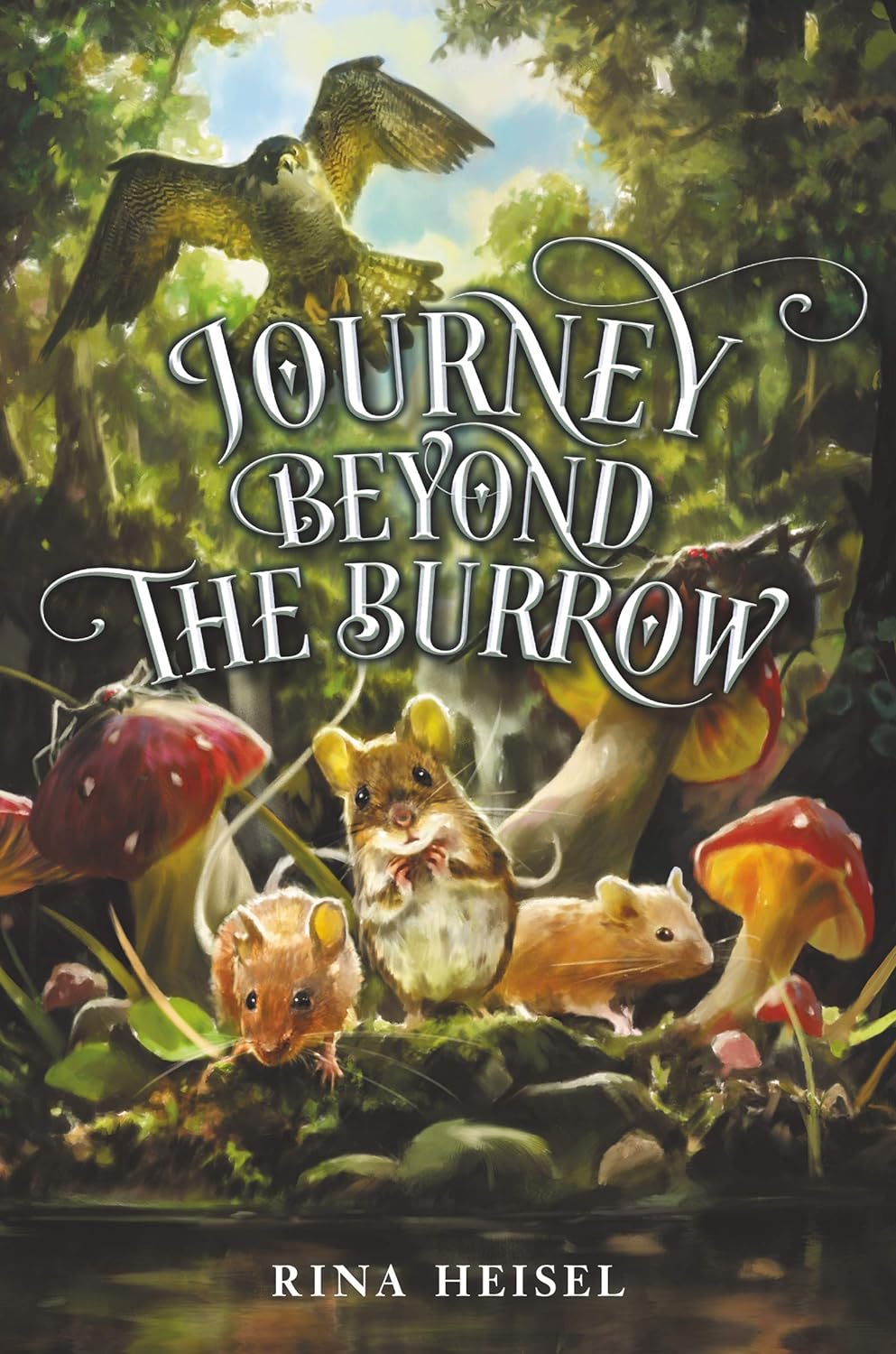
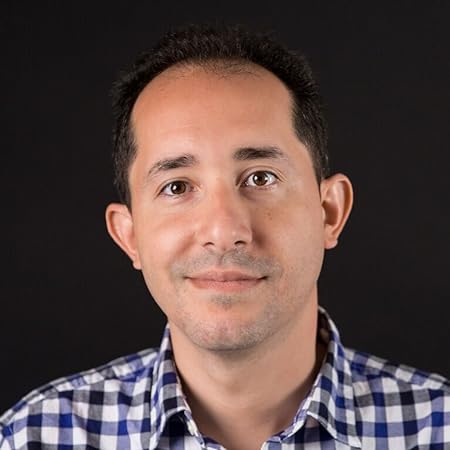
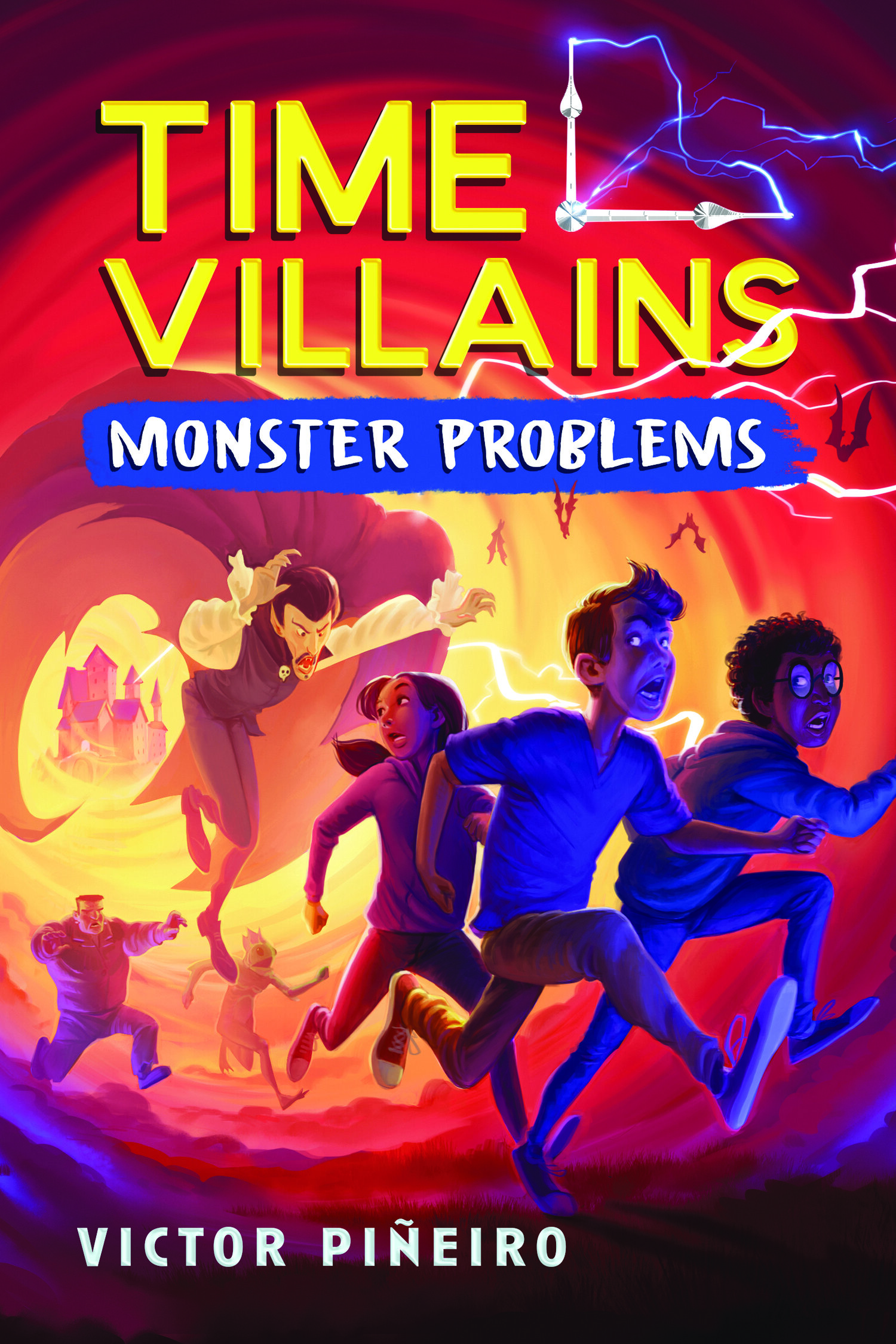
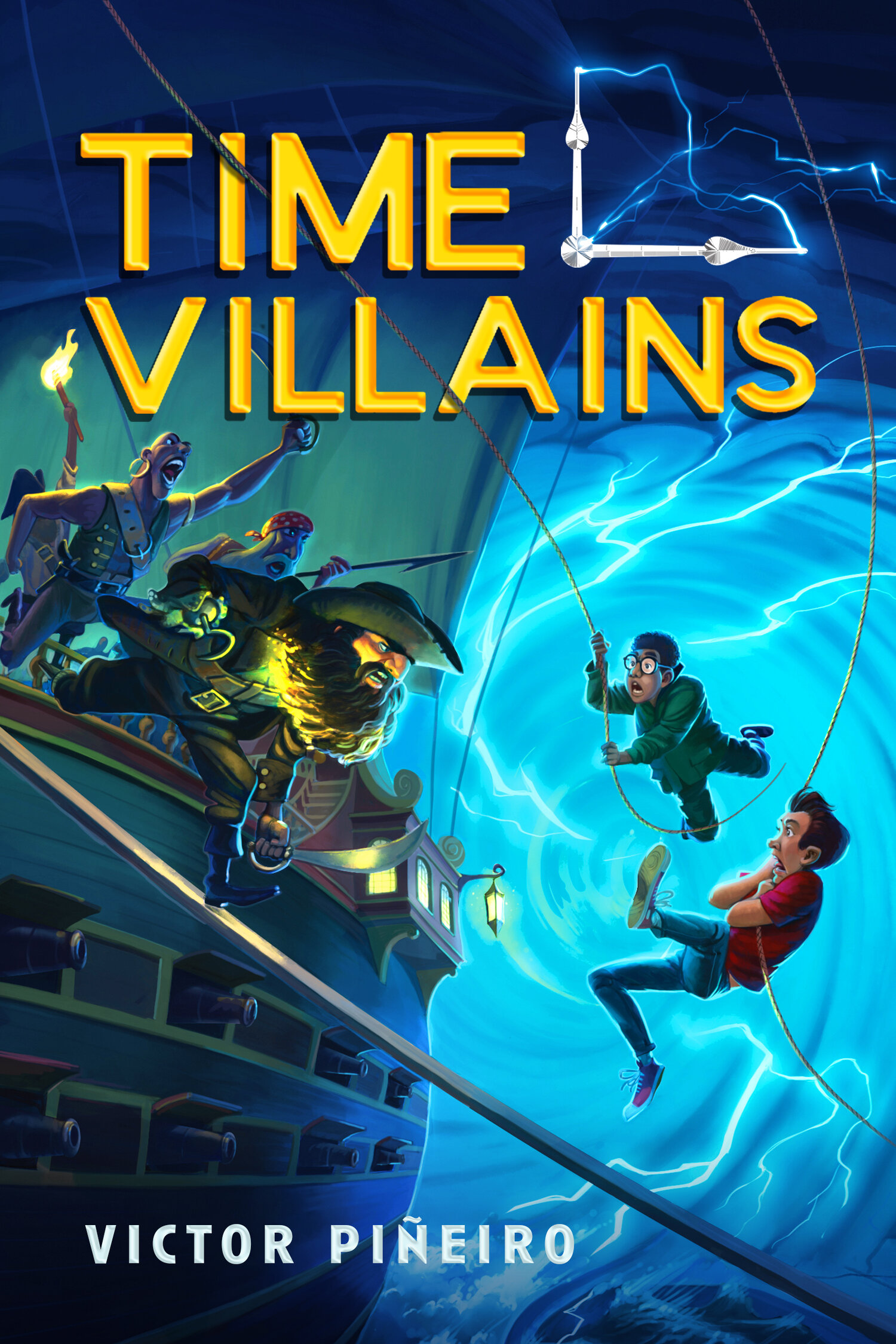
On April 26, 2024, my 5th grade students and I were thrilled to meet with middle grade authors Nicole D. Collier, Rina Heisel, and Victor Piñeiro during a virtual author visit that I had been so fortunate to win earlier this spring. My students ask wonderful questions, and were so enthusiastic when the authors asked if we had any writers in the audience. Many students stood up and proclaimed that they were writers and readers at the end of the visit. I, for one, annd looking forward to seeing where my students’ life journey takes them. Like the Middle Grade Authorcade logo states, WE LOVE BOOKS!

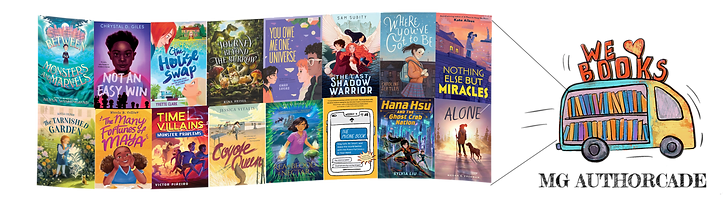
The Middle Grade Authorcade shares its origin story as, “Once upon a time, a group of first-time authors banded together to support one another in their debut year. Through this time of shared uncertainty, vulnerability, and celebration, friendships and great camaraderie emerged. So as our debut year ended, we didn’t want this supportive community to fade. With that, the Middle Grade Authorcade was born. It’s one of life’s happy endings. And you’ve got to take happy endings wherever you can get them.”

On April 26, 2024, my 5th grade students and I were thrilled to meet with middle grade authors Nicole D. Collier, Rina Heisel, and Victor Piñeiro during a virtual author visit that I had been so fortunate to win earlier this spring. My students ask wonderful questions, and were so enthusiastic when the authors asked if we had any writers in the audience. Many students stood up and proclaimed that they were writers and readers at the end of the visit. I, for one, annd looking forward to seeing where my students’ life journey takes them.

Educator Resource: Journey Beyond the Burrow Teacher Resource Guide

How did you get involved in MG Authorcade?

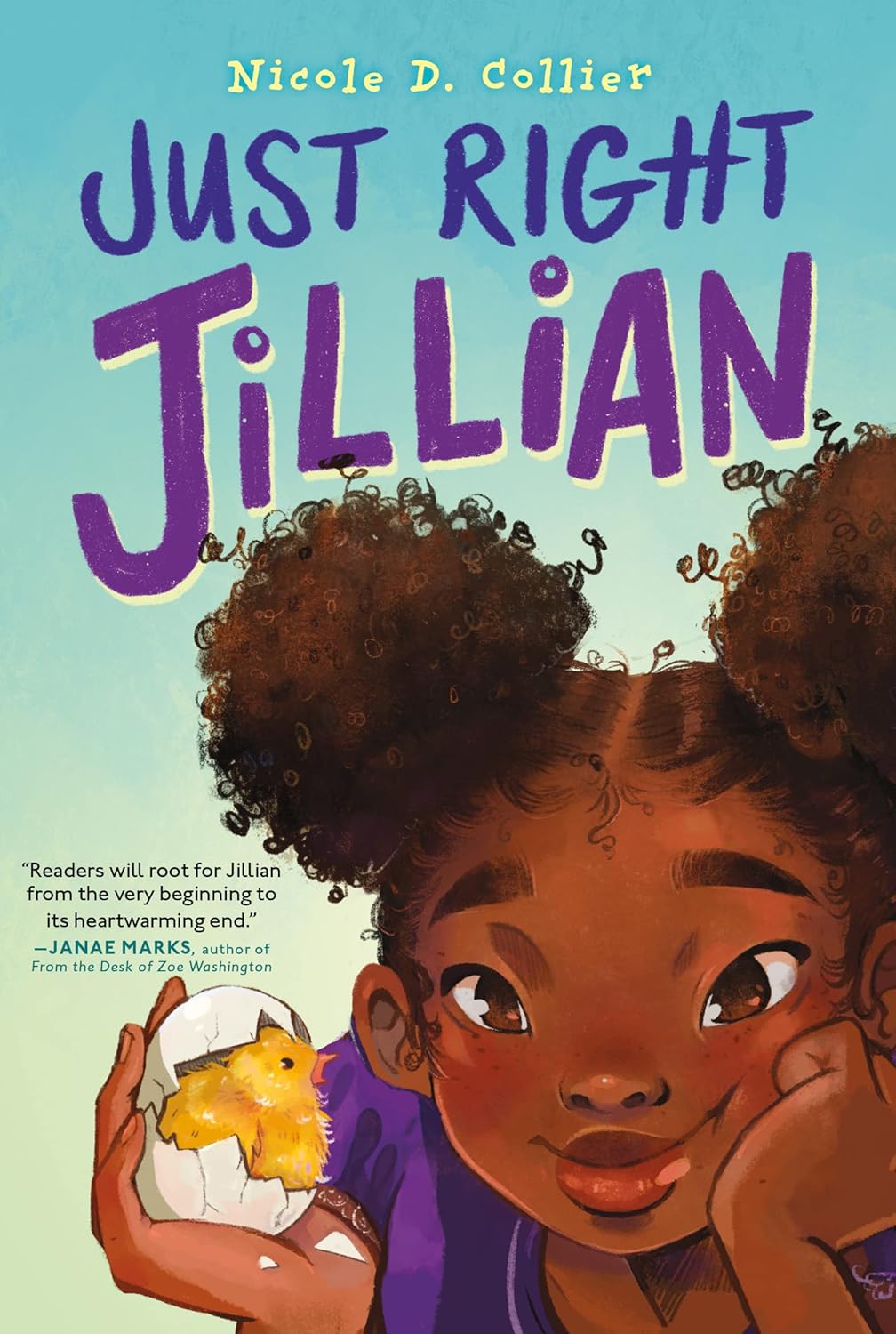
(NC) All the members of Authorcade were debut authors in 2021. Collectively we called ourselves #21ders. Officially, I was a Fall 2021 debut, but Just Right Jillian was released in February 2022. That wasn’t due to COVID as many assume; it was simply that “Fall” meant everything from August to February! I didn’t discover this until I had already bonded with the other #21ders! After I joined the #22debuts group, I kept in touch with my original debut buddies.

(VP) Though getting published for the first time was one of the highlights of my life, so was meeting a bunch of absolutely wonderful kidlit authors who were also getting published in 2021. A few of us really hit it off and formed Authorcade, hoping to spread a love of reading to middle grade readers everywhere!

Why do you think it is important to write for the middle grade audience?

(NC)  “Young people are trying to discern who they are vs. who they want to be, and how to bridge the gap between the two. My stories are right in that gap. It’s special to create art that edifies and delights the next generation, and as a former teacher (and the daughter of a school librarian) I can’t overstate the importance of literacy at this (and every) age.”

(RH) “For me, this was my “golden era” of reading—when I really began connecting to characters and getting lost in the stories, so to me there is just something magical about middle grade. This was the age I sort of pushed myself, I wanted to try reading something a little scary, or a little sad. Middle grade is an amazing place for discovery and optimism—it’s just my favorite place to be. To now put my books out there for this age is a mind-blowing honor.”

 (VP) “The most important, foundational, life-changing books I read were during my middle grade years, and as a teacher I noticed that it was true for many of my students too. Middle grade minds are open, curious and ravenous for story. And if I can help them turn into bookworms for life, that feels like the greatest job of all!”

What have you learned as you have met with your readers?

(NC)  “I love hearing the connections kids make to stories, sometimes in really unexpected ways. As a result, visits always remind me to be open to possibility.”

(RH) “Middle grade readers have the best questions for writers! So many readers I talk to are interested in writing their own stories, so they ask a lot about the writing process. They also like to talk about some of the critters in my book—mice, snakes, spiders, and how I researched all those things. I have found that our conversations are so great and we never seem to have enough time!”

 (VP) “I’ve learned that middle grade readers read deeply, truly understand your characters, and connect on a deeper level with a book than most other audiences. They also ask the most interesting questions. I’m constantly floored by the questions they ask me.”

What message do you have for librarians (and all educators)?

(NC) “At the core, your work is really about helping people of all ages become their best selves. Everything that counts can’t be counted, but everything you do truly matters. Thank you!”

(RH) “As authors, we are typically in awe of the work you do! We supply the material, but it takes educators to place the right books with the right students and encourage and support their reading journey. You are all superheroes and we appreciate you beyond measure.”

 (VP) “It’s both harder and more important than ever to give kids a chance to fall in love with reading before screens vie for all of their attention. Godspeed.”

What message do you have for your readers?

(NC) “Seeds of change are planted every time you read a book. Keep reading, and watch your life bloom.”

(RH) “My readers are usually with me because they love adventures and creatures of all kinds. I would say to them, “There is a story in every forest, every park, every backyard—if you use your imagination, you will find it!” 

(VP) “Thanks for reading, for reaching out, and for asking such inspiring questions! I’m so excited for you to read a very different book I have cooking, which should be out next year!”

I am looking forward to seeing where Nicole, Rina, and Victor’s writing journeys take them in the future!  Their readers are, too!

Thankfully, We’re All Works in Progress!

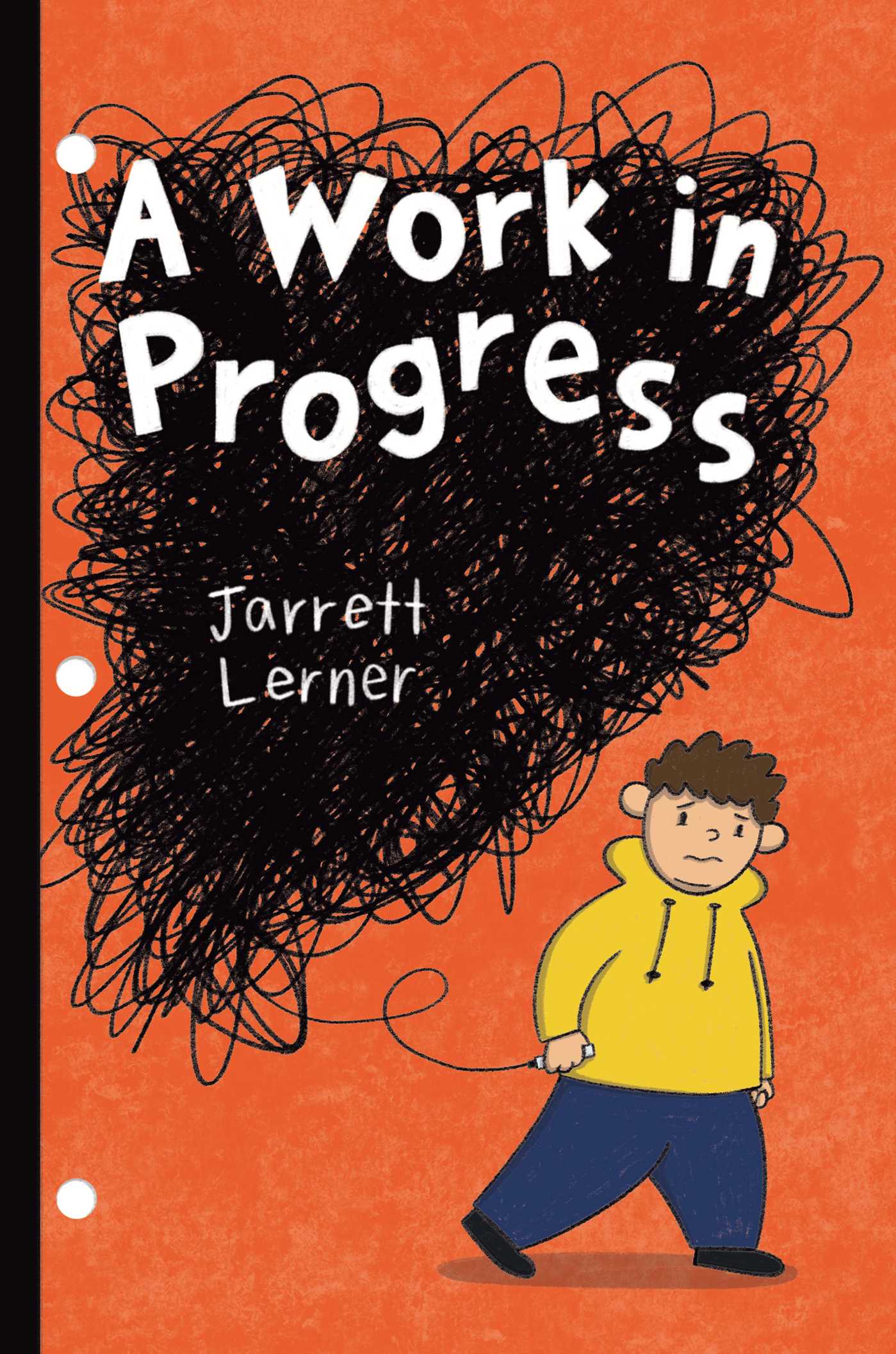
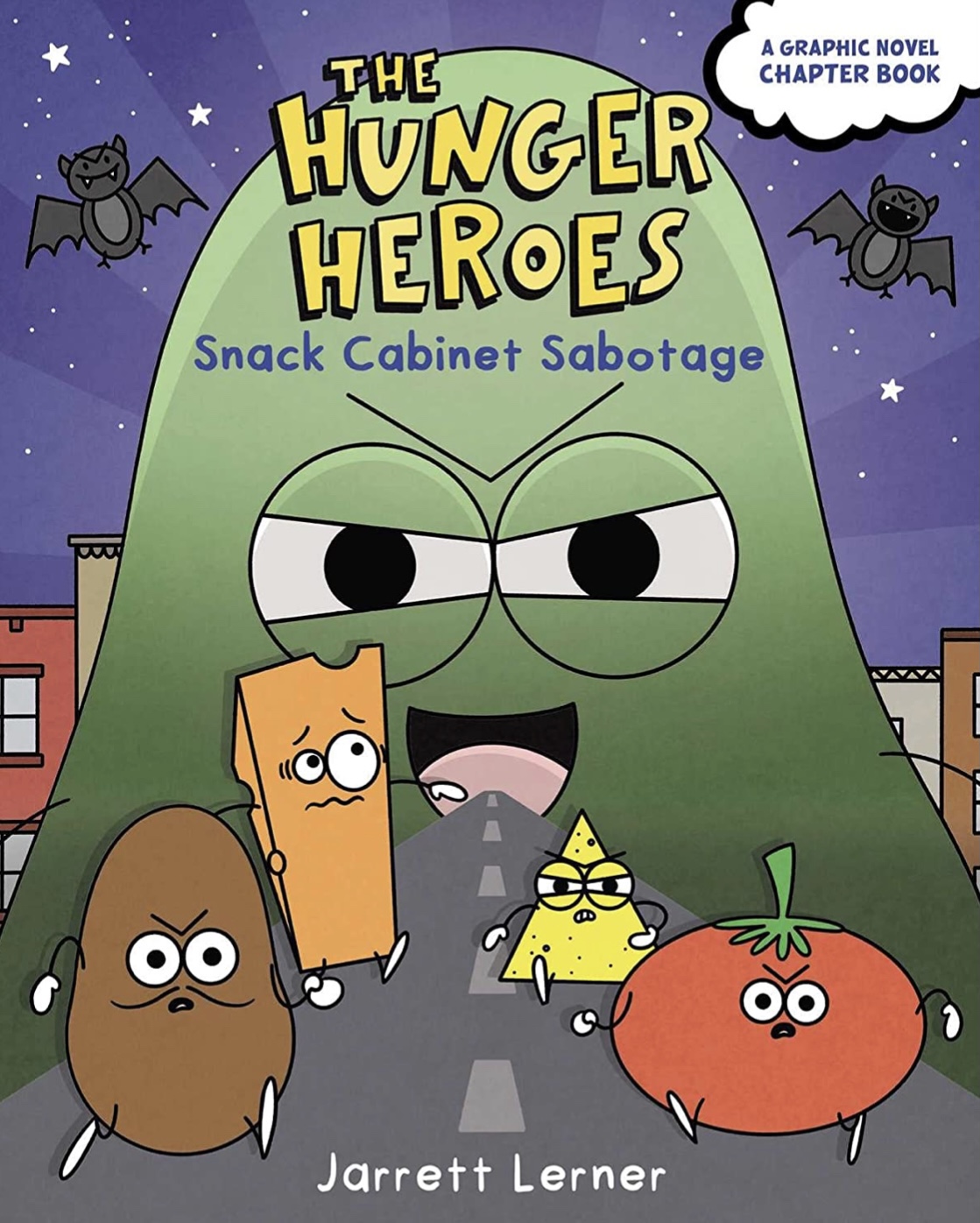
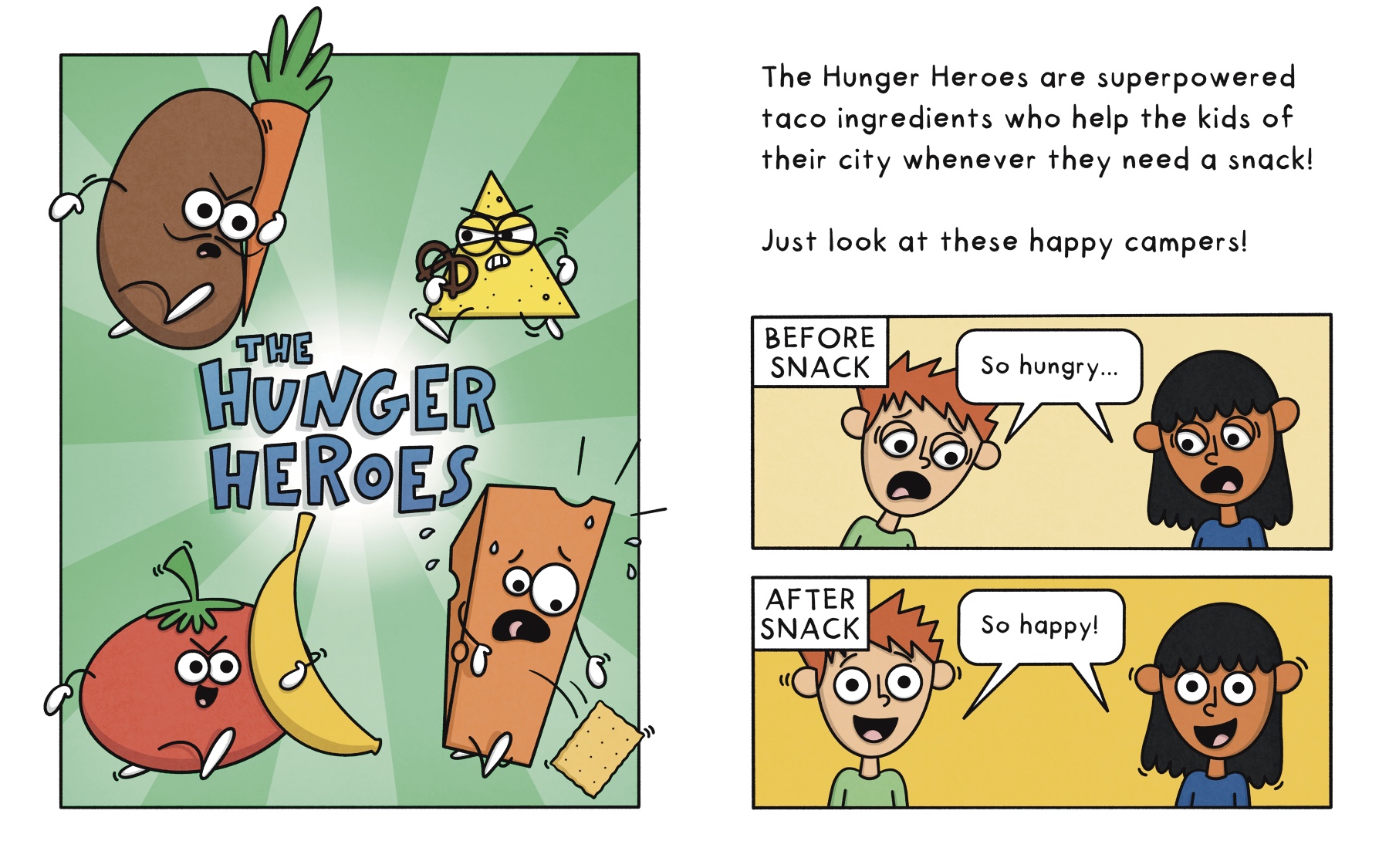
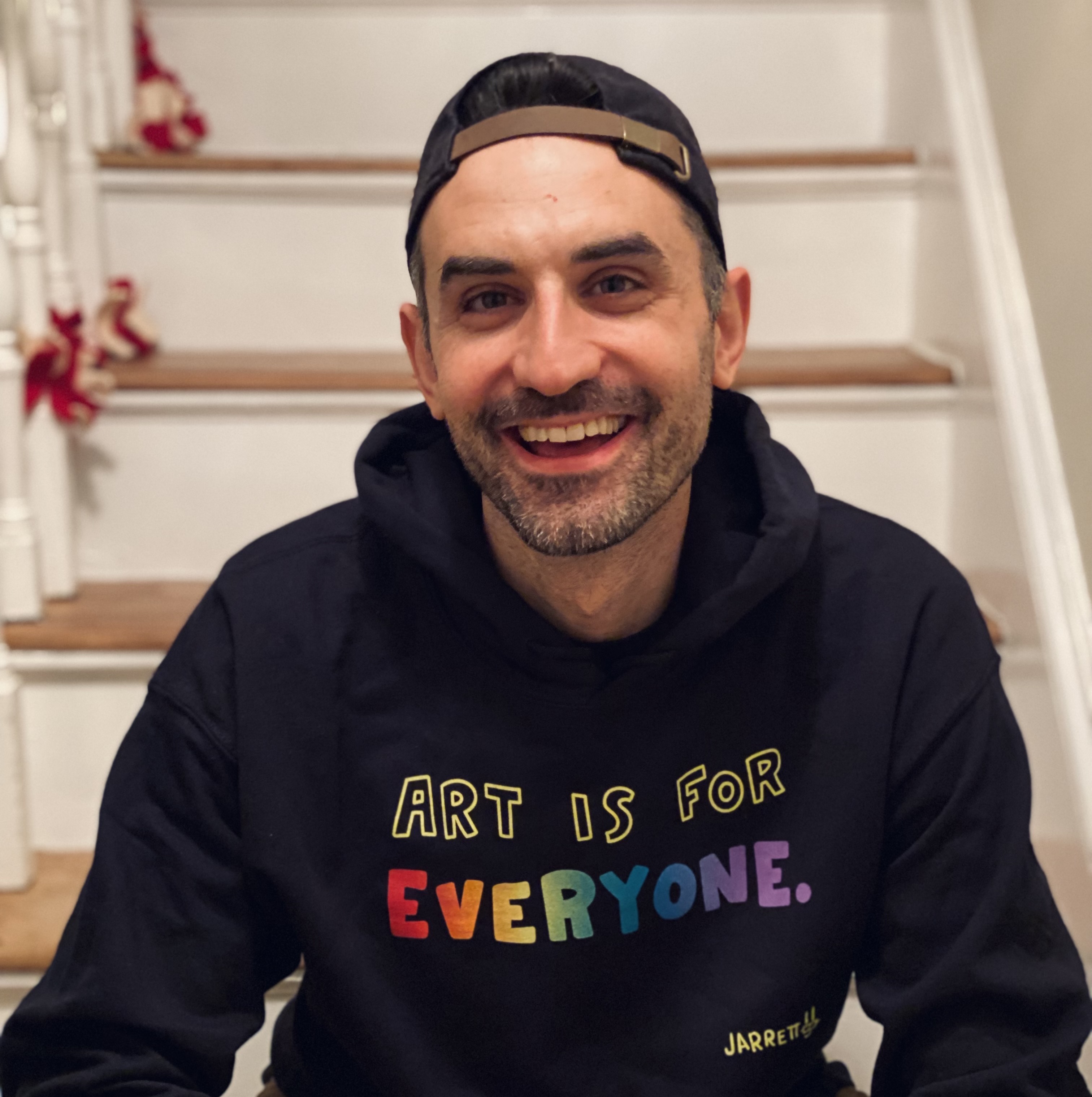
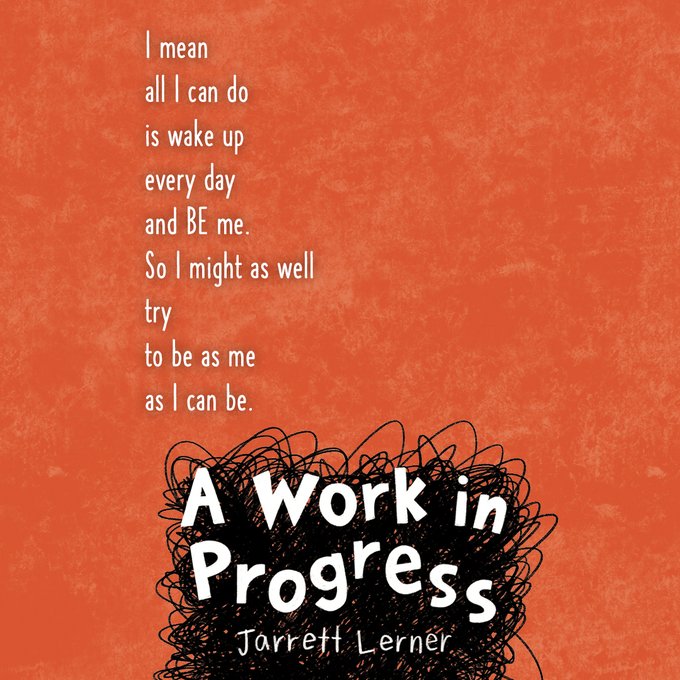
I caught up with Jarrett Lerner who is one of our many wonderful featured authors at the 14th Annual Gaithersburg Book Festival on May 20th.  He is a prolific children’s author, having published five books in the past eight months: The Hunger Heroes: Snack Cabinet Sabotage (October 2022),  Nat the Cat Takes a Nap (January 2023), Goes for Gold: Geeger the Robot (April 2023),  Nat the Cat Takes a Bath (May 2023), and A Work in Progress (May 2023).  His other middle grade series, EngiNerds and his unpublished eBook Knights of the Kids’ Table round out his book family.

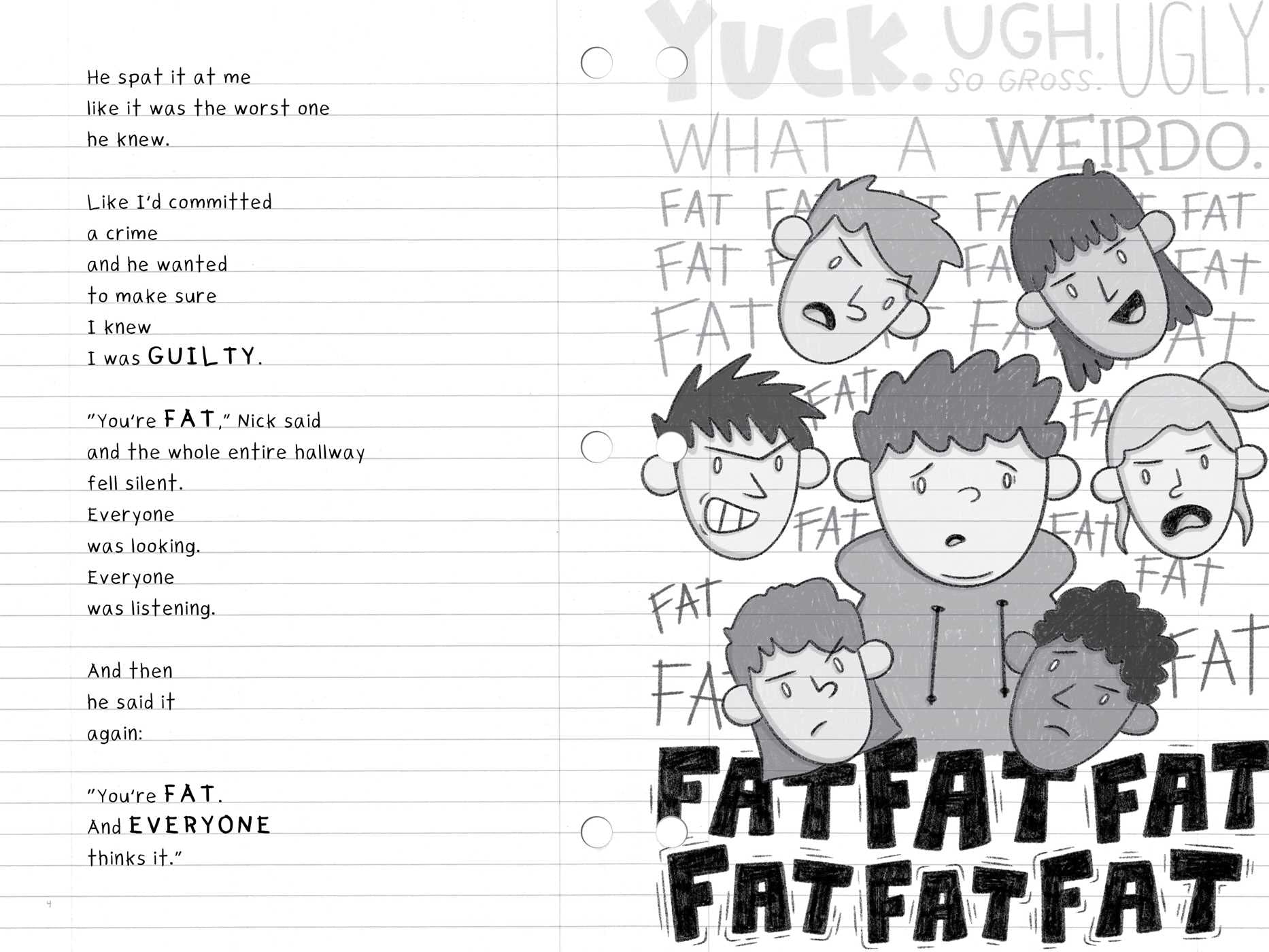
 A Work in Progress is about a “boy who struggles with body image in this poignant middle grade journey to self-acceptance told through prose, verse, and illustration.”  I am so thankful that Jarrett wrote this book – there are too many kids who need to read it because they are struggling with their negative self-image and self-talk. Both the kids who say mean words to others, and the ones who are the recipient of those mean words – they need to read this book.  And discuss it. Together. He shared a powerful message in a very accessible way.

Jarrett will be presenting A Work in Progress in a panel discussion with Janae Marks (On Air with Zoe Washington), and John David Anderson (The Greatest Kid in the World)  in the Jim Henson Pavilion, beginning at 1:15 pm (yours truly will be moderating the conversation).

He will also present his graphic novel chapter book, The Hunger Heroes: Snack Cabinet Sabotage with Jonathan Roth (Rover & Speck: This Planet Rocks!) in the Graphic Novels and Workshops Pavilion beginning at 11:15 am.

I hope you enjoy my interview with the kind-hearted (and witty) Jarrett Lerner.

Who encouraged or inspired you to become an author/illustrator?

I was first inspired by becoming a reader, and finding books I loved and connected with. That’s still one of my greatest inspirations. And when I finally realized that I actually COULD attempt to become an author-illustrator — like, as a JOB — I had boatloads of encouragement from my family and friends. I couldn’t have done what I’ve done and continue to do without them.

What is your writing space like? Your art studio?  

I’ve got a space at home that I use. It’s full of natural look, great books, and my kids’ artwork. And while I love creating there, I also make sure not to get TOO attached to it or any of the conditions I can reliably create there. To have a job doing what I do, I need to be able to be productive and occasionally even creative on demand, and often that means when I’m AWAY from my studio space. That being said, I love it there.

What do you love most about the cover art and illustrations in your current books? 

The cover art for a book is the illustration that you usually spend the most time and energy and thought on — and that you usually discuss most extensively with your publishing team. I always tell kids that the advice “don’t judge a book by its cover” is great advice for everything BUT books. Because we put so, so, SO much time and energy into making those images just right, so you’ll get a very particular idea about what the book’s going to offer you. I’m pleased with all my covers, and think they do a good job letting readers know what’s in store for them if they actually pick up the book and give it a read.

Can you speak to your creative process?  Do you write the words first, or sketch out the panels or pages?

Regarding my process — no matter how the book looks in the end, it always begins in a notebook, and I both write and draw. My first drafts are a mess, a mix of words and pictures, usually only half-formed. It’s an “idea dump,” and once I’ve gotten everything out of my head related to the story, the characters, and the world they inhabit, I go back through the notebook and try to clean up the mess, tidy it into something that looks like a story — or even just scenes or moments. From there, I’ll try to put together a draft, and at that point I usually get a sense of how the story will best be told — mostly text and occasional illustrations, as a graphic novel, or as some kind of hybrid. For me, that’s how I make the decision: I choose the form that will tell the story in the best way for my intended readers.

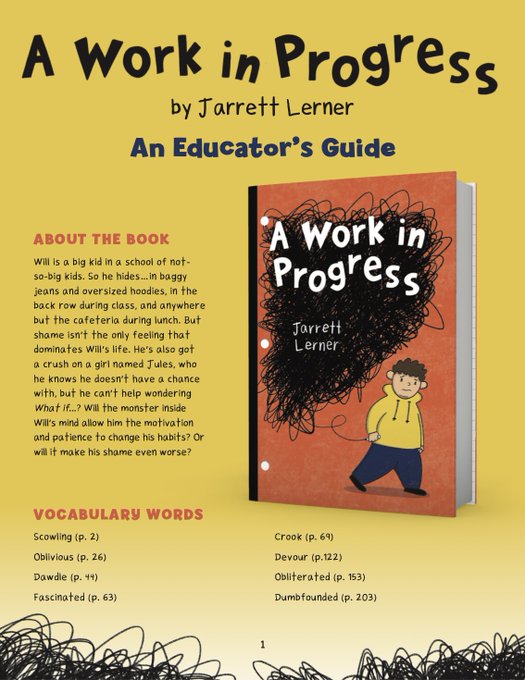
Do you have a discussion guide for A Work in Progress, and if so, could you share with me?

The AWIP Educator Guide just became available, and was created by Carrie Friday, a library media specialist in Florida.

Your two books are very different – for each of them, who is the reader you are writing for?  Please describe them, and what you hope that the reader will learn.

They are different, but they have similarities for me, too. I try to make books that kids both want and need. My youngest readers, who are just learning how to read, are going to want and need something different than my older readers, who are in middle school or high school. But focusing on my readers, giving them what they want and also what I believe they need (even if they don’t realize it!), is what guides me and has yet to steer me wrong.

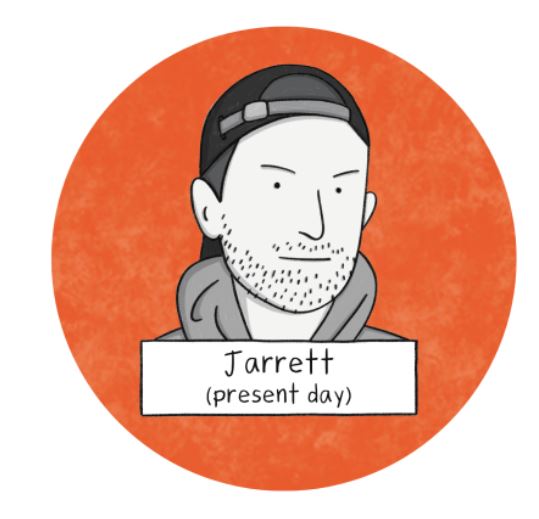
In the sketch of yourself on the author’s page and the dust jacket you look so serious or troubled – maybe even a little angry, but in every picture of you I see on social media, you have a big, happy smile.  Why did you sketch yourself that way? What message are you giving us?

A Work in Progress is largely autobiographical, and toward the end, Will talks about how he still has bad days, days when he isn’t doing all that great. I think that’s an important point to make (I explore it in my third Geeger the Robot book as well). There is a lot of intentionality behind my author portrait for the book, including that expression. I wanted my readers to know that while I’m usually happy and full of positive energy, I still have bad days, like everyone — days when, like Will, I just want to hide in a hoodie and stay in bed.

Do you think there will be a second book about Will?

I’m not sure! I’d like to revisit Will, a couple years down the road. Lately, I’ve actually been thinking about writing a story from one of the minor A Work in Progress character’s perspectives. We’ll see!

What is something that you really want your readers to know about you?

I have lots of hobbies and passions that have nothing to do with books or making them, and I think that’s hugely important if you want a career making books. I love skateboarding, I love cooking and going out to eat, and more recently, I’ve fallen in love with Formula 1 racing.

Which book review or award has been most meaningful to you?

The reading association of my home state, Massachusetts, once gave me an award for being a “champion of literacy” in our community and the country at large, and that was deeply meaningful and hugely rewarding to receive.

What are you most looking forward to at our book festival?

Meeting all the young readers!

Additional Resources

Elephants Remember at Gaithersburg Book Festival

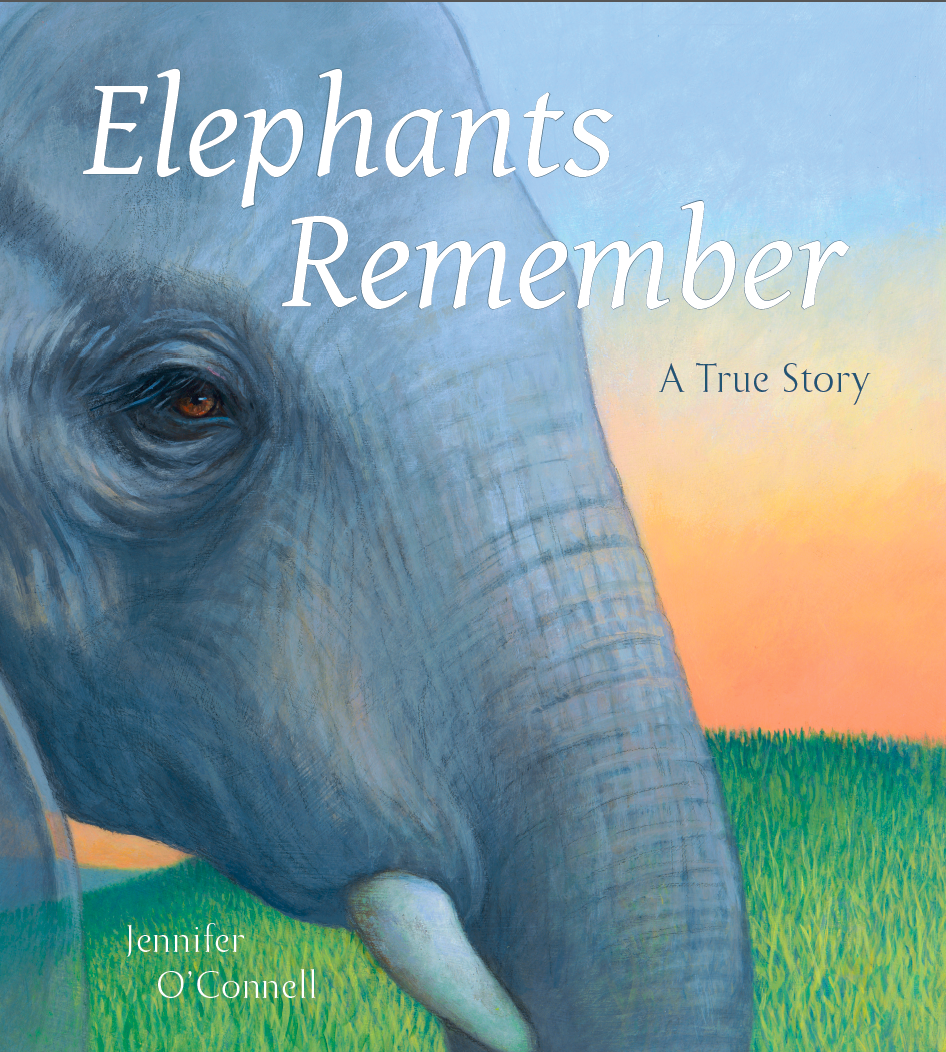
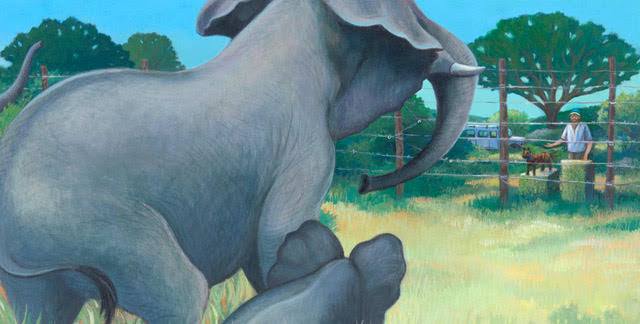
I met Jennifer O’Connell at the Amazing Animal Stories all-female author event I attended at the MCPL Connie Morella Library last January.  Since elephants are one of my favorite animals, I was drawn to the story of conservationist Lawrence Anthony and his elephants, Jennifer’s research process, and especially the expressive illustrations of Nana and the herd.

Jennifer will be presenting Elephants Remember with Susan Stockdale and her picture book, Line Up!: Animals in Remarkable Rows at the Gaithersburg Book Festival on Saturday, May 20, 2023, 10:15 am in the Jim Henson Pavilion at Bohrer Park. Click here for more information about Jennifer’s presentation.

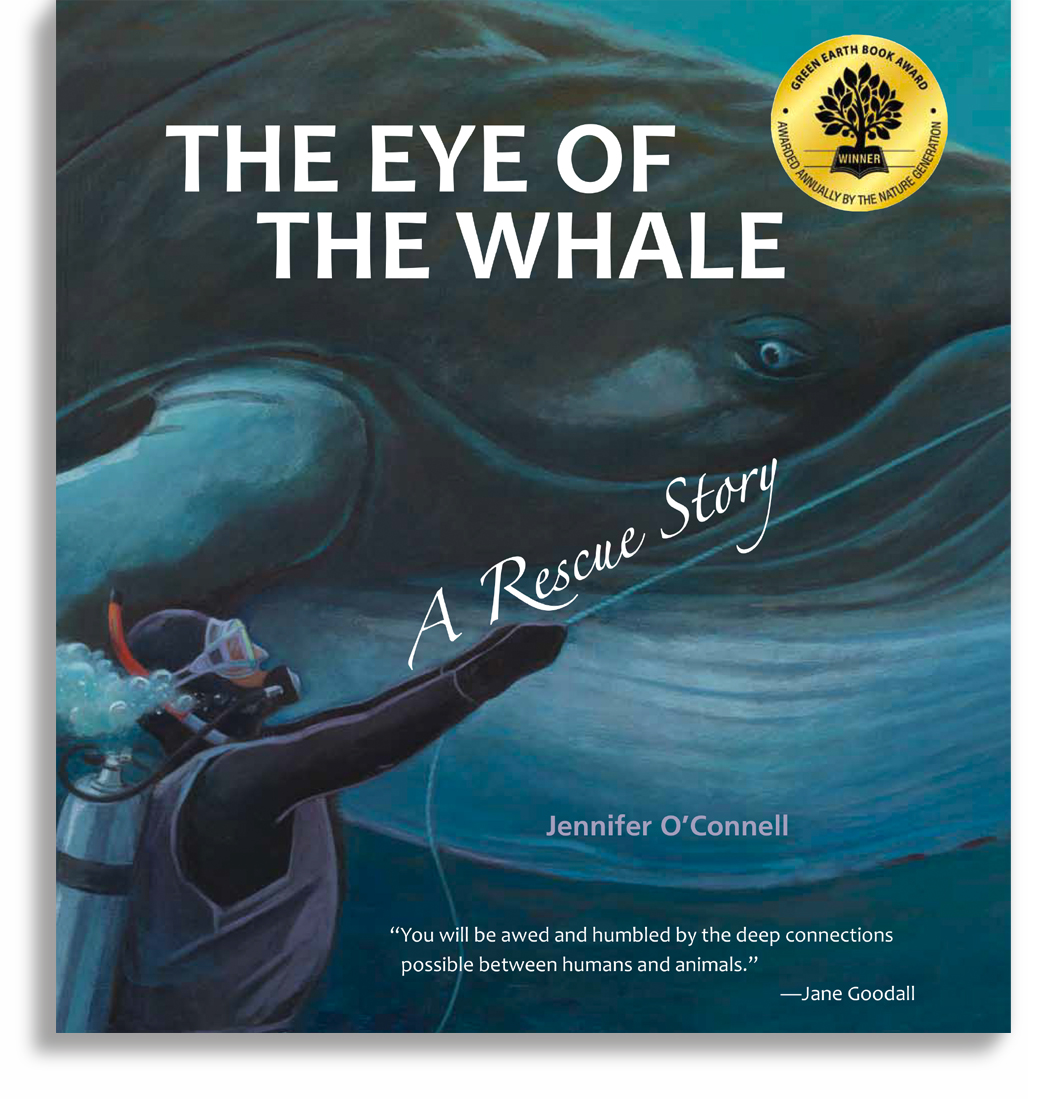
She is the author of several children’s fiction picture books: Ten Timid Ghosts, Ten Timid Ghosts on a Christmas Night, Harvest Night, and It’s Halloween Night! The nonfiction picture book, A Garden of Whales, was beautifully illustrated by Jennifer as well.  The Eye of the Whale: A Rescue Story, is another triumphant story of human and animal connection, and both written and illustrated by Jennifer.  It won The Nature Generation 2014 Green Earth Book Award, which is announced annually on Earth Day.

Please enjoy my interview with Jennifer, and join her at the Gaithersburg Book Festival to learn more about her and her touching nonfiction narrative picture book, Elephants Remember.

Who encouraged or inspired you to become an author/illustrator? 

Years ago, at Philadelphia College of Art, I attended a lecture by Maurice Sendak, explaining his process of designing Where the Wild Things Are. I fell in love with the art form of the picture book and began collecting and studying them with the hope of one day creating one myself. My mom (to whom Elephants Remember is dedicated) was always my biggest cheerleader!  

What is your writing space like?  

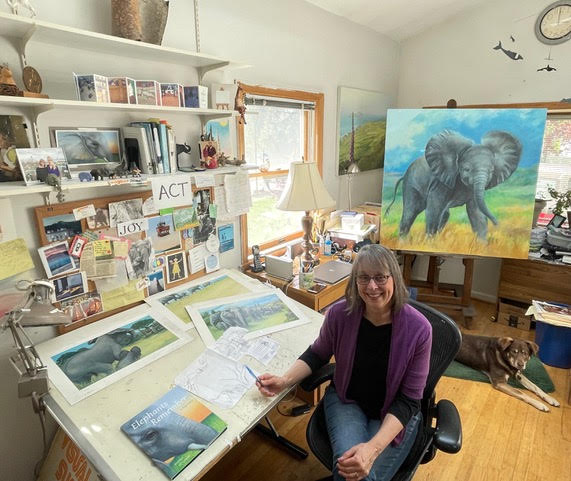
I write and paint in a bright, cluttered, studio space that we converted from our garage. It is my happy place! I have a large bulletin board in front of my art table with images and quotes that inspire me, an easel standing in the corner for painting, and a small rug by my table for our dog, Daphne. 

What do you love most about the cover art and illustrations in your current book?   Describe your art style and your art process.

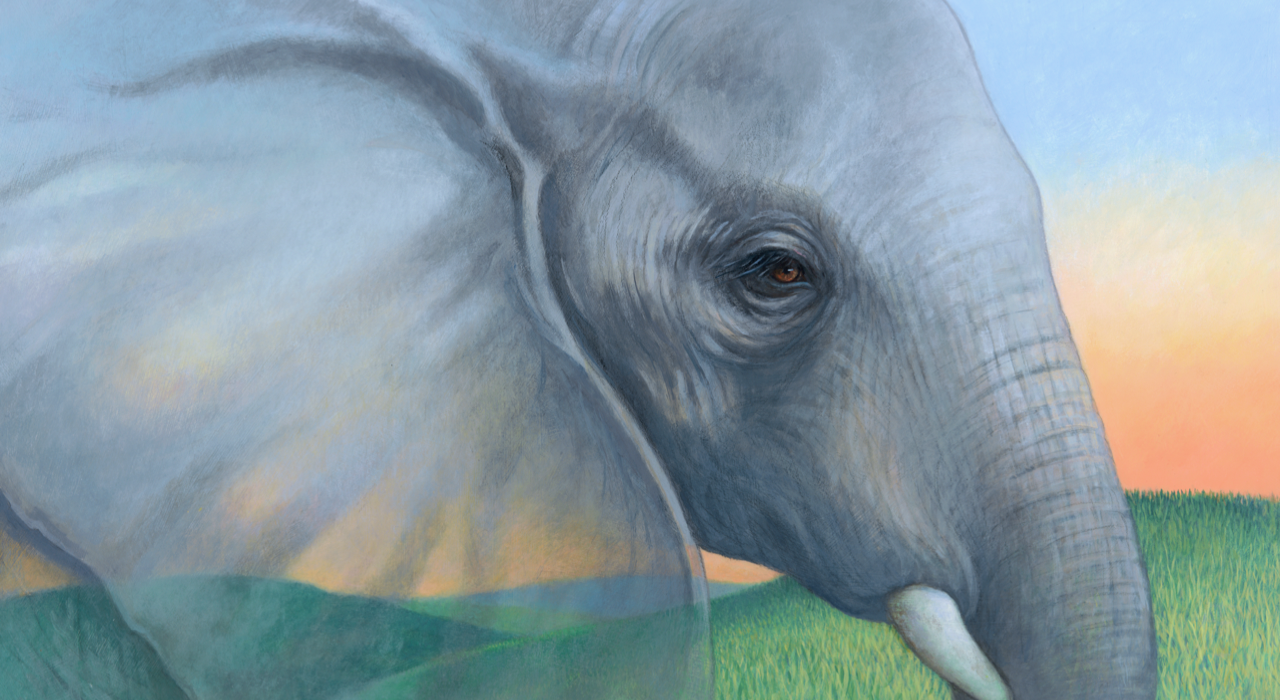
After painting several versions of the cover illustration, I finally succeeded in giving Nana’s elephant eye the contemplative feeling that I was striving for. I painted the South African landscape to show through her image to convey a feeling of mystery and to reinforce how elephants are a part of the land. The illustrations were created with acrylic paints and Prismacolor pencils on gesso-primed Strathmore Bristol paper. I also paint in oils and tried to incorporate a painterly style in these illustrations. 

What information surprised you most during your research? 

Several facts: That elephants are terrified of bees, and conservationists use this by placing beehives around land that they need to keep elephants out of, like plantations. That elephants communicate with each other up to six miles away with their low-frequency rumbles. That adult elephants can eat up to 400 pounds of plant matter each day! 

How (or in what ways) do you hope librarians will promote your book?  

I hope that librarians will share the story of Elephants Remember with children and parents, and that it will excite and inspire readers to want to learn more. The three-page Afterword provides additional details, explanations and a list of resources – books and websites. I have created a “Classroom Ideas” guide (on my website) that features ideas and activities for Language Arts, Visual Arts, Natural Science & Math, History & Geography, Conservation, How Students Can Help, and Human Values of Kindness and Compassion. 

What do you hope your readers will learn from reading your book?

I hope that readers will learn how sensitive, emotional and intelligent elephants are. And how we can all strive to be like Lawrence, who had empathy and recognized the value and integrity of other species and cultures by being receptive to and listening to them. 

Who is the reader you are writing for?  Please describe them.

I view Elephants Remember being for all readers, ages 5 to 105. But let’s imagine someone – a fourth-grader living in Brooklyn, New York. This young person has never been outside the US and has only seen elephants at the zoo. An adventure awaits!

What else do you really want your readers to know about you?

1 – l love connecting with them – talking, answering questions, hearing their ideas (email me!) 2 – I usually never get the words or pictures right the first time – but each try gets better. 3 – I love animals, especially dogs!

Which book review or award has been most meaningful to you?

I am proud that my picture book, The Eye of the Whale – A Rescue Story, received The Green Earth Book Award, which “honors books that inspire youth to grow a deeper understanding, respect, and responsibility for the natural environment.” 

What are you most looking forward to at our book festival?

Being with people who love books! I can’t wait to tell readers about Elephants Remember and how it became a book. I am also looking forward to seeing and hearing other authors and their stories. 

What message do you have for your readers?

Keep reading! The world opens up to you when you read all kinds of books. Start writing down your stories and never be afraid to try something new!

Follow Jennifer O’Connell:

Facebook | Instagram: @jenniferoconnellart | Twitter: @JenniferOCBooks

Want to learn more about Conservationist Lawrence Anthony? Check out these articles:

Lawrence Anthony, South African conservationist, dies at 61

Thula, Thula website 

UPDATE: Elephants Who Appeared To Mourn Their Human Friend Remain Protected

When the Elephants Came to Mourn the Elephant Whisperer

Kitty Sweet Tooth Makes Her Way to GBF

My students LOVE graphic novels.  Strong readers, reluctant readers, those with attention issues – nearly all my students read graphic novels. They also love dogs and cats, so you can imagine that Dav Pilkey’s Dog Man series, John Gallagher’s Max Meow series,  John Green’s InvestiGATOR series (yes, I know gators aren’t dogs or cats) books don’t stay on my library shelves for long – if at all.  I am excited to add Kitty Sweet Tooth to my ever-growing graphic novel collection!

Abby Denson will be part of an “animals and their antics” graphic novel panel, along with John Gallagher (Max Meow), John Patrick Green (InvestiGATORS), Dave Roman (Astronaut Academy series) at the Gaithersburg Book Festival on May 21 at our new location, Gaithersburg’s Bohrer Park, 506 S. Frederick Avenue, Gaithersburg, Maryland.

Abby’s Graphic Novel Author Presentation:  12:15-1:05 pm in the Willa Cather Pavilion. It will be immediately followed by a book signing.

I hope you enjoy my interview with the delightful Abby Denson!

What is your creative space/studio like?

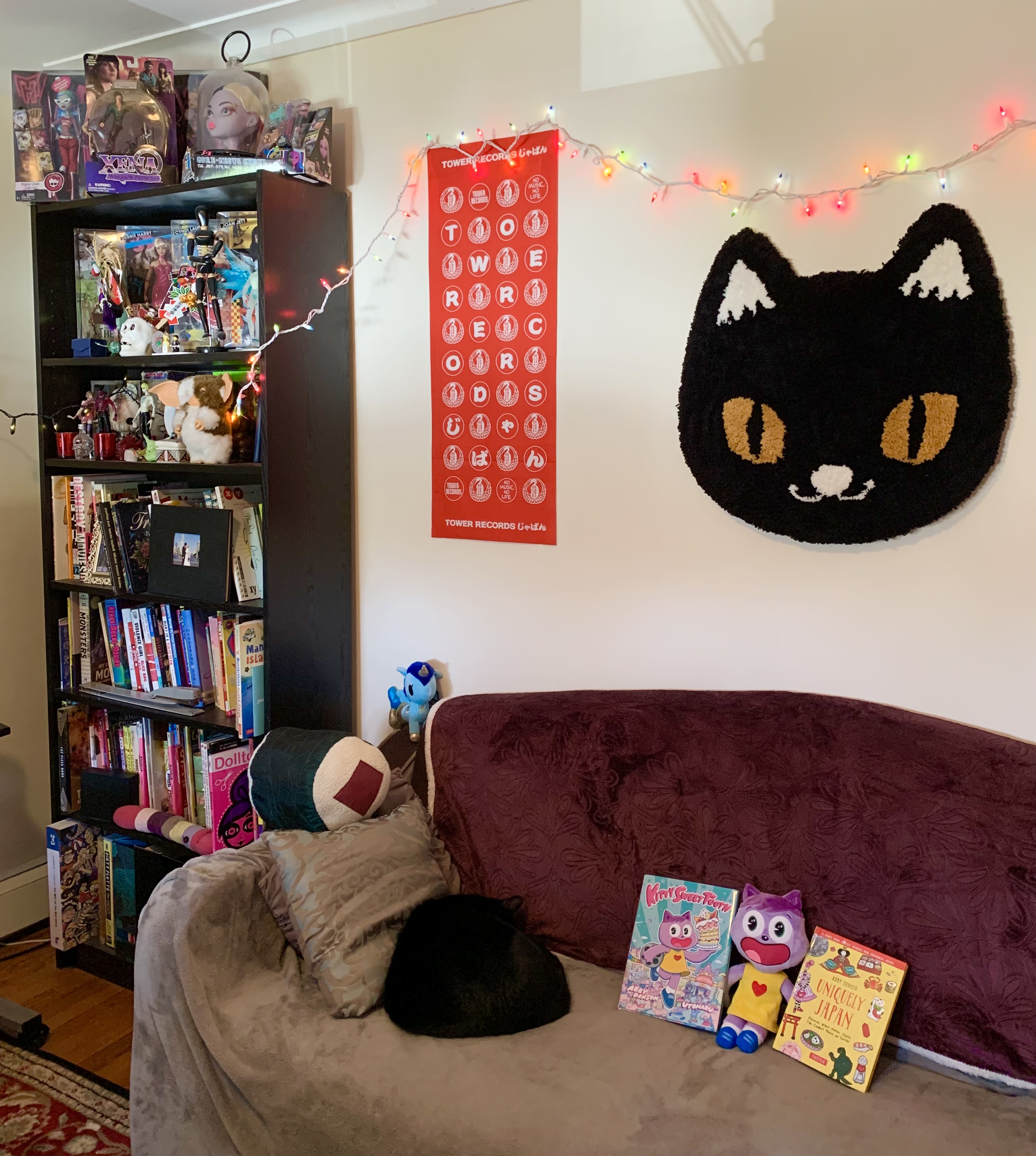
Abby’s creative space – photo provided by the author.

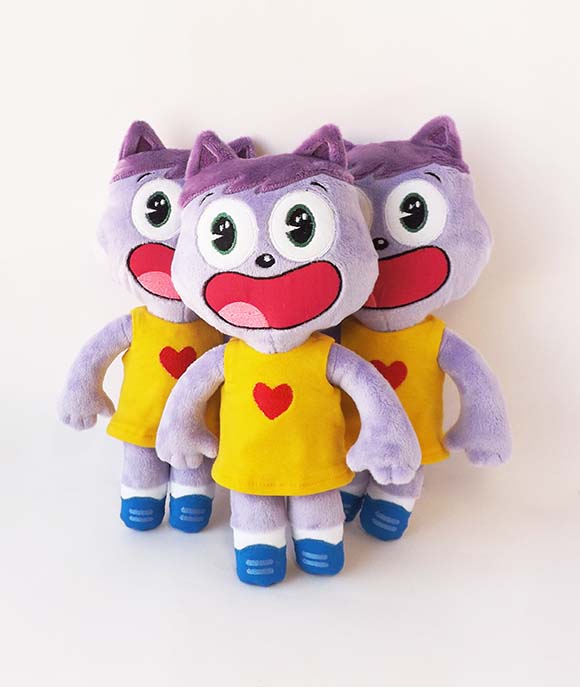
It’s a large room with a couch and a lot of natural light that has two computer workstations and a drawing space. I have multicolor fairy lights hanging around the room and wall art that includes a black cat hanging rug and various Japanese furoshiki cloth hangings with patterns I like. I also have book shelves with lots of comics and graphic novels on them as well as my small collection of dolls and action figures. This includes a Kitty Sweet Tooth plush doll that my editor Robyn Chapman commissioned as a (very thoughtful) gift when the book launched! It was made by the talented Claire Sanders.  

Kitty Sweet Tooth plush doll created by Clare Sanders.

How (or in what ways) do you hope librarians will promote your book?

Mainly, I just want my books to be available to readers, but I love it when my books are part of a nice display, or if they get featured as a recommended read. That’s great! I also hope for my books to be included on ALA recommended reading lists and considered for awards. I love to do library events, and luckily have been able to do several virtual library talks over the past year.

What do you hope your readers will learn from reading your book?

Kitty Sweet Tooth is about friends creating something great for their community together, and it can teach kids about overcoming obstacles and unexpected mishaps through cooperation. It centers on a character who has an enthusiastic love for movies, and she is inspired to share that with her town at the movie theater. I hope it will encourage readers to share their enthusiasm and appreciation for the arts and encourage their own feelings of creativity.

Uniquely Japan is a non-fiction book covering different Japanese cultural topics. I hope that readers will learn a lot about Japan from it, or at least enjoy  looking at my comics, photos, and drawings!

Who is the reader you are writing for? 

Anyone who wants to have a fun and enjoyable read, but is also interested in learning something new. 

What is one (or more) thing(s) that you really want your readers to know about you?

I’m hoping that my books will make people smile, and I want readers to know that if they are inspired to do so, they can also create their own books and comics. Please go for it!

What do you love most about  your cover art and illustrations in your book?   

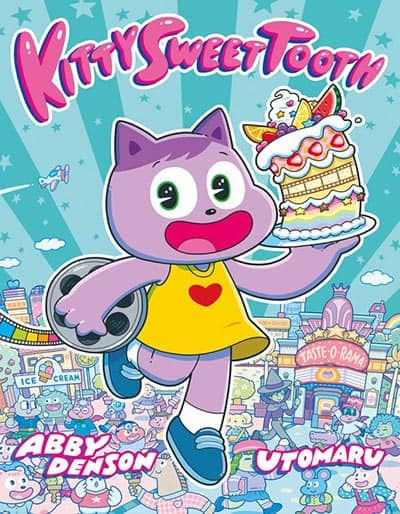
For Kitty Sweet Tooth, the entire book was illustrated by Utomaru, who is a brilliant artist! I’m so glad I get to work with her. Frankly, I love everything about her cover art! Though if I had to pick out details, I do especially love the cake that Kitty is holding and also the way the film reel wraps around to the back of the book. Also, there is a totally different (equally gorgeous) cover design under the dust jacket, so please look inside and check it out. Molly Johanson did the amazing design work!

For Uniquely Japan, the cover includes my own illustrations, and I am really happy with the compact hard cover design of the book – the Tuttle team did a great job! I especially like the way the sushi and bento illustrations came out.

[Melissa:  If you would like to read more about Uniquely Japan, here’s the link to an article in Stars and Stripes.]

What has surprised you most about the characters in your book?

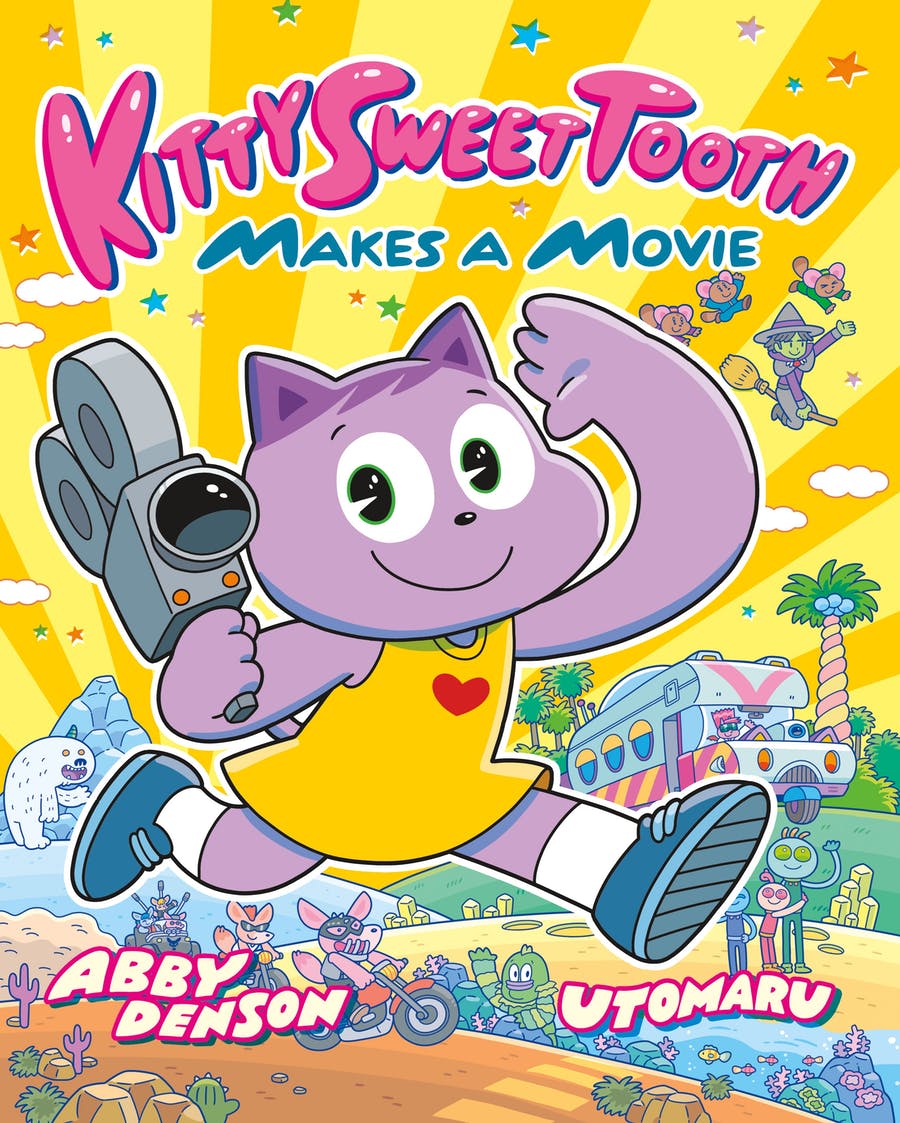
 In Kitty Sweet Tooth, it can be surprising how resilient and tough Kitty is (you’ll see more of this in her next book Kitty Sweet Tooth Makes a Movie). Even when different mishaps occur, she and her friends can figure things out together. 

Publishes October 18, 2022.

Which book review or award has been most meaningful to you?

Receiving an International Manga Award for my book Dolltopia was really special. Having my work recognized by a board of established manga creators was very meaningful to me. 

I also recently got a very insightful review for Uniquely Japan from UK Anime Network. I felt that they really understood what I was aiming for with the book. Read the UK Anime Network review here.

What are you most looking forward to at our book festival?

Meeting the readers and my fellow authors!

Please join Abby Denson at Gaithersburg Book Festival on May 21st!

Abby Denson is the author of “Uniquely Japan,” the “Kitty Sweet Tooth” series (illustrated by Utomaru), “Cool Tokyo Guide,” “Cool Japan Guide,” “Dolltopia” and “Tough Love: High School Confidential.” She has scripted comics for Amazing Spider-Man Family, Powerpuff Girls Comics, Simpsons Comics, Sabrina The Teenage Witch, Josie and the Pussycats, Disney Adventures, and many others. Her work has garnered the International Manga Award, Moonbeam Children’s Book Award, and IPPY Award. She has taught and lectured at various venues including the Eugene Lang College at The New School and Sophia University in Tokyo.

P is for Puffin: ABCs and GBF

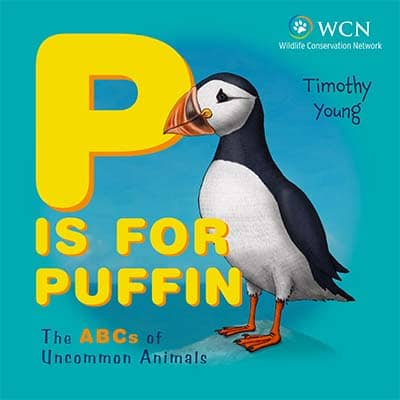
Maryland author-illustrator Timothy Young is a long-time friend of the Gaithersburg Book Festival, and the creator of many wonderful children’s books, including his newest, P is for Puffin: The ABCs of Uncommon Animals, a delightful nonfiction board book for children of all ages.

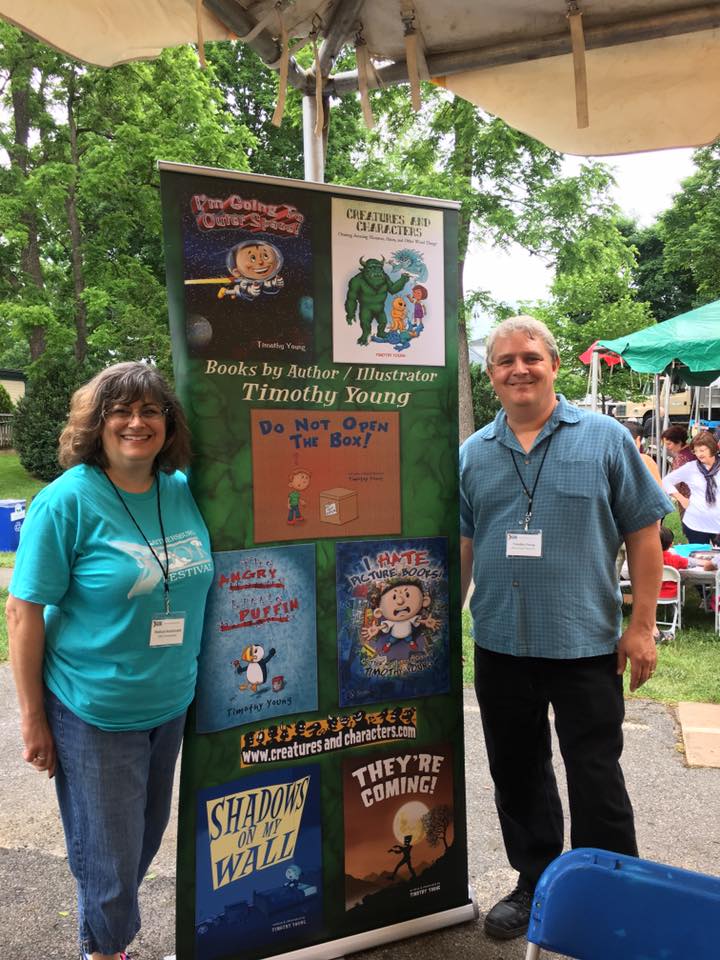
Melissa with Timothy at 2017 GBF

Timothy seems to love the beautiful Atlantic Puffin which nests in the North Atlantic. In the summer, birdwatchers “flock” to Maine and eastern Canada to catch a glimpse of them.

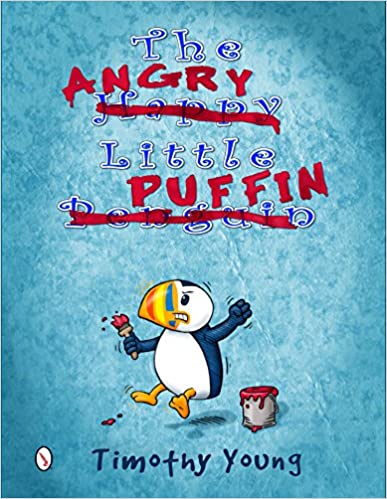
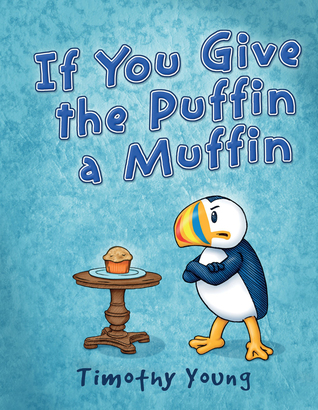
Fans of Timothy’s picture books will remember that in 2014 he published the children’s book, The Angry Little Puffin, about a Penguin – er – Puffin with lots of feelings. Four years later, in 2018, he published If You Give the Puffin a Muffin, about the same grumpy Puffin who realizes that he’s the subject of another picture book and the target of a rhyming scheme gone wrong.

Timothy will be presenting P Is for Puffin: The ABCs of Uncommon Animals along with June Smalls (He Leads: Mountain Gorilla, The Gentle Giant 11:15-12:05 in the Jim Henson Pavilion (immediately followed by a book signing). 

He will also lead an illustration workshop for teens entitled Drawing Animals: Either Realistic or Funny 2:00-2:45 pm in the Children’s Village Workshop Tent.

I hope you enjoy my interview with author-illustrator Timothy Young.

What is your creative space like? 

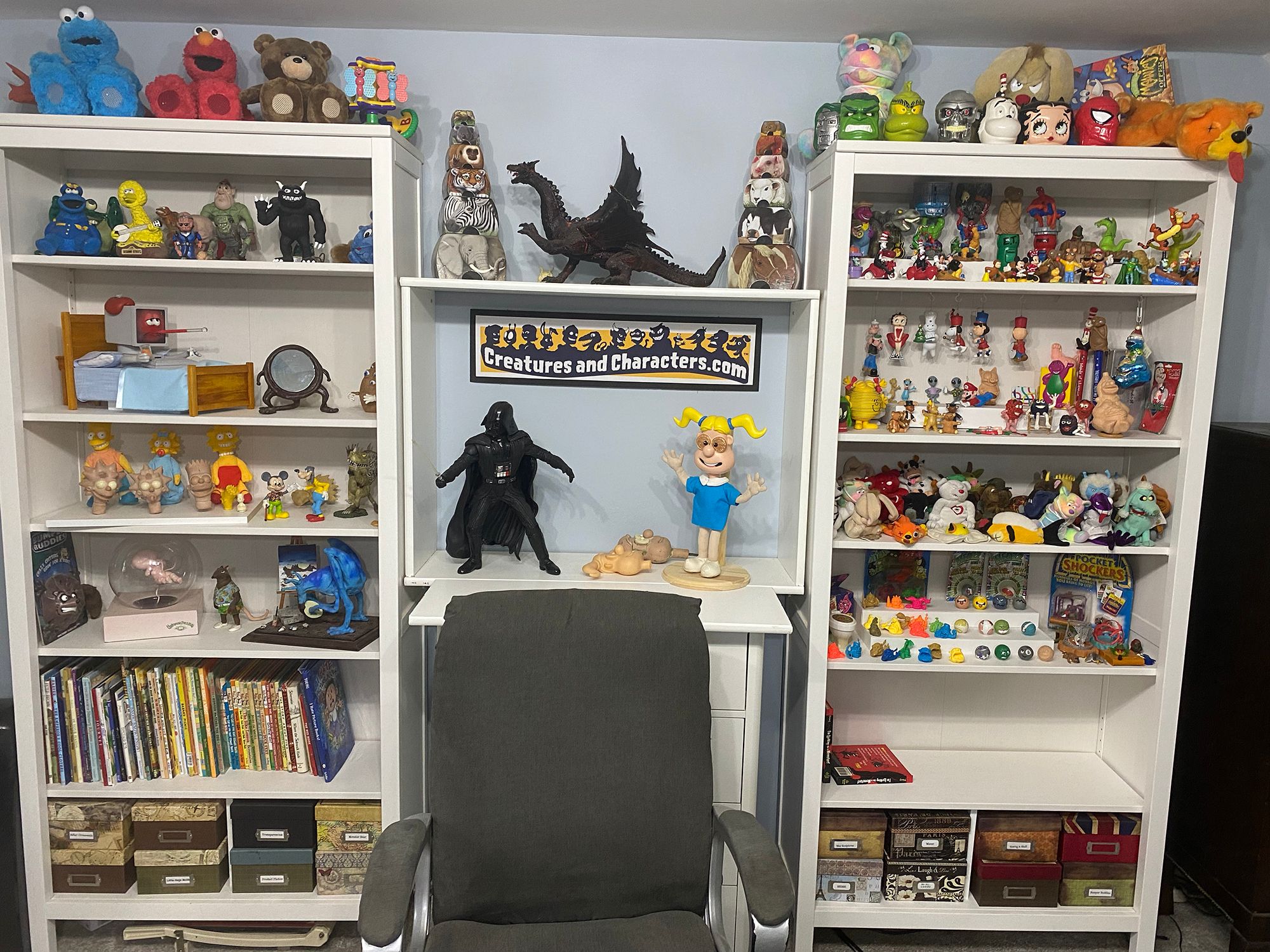
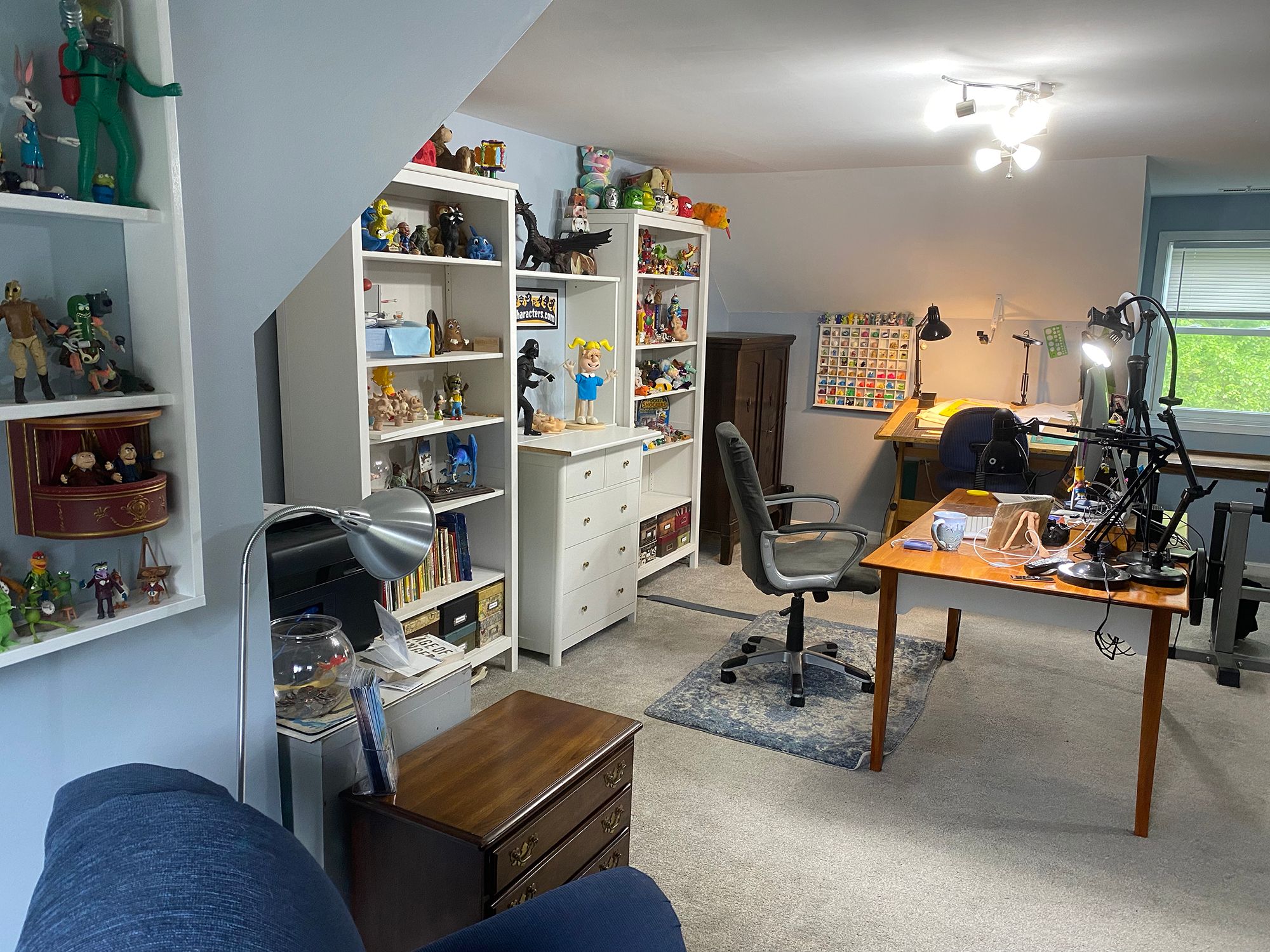
I have a great workspace in my home. I moved into a larger room in the house in January 2021 so I could have room to set it up so that half of it is a presentation space for virtual visits. I have so many lights it’s like working in a TV studio! I also have lots of books and toys and other stuff, things I have worked on and things that I just like having around. I also have my drawing table on one end near the front window and a reclining chair by the back window where I can relax, think and read.

How (or in what ways) do you hope librarians will promote your new book (or any of your books)?

While it is a board book I would hope that the illustrations and animal facts would appeal to older children who are interested in animals.

Can you tell me about your research process for P is for Puffin?

I have been interested in animals since I was very young. I still have a set of animal cards that my mom signed me up for. I received a new set of cards each month for many years. Many of the animals in the book I already knew about. In picking specific animals for each letter I learned about some animals I had not heard of before like the Shekru and the Fairy Armadillo. I read everything I could find about each animal and picked some interesting facts about each.

Who is the reader you are writing for?  Please describe them.

As with most of my books my first audience is me. I write books that I would have liked reading as a child. I hope that there are kids out there who love to learn about new animals and it sparks their curiosity further. 

What is one (or more) thing(s) that you really want your readers to know about you?

This book began as another vehicle for my Angry Puffin but as I worked on it I realized I wanted to represent these animals differently. Most of my books are just funny stories. The more I worked on it the more I wanted to do something for these animals I cared about and that’s when I decided to donate my royalties to an animal charity. I friend of mine introduced me to the Wildlife Conservation Network and I was very happy when they accepted my donation. They help quite a few of the animals in my book like the Okapi and the Pangolin and give every penny they raise to organizations directly involved in protecting animals.

What do you love most about the cover art and illustrations in your book? 

I created my illustrations in a different style than my other books. I wanted the focus to be on the animals and I illustrated them more realistically rather than in a cartoony style. They are still a bit stylized and look friendly and approachable. I spent a lot of time drawing fur. Even digitally it take some time and brush stroke to draw that much fur.

Can you tell us about your creative process? What medium did you use? Could you share images of your work in progress?

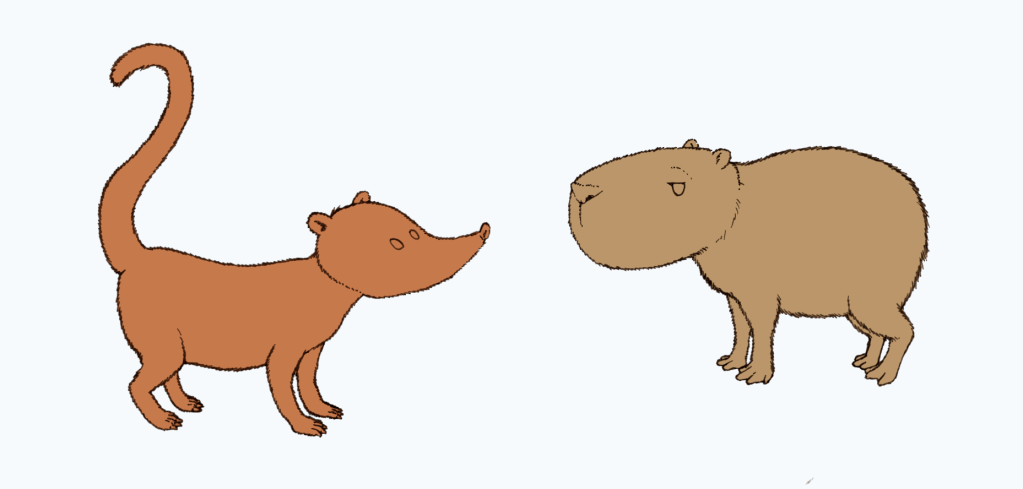
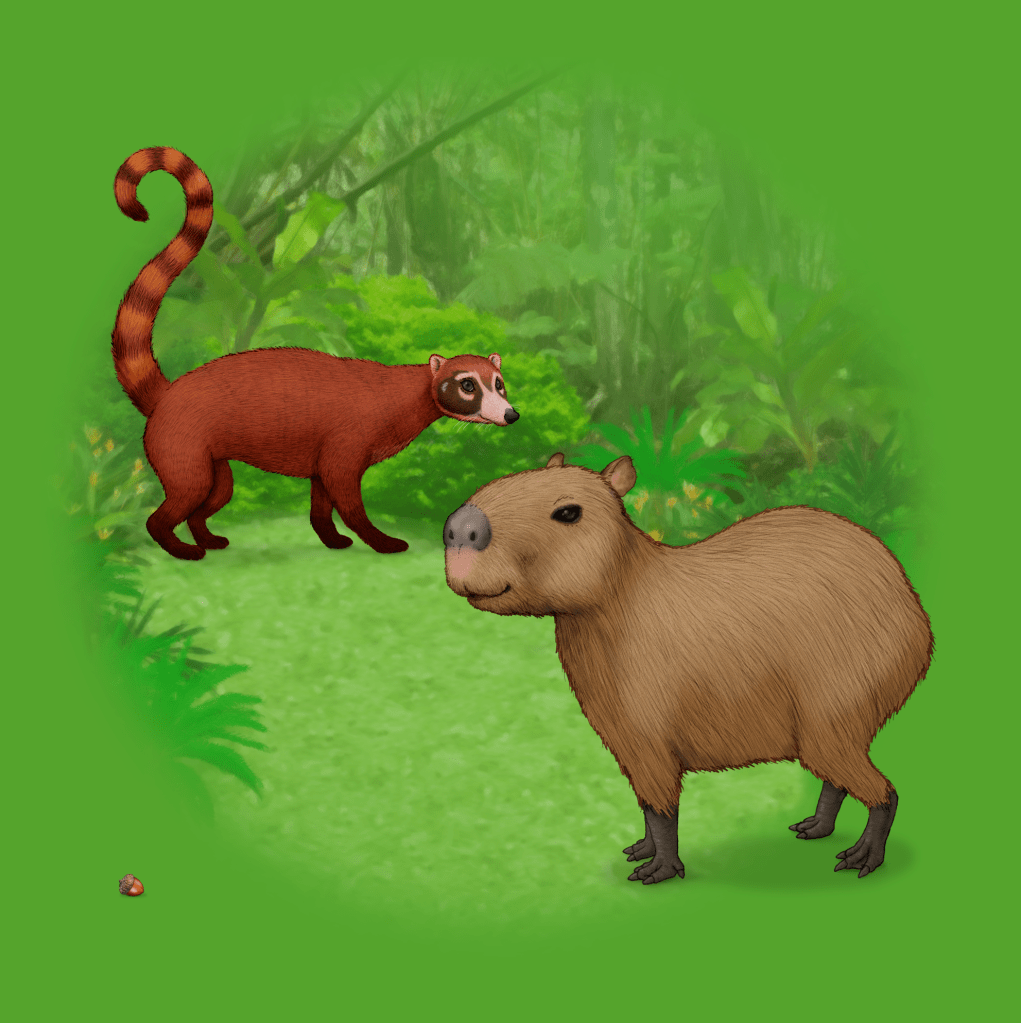
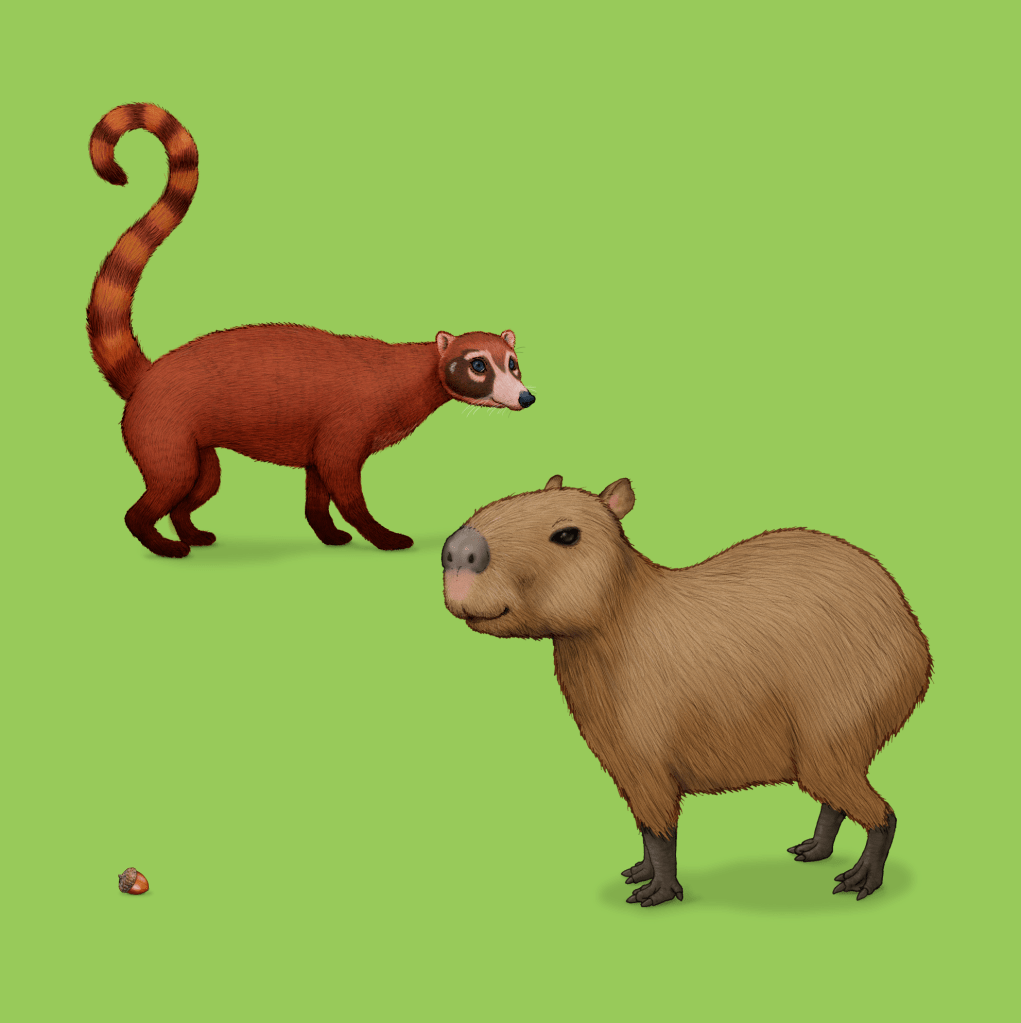
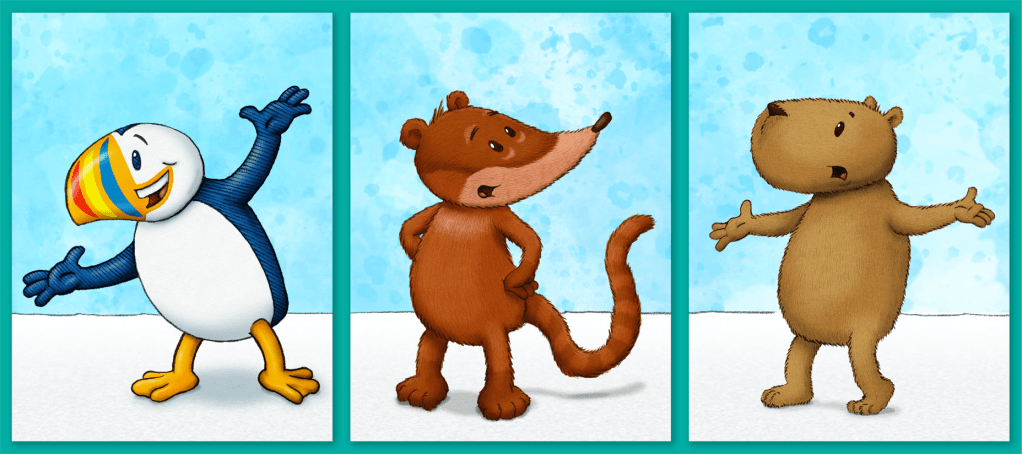
In the early stages, when it was more of a story, I drew some of the animals in my usual way. Since I had already written books with a puffin, a coatimundi and a capybara as characters I drew similar versions of those characters in more animal type poses. I then decided to change that and draw them with more detail. Once I have a pencil drawing I inked them and then scanned the ink drawings into Photoshop. I did all of my coloring, detailing and shading in that program. Originally the animals were on solid color backgrounds. At the suggestion of my publisher I added subtle backgrounds to my illustrations.

Which book review or award has been most meaningful to you?

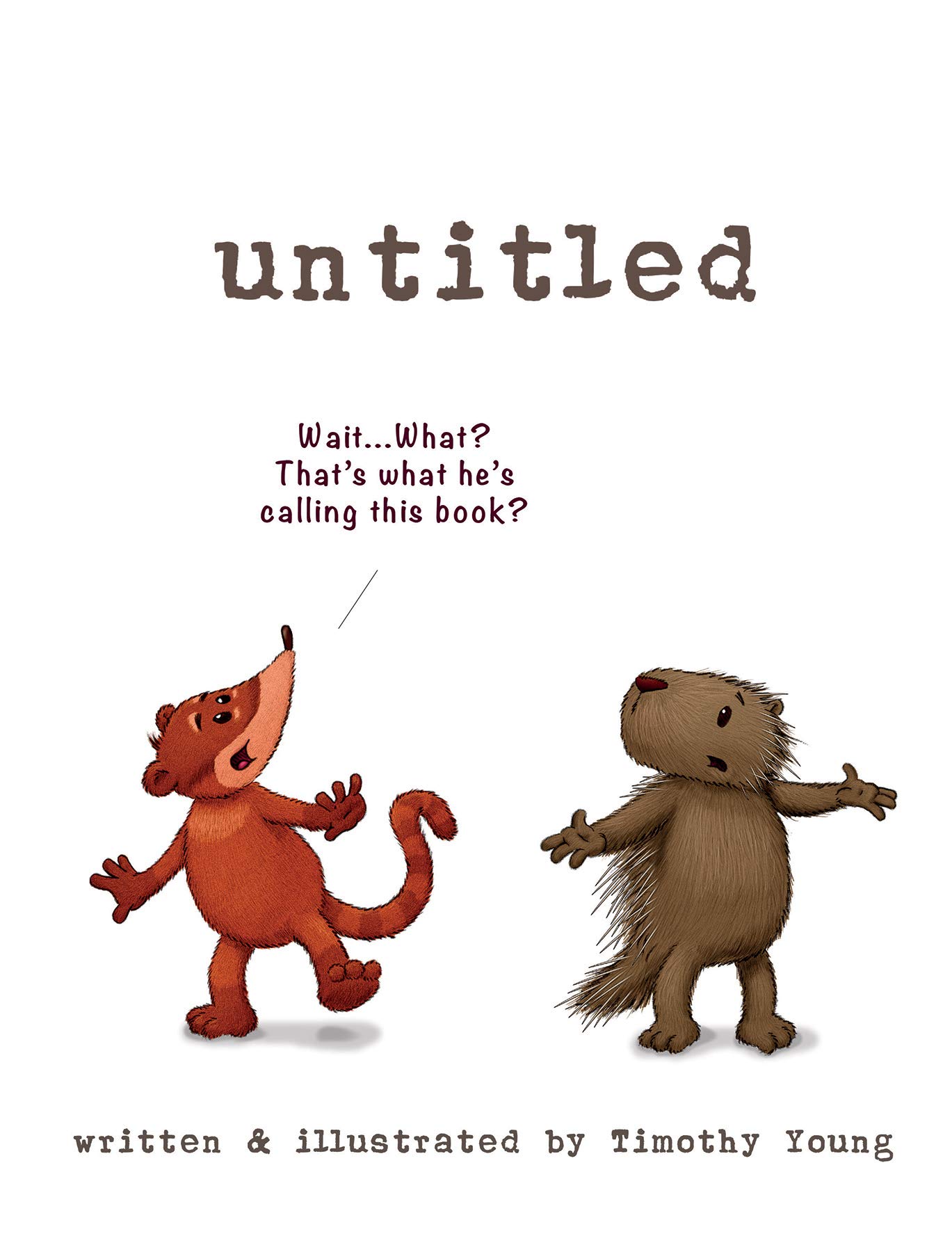
If I were in this for awards I would have stopped long ago. Being with a small publisher it’s easy to be overlooked. I toyed with the idea of putting a circle on the cover of “untitled” with the words PLACE CALDICOTT HERE but I liked the blankness of the final design.

The best awards come when you get a note from a parent, teacher or student about that one kid who loves your book so much that they read it over and over or it’s the first book they wanted to read in front of their class. 

What are you most looking forward to at our book festival?

I love the Gaithersburg Book Festival. This is the first one I’m doing in almost three years. I love meeting the readers, I love re-connecting with other authors who I only get to see at festivals and, of course, seeing all over, the volunteers who bring this all together.

Please come to the 13th annual Gaithersburg Book Festival on May 21st to meet Timothy Young, and lots of other talented children’s authors and illustrators!

As a child Timothy Young always wondered who made the toys he played with, who wrote and illustrated the books he read and who made the cartoons he watched. He grew up to be one of the people who got to do all of them.

His career has included being the head model-maker for the Penny cartoons on Pee-Wee’s Playhouse, building Muppets for Jim Henson and sculpting the first Simpsons toys. He is the author/illustrator of 13 books including “I Hate Picture Books!,” “The Angry Little Puffin” and his newest, “P is for Puffin.”

Be a Tree at Gaithersburg Book Fest (the Tree City)

Maryland author, and illustration instructor at the Maryland Institute College of Art, Joyce Hesselberth, will be joining the many wonderful children’s authors and illustrators presenting at the Gaithersburg Book Festival on May 21, 2022.  Joyce will be a featured presenter along with the equally talented Julia Kuo in the Willa Cather Pavilion (12:15-1:05 pm), immediately followed by a book signing.  GBF will be at our new location Gaithersburg’s Bohrer Park, 506 S Frederick Ave, Gaithersburg.

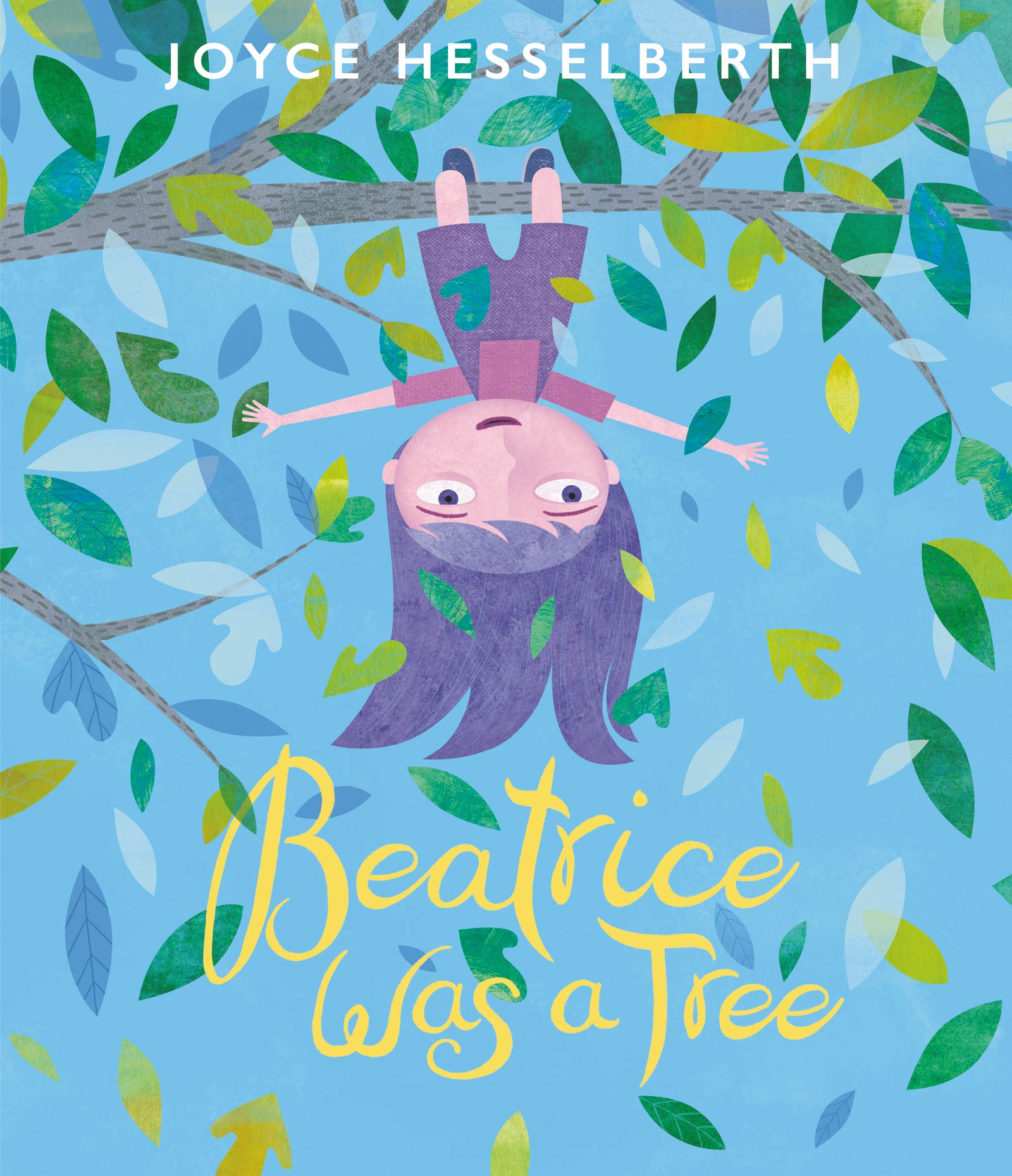
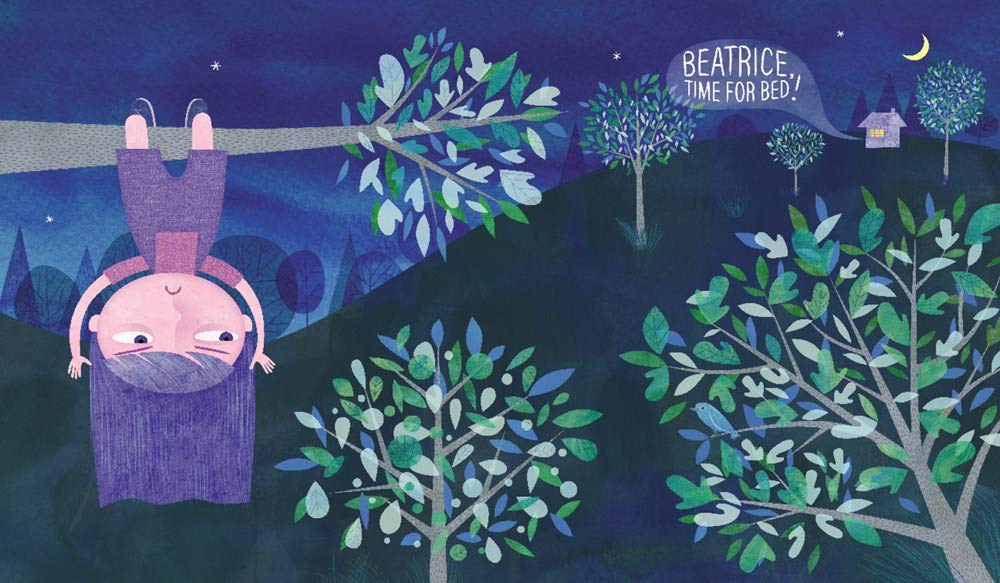
I am not only looking forward to meeting Joyce at GBF, but I am also looking forward to teaching a lesson to my young naturalists this week using Beatrice Was a Tree as my anchor text (a future post will include this library media lesson).

I hope you enjoy my interview with the lovely Joyce Hesselberth.

What is your writing space like?

I have two writing spaces. One is our* studio in Baltimore. It’s a renovated warehouse space and I’m surrounded by all my favorite art supplies there. That’s important because I switch back and forth between writing and drawing. The second place is our den at home, with a cat by my side. 

(*Joyce and her husband, David Plunkert, own Spur Design in Baltimore)   

How (or in what ways) do you hope librarians will promote your book?

I hope librarians will share my books with kids, and also with other librarians. Just sharing books they love is the perfect way for them to promote authors. I also love when they reach out to other teachers. During a recent school visit, we were able to combine a book reading with a hands-on project that the art teacher and I planned together. It was a great way to extend the reading experience and engage kids who like to tell stories with pictures too!

(Note to educators and parents:  Joyce has an Activities for Kids section on her website – check it out for some great extension activities)!

What do you hope your readers will learn from reading your book? 

Most of my books look at the world in a slightly different way. Beatrice Was a Tree is a book about why trees are important, but it’s also a book that asks readers to turn inward and imagine themselves as a tree. I hope they come away feeling that they have a connection to nature.

I hope they come away feeling that they have a connection to nature.

~ Joyce Hesselberth ~

Who is the reader you are writing for?  Please describe them.

I think I’m always writing (and drawing) for myself. Or maybe for myself as a kid! It might sound silly, but if I’m not having fun while writing, then my reader probably won’t have fun reading it, right? 

What is one (or more) thing(s) that you really want your readers to know about you?

My family has seven chickens. I can list all fifty states in alphabetical order. 

What do you love most about the cover art and illustrations in your book?   

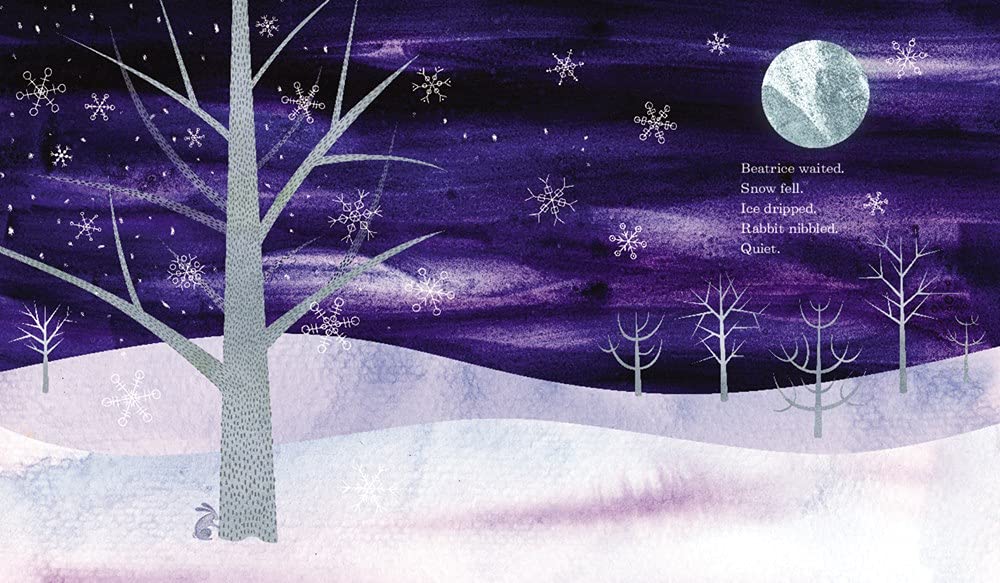
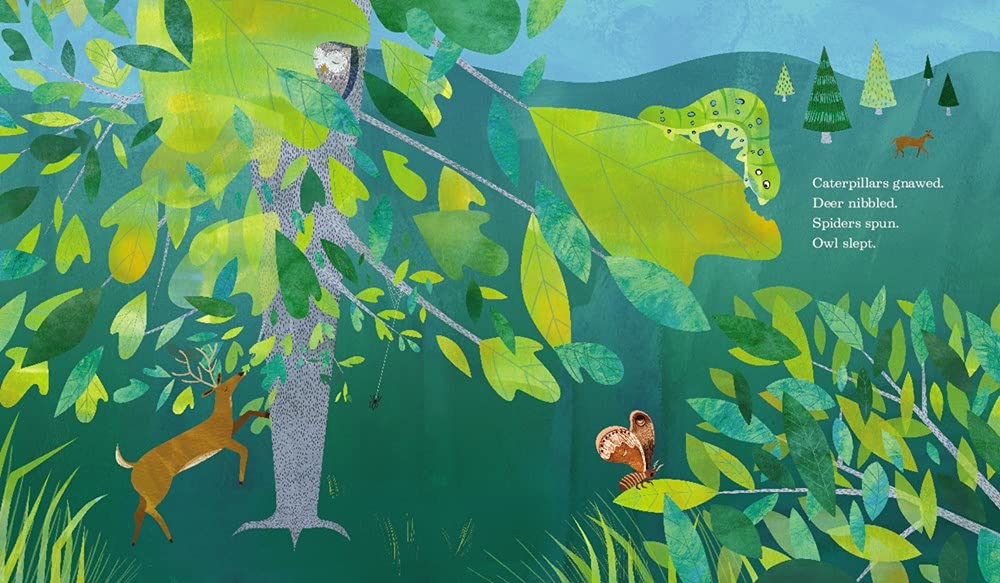
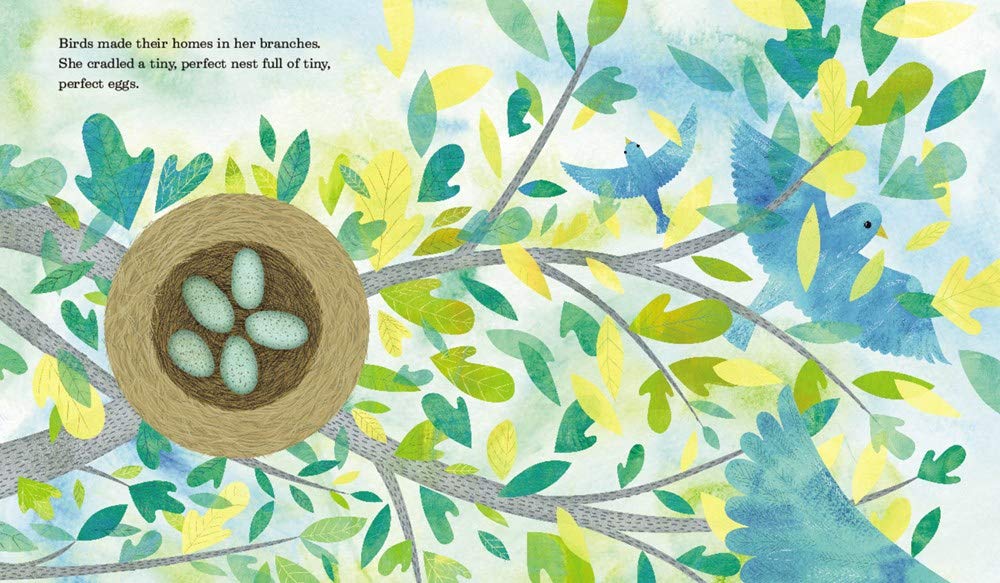
Since this is a book about trees, there are thousands of leaves in it. I loved drawing each and every leaf. There is something so satisfying about those shapes. I also love that on the cover some of the leaves are shiny. The publisher used a special varnish to make them look that way and if you tilt the book back and forth they shimmer!

What has surprised you most about the characters in your book?

Probably that Beatrice ended up having purple hair! I didn’t plan it that way when I started drawing her, but a lot of the book takes place at night, and the purple just seemed to fit with the deep blues in the sky.

(All shades of purple is my absolute favorite color, so I adore Beatrice’s hair)

Which book review or award has been most meaningful to you?

One of my reviewers called my book Kafkaesque and I really like that! Picture books can be weird and imaginative.

(For those of you (like me) not familiar with the term Kafkaesque, per Dictionary.com, Kafkaesque means relating to, characteristic of, or resembling the literary work of Franz Kafka; marked by a senseless, disorienting, often menacing complexity).

What are you most looking forward to at our book festival?

People! I’m so looking forward to seeing people in person!

I hope you will join me at the Gaithersburg Book Festival on May 21st to meet Joyce Hesselberth!

Joyce Hesselberth’s illustrations have appeared in national ad campaigns, theater productions, and major newspapers and magazines. She writes and illustrates children’s books, including “Mapping Sam,” which won a special mention award in the Bologna Ragazzi non-fiction category. Her most recent book, “Beatrice Was a Tree,” was published in 2021 by Greenwillow Books (HarperCollins). Her work has been recognized by American Illustration, Society of Illustrators, and the Art Directors’ Club of New York among others. She and her husband David Plunkert co-founded Spur Design in 1995. Spur Design is located in a renovated factory building in Baltimore, Md. Joyce is also a professor of illustration at Maryland Institute College of Art.

Moonwalking with Zetta & Lyn at GBF

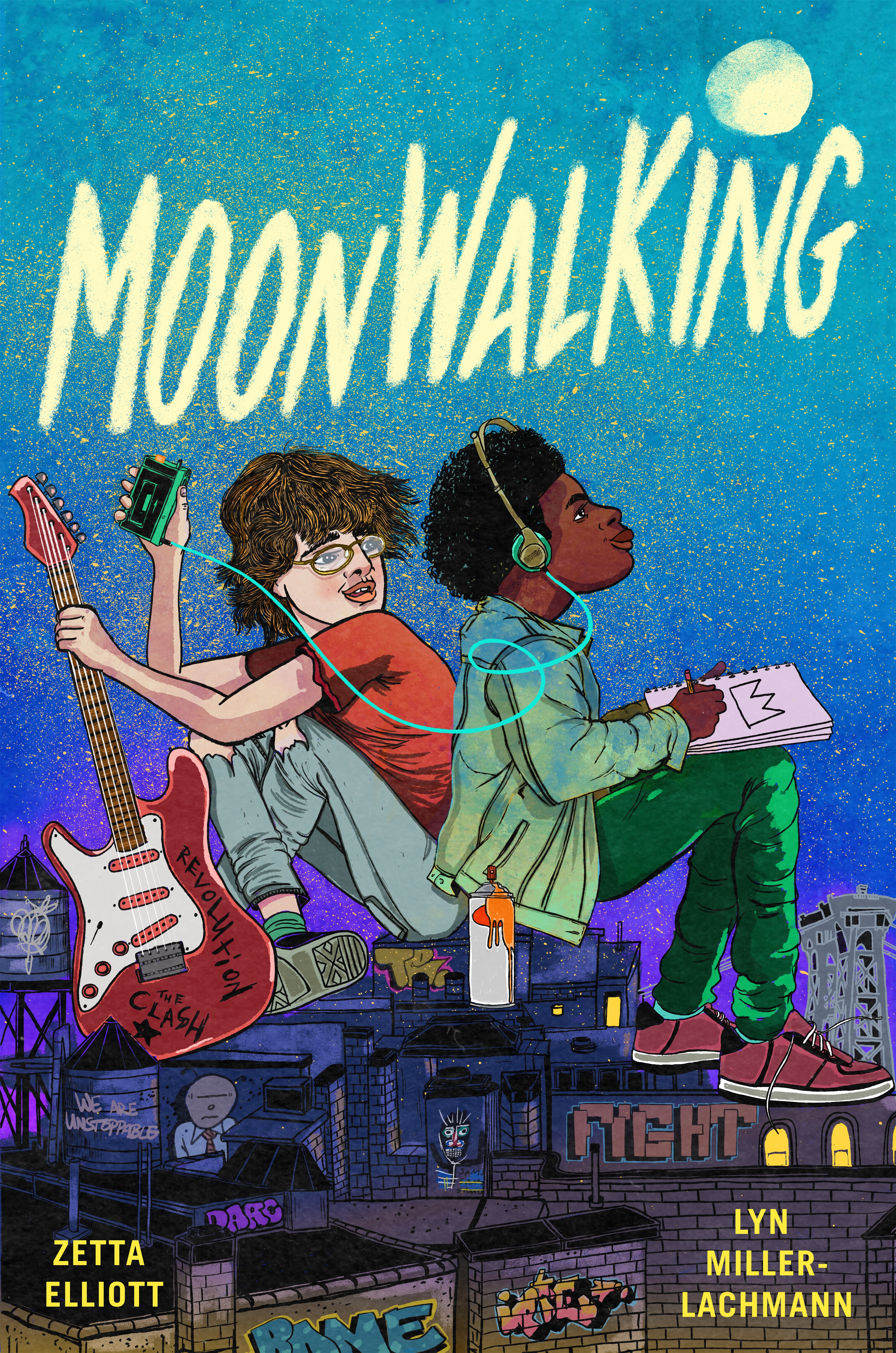
Zetta Elliott and Lyn Miller-Lachmann will be joining us as featured presenters at the Gaithersburg Book Festival on May 21, 2022, at our new location Gaithersburg’s Bohrer Park, 506 Frederick Ave, Gaithersburg, MD.  They will be sharing their co-authored book, Moonwalking, a stunning exploration of class, cross-racial friendships, and two boys’ search for belonging in a city as tumultuous and beautiful as their hearts.

Zetta and Lyn are presenting their book 12:15-1:05 pm in the Ogden Nash Pavilion. MCPS School Library Media Specialist, Joela Paik, will be moderating the discussion. Their presentation will be immediately followed by a book signing.

I hope you will enjoy my interview with Zetta and Lyn.

What is your writing space like?

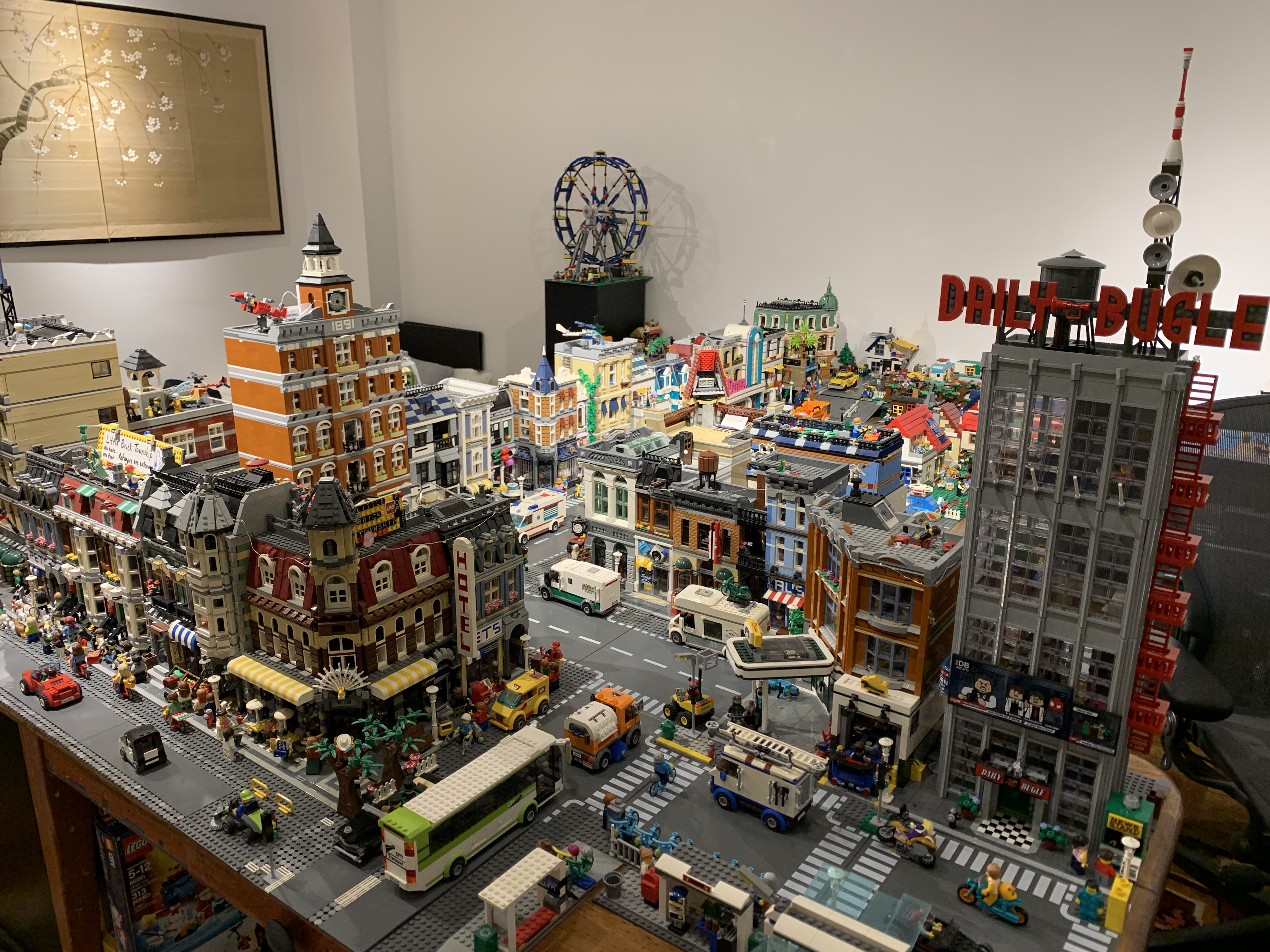
Lyn: The most unusual feature of my writing space is a giant LEGO town that I’ve been working on for 15 years. It features buildings in the LEGO Modulars series that I built according to the instructions, ones that I’ve modified to suit the needs of the town (such as adding extra floors to several of the buildings), and my original creations that I’ve designed to fit seamlessly into the display. Some of the minifigures in my town look like characters in my various books and are set up to portray scenes in those books. I have a vignette that includes JJ from Moonwalking, even though he leaves his own LEGO pieces behind when he moves from a Long Island suburb to his grandmother’s home in Brooklyn because he doesn’t have the space and has become obsessed with Joe Strummer and The Clash instead. 

Lyn’s Amazing LEGO Town – photo provided by the author.

Zetta: I tend to write all over my apartment even though I do have a designated office that’s bright and sunny (and purple!). I bought an adjustable desk so I can sit or stand when working, but I haven’t tried it out yet. I mostly sit at my desk for Zooms since the bookcase behind me shows off my dragon collection and my latest titles. By noon, I’ve usually moved into the living room—it has a bay window that lets in lots of light, and I can see and hear all the birds in the shared garden. I just moved to Chicago last fall so I’m still getting to know my neighborhood. Since writing for me is 70% dreaming, I spend a fair bit of time gazing out the window, or walking by the lake, or visiting the nearby Japanese garden to gather my thoughts and hear my characters’ voices.

How (or in what ways) do you hope librarians will promote your book?

Zetta: I trust librarians to pair young readers with the right book! I think Moonwalking will have broad appeal because of the alternating viewpoints and different backgrounds of the two main characters. Verse novels are often great entry points for reluctant readers so I hope poetry fans find our book but also folks who might think poetry isn’t for them (poetry is for everyone!). I’ve seen a lot of art in the libraries I’ve visited so it would be great to have a display with work by local graffiti artists and, of course, images of tagged trains from 1980s NYC and the art of Jean-Michel Basquiat. Lyn has already assembled The Clash playlists so maybe library websites could make those tracks available to patrons.

What do you hope your readers will learn from reading your book?

Zetta: I tried to create an entire village in Moonwalking and I hope readers will think about their own communities in new ways after reading our book. JJ and Pie seem like opposites but when you go beneath the surface, there are enough similarities to sustain a connection. Pie wants more from his life, he’s outgrowing his childhood friends, and his teacher is nourishing his interest in art. For JJ, playing an instrument is a way to express himself and connect to the themes of resistance in punk music. Things were kind of hectic at home when I was Pie’s age so I hope kids dealing with family drama realize they’re allowed to BE kids and can search for and find adults in their community who can provide the help they need.

What is one (or more) thing(s) that you really want your readers to know about you?

Lyn: Like JJ, I was not diagnosed as autistic when I was in school, and I didn’t understand why I was bullied and it was so hard for me to make and keep friends. I had a whole lot of other diagnoses that tried to explain, for instance, why I never looked people in the eye, so I wore an eyepatch for months and had to do exercises that never worked. I never had a problem focusing when I read books, but eye-to-eye contact intimidated me. I also experienced selective mutism, and in fourth grade stopped speaking in school altogether for about three months. That time of being too terrified to speak, even if I wanted to, is what inspired JJ’s invisibility when he goes to public school for the first time.
What do you love most about the cover art and illustrations in your book?   

Lyn: I love the way David Cooper evokes early 1980s Williamsburg, pre-gentrification, with the Domino Sugar factory, the Williamsburg Bridge, the lights of Manhattan, and the graffiti murals on the sides of buildings. One can see the inspiration for the cover in Zetta/Pie’s powerful poems “Bomb” and “Sugarland” right at the beginning, and they set the tone for everything that comes after.

What has surprised you most about the characters in your book?

Lyn: The most surprising thing for me was how different from me JJ turned out to be, even though we’re both autistic and experience the same confusion and fear in new situations. There’s a saying, “When you’ve met one autistic person, you’ve met one autistic person,” and it’s true! Kiara in my earlier middle grade novel Rogue was a more autobiographical protagonist, with incidents lifted from my life, but JJ’s life, abilities, and interests are different. My parents gave me music lessons, and I hated them, but JJ embraces music as a way of communicating what he can’t express in words. Except for brief episodes of selective mutism, I was highly verbal and an A student in school. I didn’t really experience what JJ does as a struggling C student until I was out in the workplace and realized that exceptional academic skills don’t always lead to success outside of school.

Which book review or award has been most meaningful to you?

Zetta: My books don’t always get reviewed but I think the most meaningful feedback definitely comes from young readers and parents or educators who are sharing books with kids. I often hear from parents who express gratitude for the books I write because like me, they remember all too well how it felt to grow up not seeing yourself in the stories you loved. Teachers tell me that students with little interest in reading became more engaged after finding one of my books—even going on to write their own story. Awards are nice and my career in kid lit started with the Lee & Low New Voices Honor Award for Bird, but so many excellent books never get that sort of recognition…it’s nice to have shiny stickers on the cover of your book but what matters most to me is that my stories resonate with a broad range of readers.

What are you most looking forward to at our book festival?

Lyn: This festival is a first for me. I’ve always been on the other side of the table, listening to the authors’ presentations and hoping to meet them and get my books signed. I look forward to meeting young readers and their families, talking to them about verse novels, how Zetta and I came to write this book, and my process for creating a protagonist on the autism spectrum who is very different from me even though I’m also autistic. I’m especially eager to be at the Gaithersburg Book Festival because the pandemic has isolated us for the past two years and canceled most in-person book events. While going out in public can be stressful for me, I don’t do well with isolation either. It’s too easy for me to hole up with my LEGO town and let my hard-won social skills wither.

I hope you will come to Gaithersburg Book Festival on May 21st to meet these two authors!

Zetta Elliott is a black feminist writer of poetry, plays, essays, novels and stories for children. Her poetry has been published in “We Rise, We Resist, We Raise our Voices,” and her picture book, “Bird,” won the Honor Award in Lee & Low Books’ New Voices Contest and the Paterson Prize for Books for Young Readers. Her latest book is “Moonwalking.” She lives in West Philadelphia.

Lyn Miller-Lachmann is an author, teacher and librarian. Her latest book is “Moonwalking.” As an adult, she was diagnosed with Asperger’s syndrome and delves into her diagnosis often in her writing. Lyn received her Masters in Library and Information Science from the University of Wisconsin, Madison, and edited the journal “MultiCultural Review” for 16 years. In 2012, she received my Masters in Fine Arts in Writing for Children and Young Adults from Vermont College of Fine Arts. She lives in New York City.