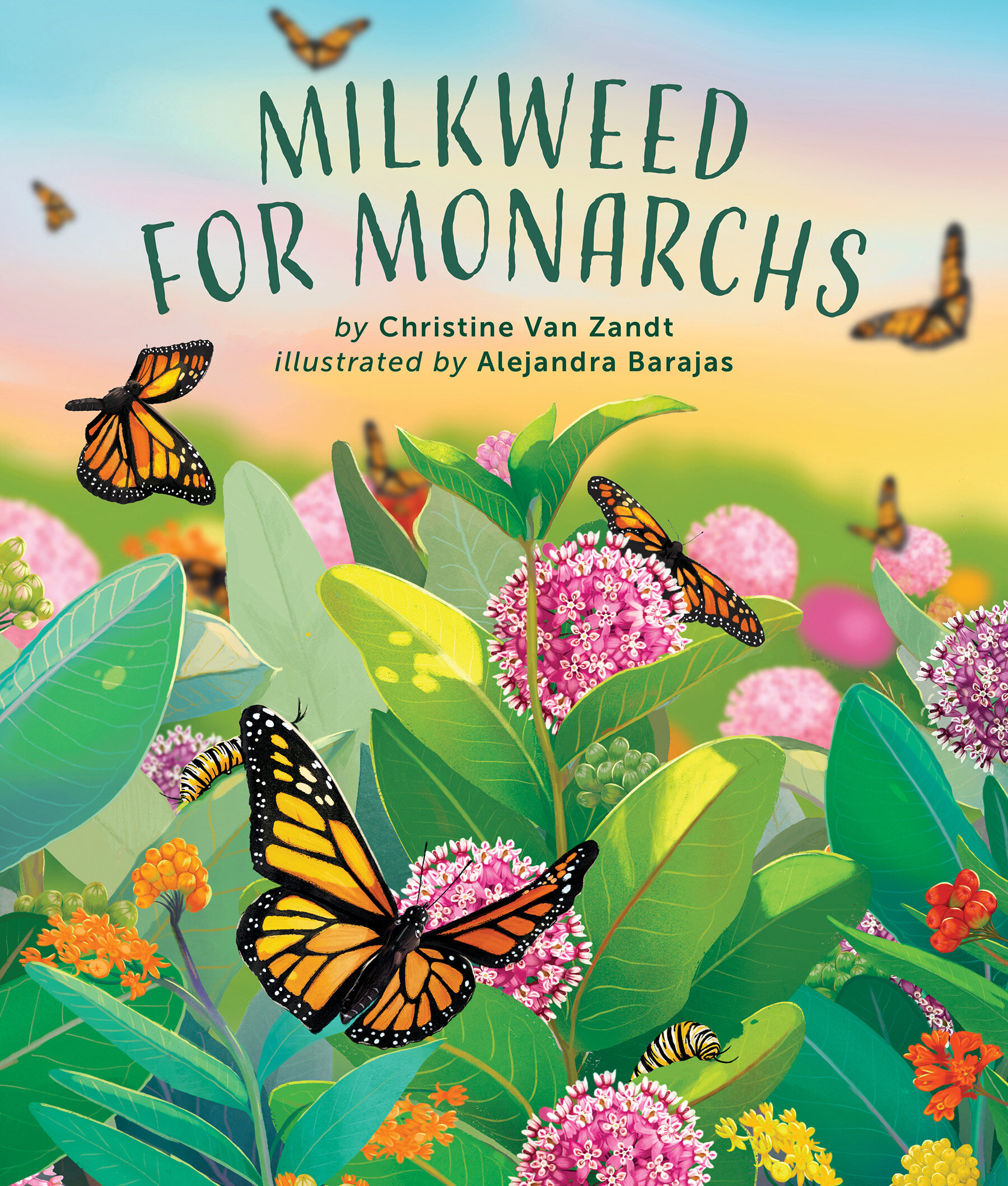
As a burgeoning environmentalist, I have become increasingly interested in pollinators which are vital to our ecology. Specifically focusing on my local ecology here in Gaithersburg, I was fortunate to have the help of Nature Forward’s GreenKids program in creating our first pollinator garden with our Green Team, and we have continued to expand our pollinator gardens throughout our school’s courtyard. Always on the lookout for good environmental books to add to my library collection, and to use in my lesson plans, this spring I connected with Christine Van Zandt, who wrote, Milkweed for Monarchs (Beaming Books, ©2024).
Milkweed for Monarchs is a wonderful resource for young lepidopterists. The rhyming text follows the life of the female Monarch butterfly, while the additional facts add to the depth of learning. Did you know, for example, that the process of emerging from the chrysalis is called eclosion?
The bright and beautiful illustrations, digitally rendered by Alejandra Baraja, significantly add to the level of the reader’s understanding. The spreads where she illustrated how the chrysalis transforms in the pupa stage are fascinating.
In the backmatter, author Christine Van Zandt reminds us how important Monarch butterflies are to our ecosystem, that we humans are important to their survival, and that there are four simple ways that we can help them. A selected bibliography is included for those who would like to learn more as part of their environmental education and advocacy.
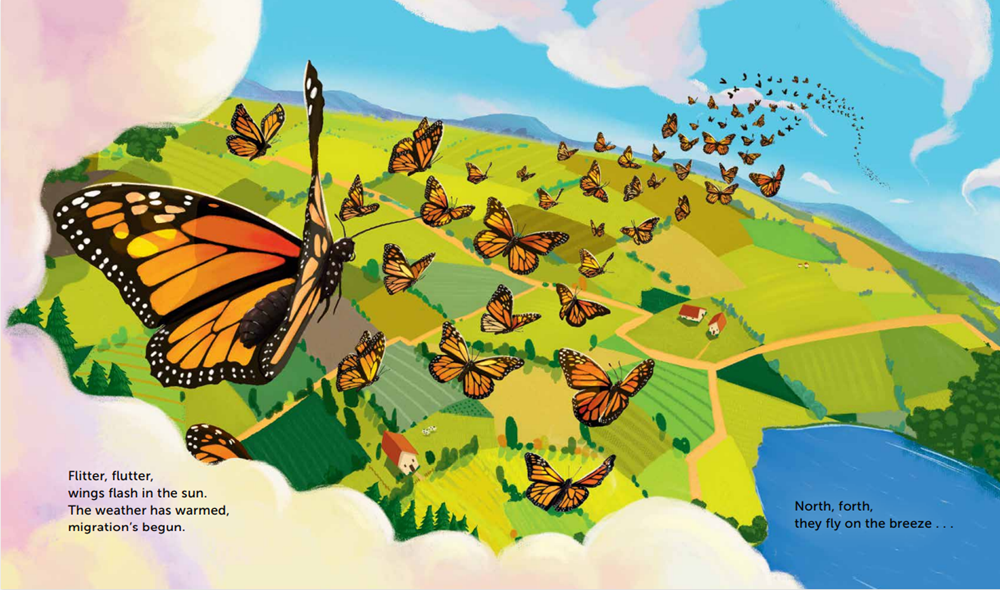
When creating lesson plans for my elementary students, I pull together a variety of resources, almost always with a picture book as the anchor text. I found some wonderful videos to accompany Milkweed for Monarchs and utilized the Beaming Books Discussion Guide for Parents and Educators as well. Feel free to create a copy of my Monarch Butterfly lesson slides linked here to use with your students and young lepidopterists.
Please enjoy my interview with Christine Van Zandt that follows.
Who encouraged or inspired you to become an author?
Just as some people need to run or paint, I need to write. My dad encouraged me to change from majoring in business (a seemingly practical choice) to English literature because he knew writing was an integral part of me.
He believed that since we spend huge amounts of time at work, we should pursue careers doing things we love, choose something that makes us happy. (Thanks, Dad!) Because of his advice, my career path led me to becoming an editor and writer. Whether I’m helping someone with their book or writing my own, I enjoy what I do every day!
What is your writing space like?
We live in a small place so my writing area is in the middle of it all. Fun fact: I have a disco ball hanging behind my monitor!
What was your inspiration for writing?
During the pandemic, we bought our first milkweed plant, vaguely aware that milkweed somehow helped butterflies. Soon we had eggs and caterpillars but none of them made it to butterflies—they were eaten by raccoons, birds, the small ones carried off by ants.
I wanted to know all I could about monarchs and was shocked to find our western monarch was near extinction. I grew up in Northern California; my family went to the coast to see the trees cloaked with monarchs overwintering here. That was magical! However, the monarchs’ population had dropped from millions to a couple of thousand! If I had realized this, I would have planted milkweed sooner. As much as I wanted to write a book kids would enjoy, I also wanted the adults to learn how critical it is for anyone who’s able to plant some milkweed and to not use pesticides in their yards.
What do you love most about the cover art and illustrations in your book?
The illustrator, Alejandra Barajas, did an amazing job—I love it all! The cover is gorgeous and all throughout her bright, upbeat, colorful art accurately depicts the various stages of a monarch’s life.
How (or in what ways) do you hope librarians will promote your books?
I hope that librarians, educators, and anyone looking for activities and lesson plans finds the wonderful Educator Guide that’s available for free at Milkweed for Monarchs | Beaming Books. This six-page illustrated guide provides fun and educational activities that kids will enjoy.
I also hope that more milkweed gets planted because the western monarch really needs our help.
Who is the reader you are writing for? Please describe them.
I’m hoping to reach that kid, who like me, enjoys learning about insects and digging in the dirt. There are countless things going on that we don’t notice until we stop and watch. It’s exciting watching all the interactions. In our yard, there’s often a dominant male monarch butterfly that protects his territory. He allows females into the area to lay eggs on his milkweed plants. Hunting around to find eggs is a thrill. Caterpillars go through so many changes and they’re very active. I’m still surprised where they turn up. We’ve had chrysalises in the strangest places. If you’re someone who appreciates bugs and plants, then I’m absolutely writing for you.
But also I hope to reach readers who may not realize that monarch caterpillars, like koalas or pandas, can only eat one type of food (milkweed). That’s why the title of the book is Milkweed for Monarchs. Without milkweed, the monarch cannot continue.
What is one (or more) thing(s) that you really want your readers to know about you?
Our yard is small (many plants are in pots), but the garden is my happy place, nurturing all kinds of life. I have a lot of milkweed for the monarch caterpillars and flowers for the butterflies. This year, I added heirloom tomatoes. The first to ripen were sweet and delicious yellow cherries. Nothing beats a freshly picked and sun-warm tomato.
Which book review or award has been most meaningful to you?
Every review matters to me because book reviews really help authors. I post as many reviews of books as I can because I know that a few minutes of my time makes a difference to that author and their book.
Milkweed for Monarchs has recently been shortlisted for two prestigious awards. Both nominations are exciting. There are many amazing books. Having my book recognized means so much to me.
What message do you have for your readers?
We can’t do everything but we can do something. Find your “something” and put your heart into it.
Christine, thanks so much for writing this beautiful book (and for Alejandra’s vibrant illustrations)!
You’re so kind! I appreciate it.
Want to learn more about Christine? Explore the links below!
Christine Van Zandt’s website: Christine Van Zandt
Goodreads with Ronna blog interview: An Interview with Author Christine Van Zandt
SCBWI-LA Kite Tales: The Sue Alexander Grant is Open for Submissions! | Kite Tales
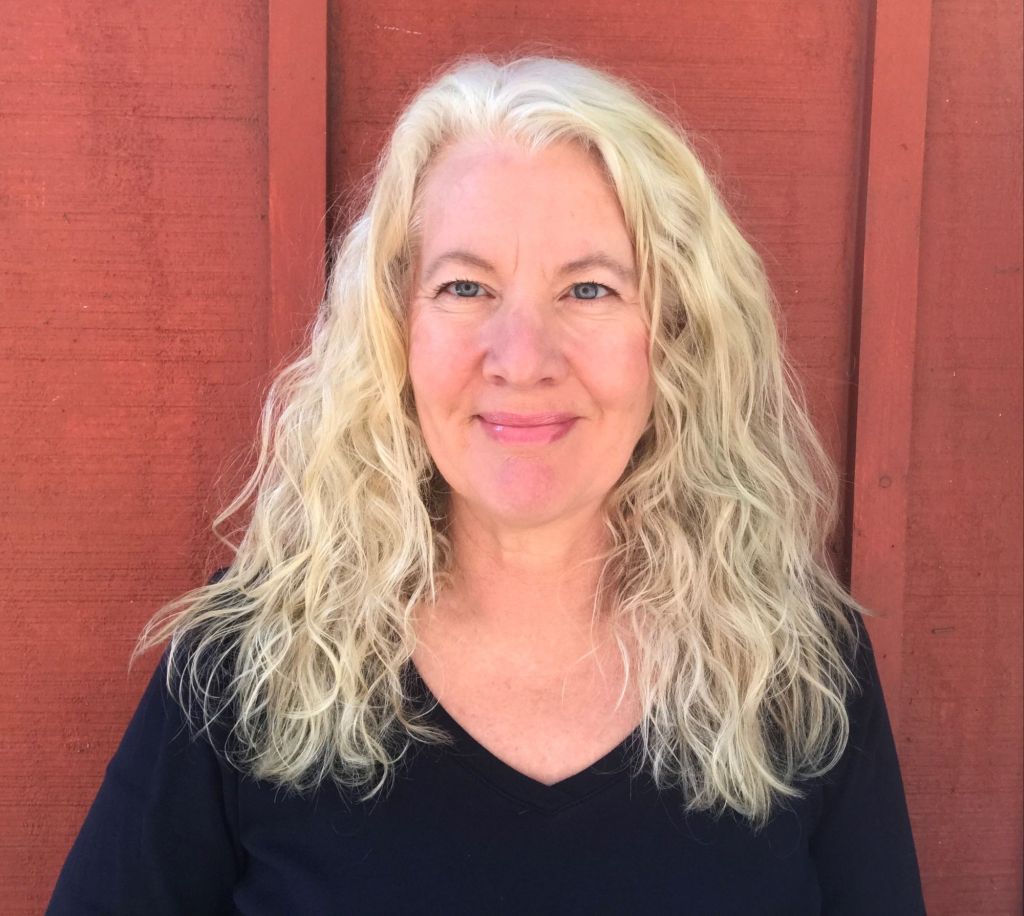
Follow Christine on the socials here: Facebook | Instagram | LinkedIn | Twitter/X



 The Creative Librarian