When I’m in the process of writing a book, wherever I am is where I am writing. It’s not a process that has an easy on/off switch. So sometimes I’ll be writing at a desk, other times it’s on a couch watching TV, occasionally it’s laying in bed trying to get to sleep. Much of my writing happens while pacing around my apartment. For me, sitting still isn’t really conducive to creating a story, so I’ll move around a lot. I’m probably most productive writing-wise when I’m doing a chore like laundry or washing dishes!
How (or in what ways) do you hope librarians will promote your book?
The best promotion I’d say is just recommending my work. Being familiar enough with it and other books like it that you can say, “oh, you like that book? Then you might also like THIS book.”
What do you hope your readers will learn from reading your book?
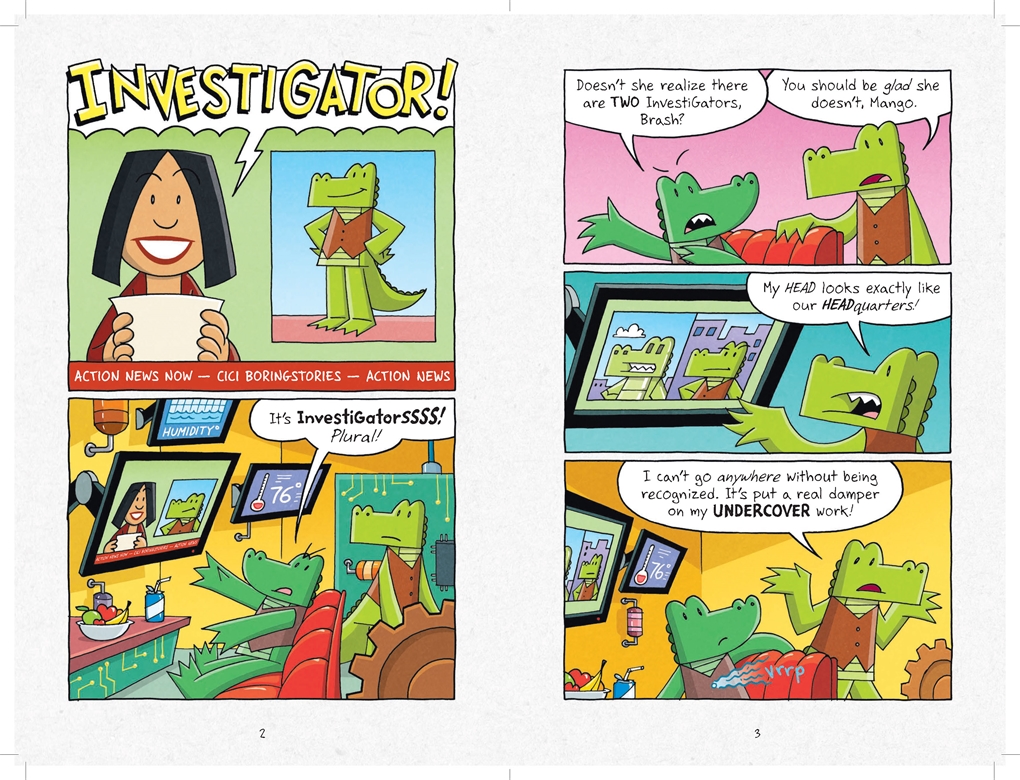
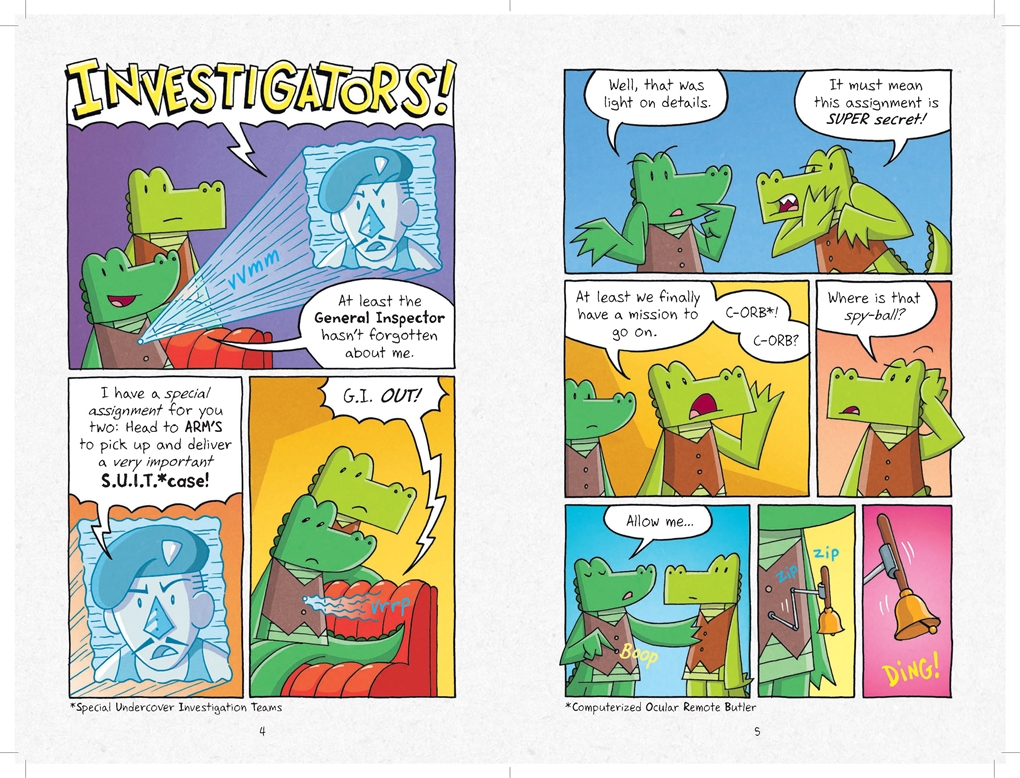
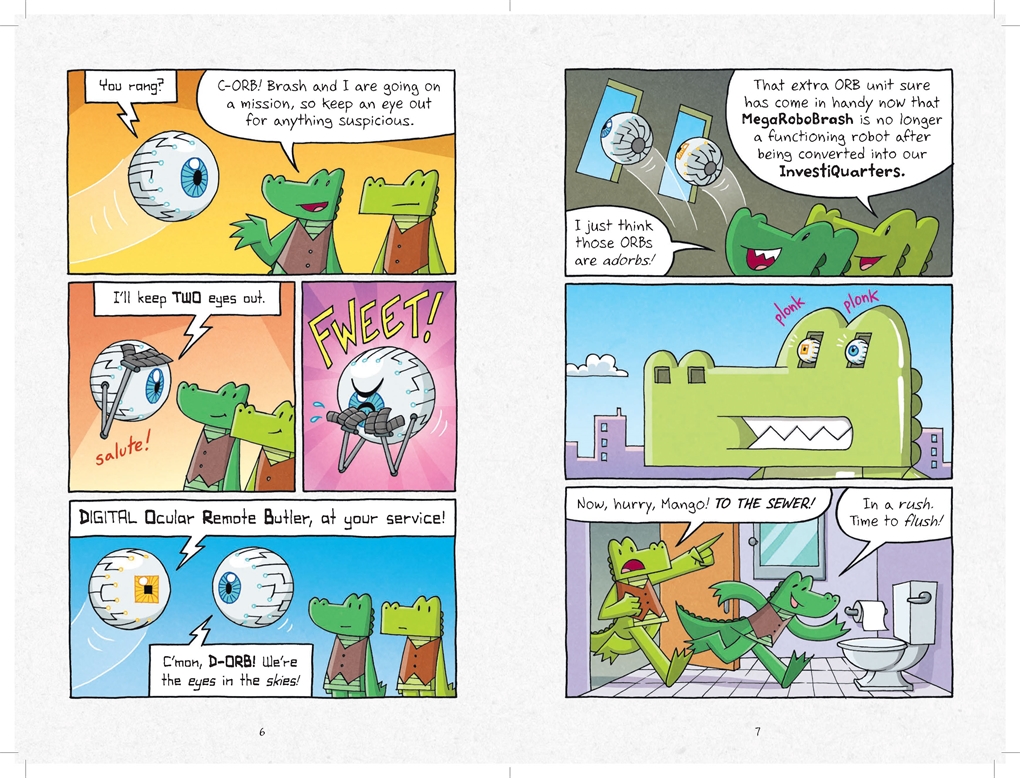
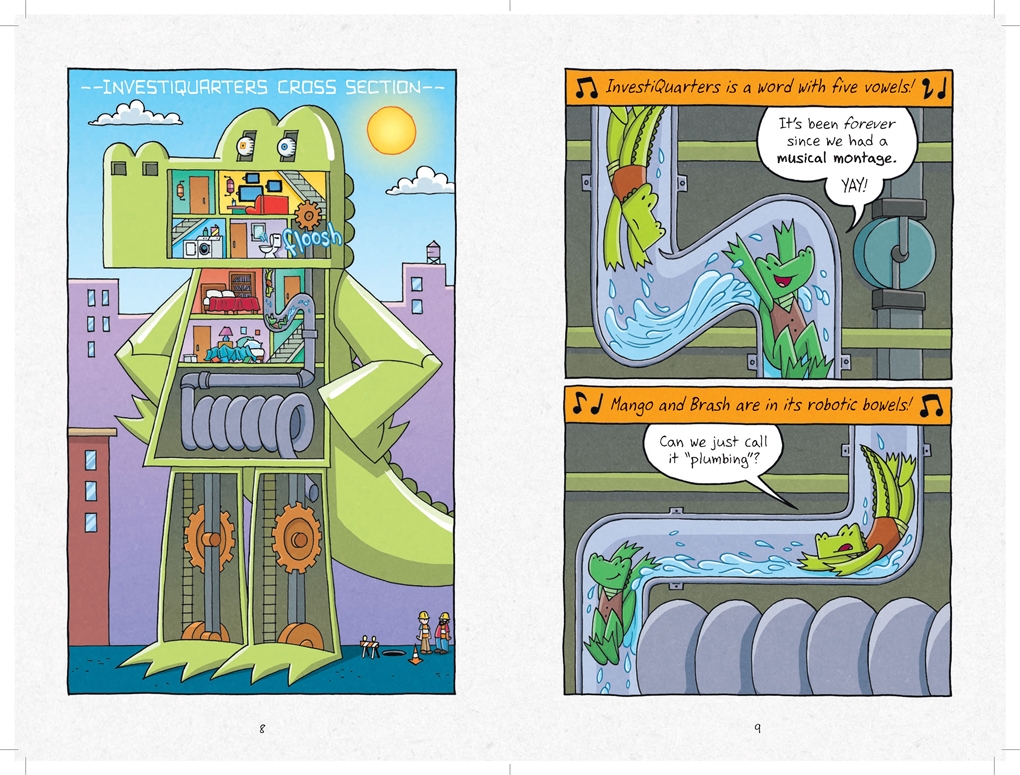
One thing I hope they’ll get out of my books is an appreciation for the connection between text and visuals when it comes to this type of storytelling. And maybe they’ll also learn the occasional big or obscure word.
Who is the reader you are writing for? Describe them.
My target audience is, basically, myself when I was a kid. I try to harness the types of stories and humor and cartoons that I liked when I was little, and make something that young me would find entertaining. And hopefully kids today will find it enjoyable as well.
What is one (or more) thing(s) that you really want your readers to know about you?
Hmm… I guess I’d want them to know how much I appreciate hearing that they are enjoying my books! And if there’s any occasion that calls for such a thing, please send me cheese instead of flowers.
What do you love most about the cover art and illustrations in your book?
The part about my illustrations I like the most is when they’re DONE and I get to hold the books in my hands. It takes a lot of drawings to make a graphic novel, and while it’s fun making them, it’s very satisfying when the art is finished and ready to be seen by readers!
What has surprised you most about the characters in your book?
What probably is most surprising about a few characters is how they just showed up out of nowhere. When I’m making a book, I usually start with a short outline, and then I come up with specific dialog and detailed situations that I sketch out. Many times this results in a joke that wasn’t planned, and often it results in a funny character insetting themselves into the story unexpectedly. Characters like Dr. Doodldoo and C-ORB were not planned at all up until the moment I sketched out the page each one first appears in.
Which book review or award has been most meaningful to you?
These aren’t really reviews or awards, but I’d say the response that has meant a lot to me is the appreciation my work gets from readers who *aren’t* actually the target demographic. While I want these books to connect with the audience I’m aiming them at, it’s nice to know that there are readers outside of that window that connect with the work as well. So when I hear from them or see fan art they’ve done it makes me feel like I’ve accomplished creating something that works on different levels.
What are you most looking forward to at our book festival?
I’m most looking forward to meeting readers! And after a couple years of mostly virtual conventions and festivals, it will be nice to meet some in person.
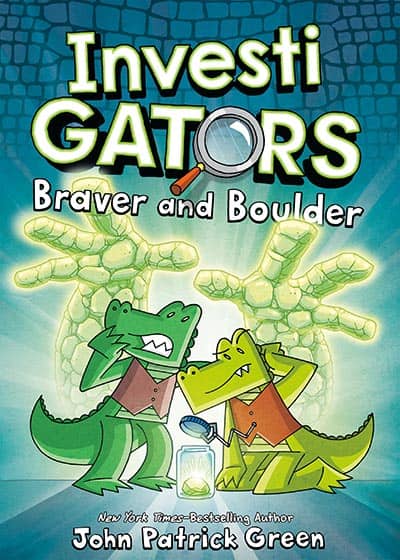
John Patrick Green is a human with the human job of making books about animals with human jobs, such as “Hippopotamister,” “Kitten Construction Company” and “InvestiGators.” John is definitely not just a bunch of animals wearing a human suit pretending to have a human job. He is also the artist and co-creator of the graphic novel series “Teen Boat!”, with writer Dave Roman. John lives in Brooklyn, N.Y., in an apartment that doesn’t allow animals other than the ones living in his head.
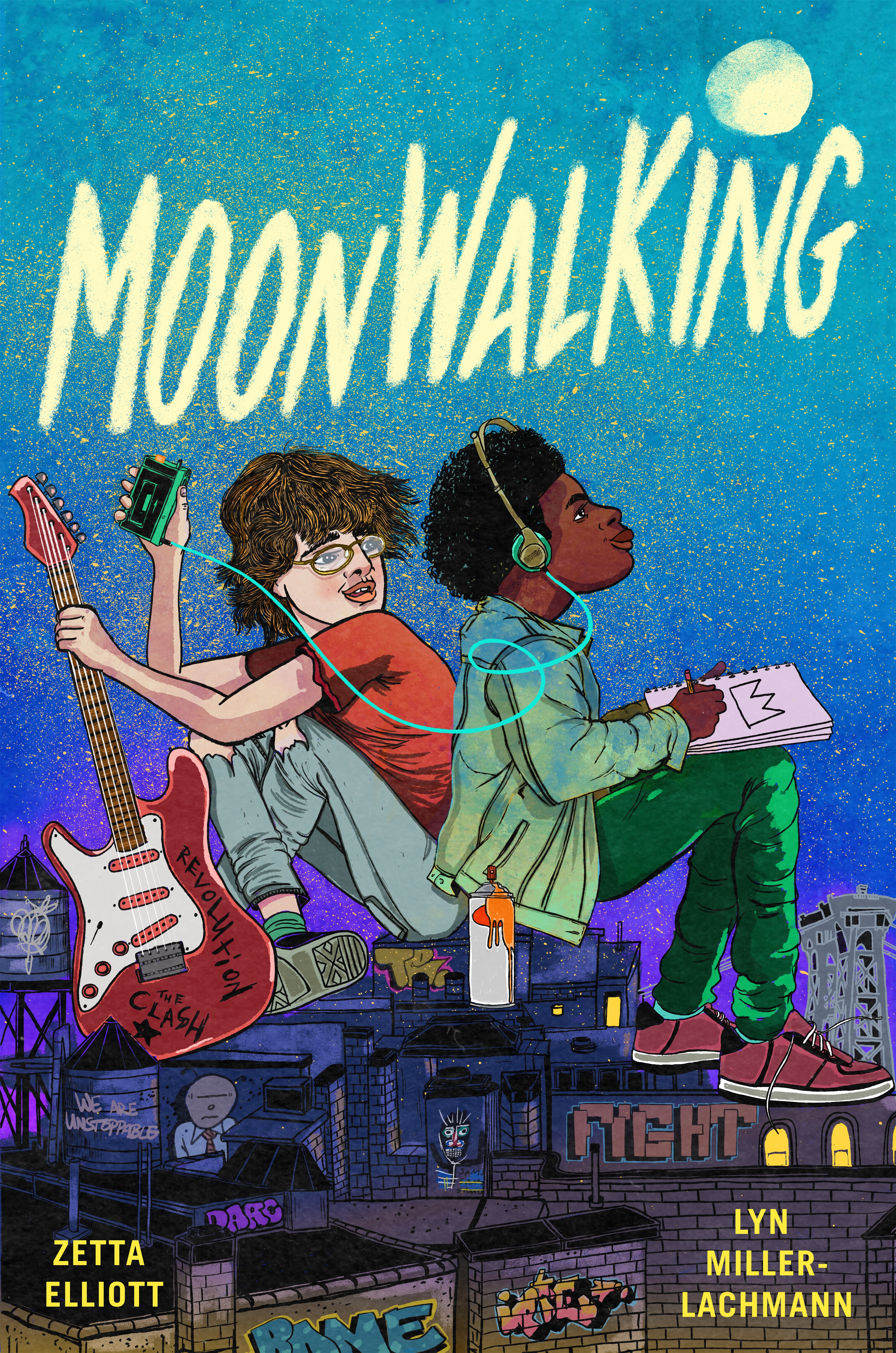
Zetta Elliott andLyn Miller-Lachmann will be joining us as featured presenters at the Gaithersburg Book Festival on May 21, 2022, at our new location Gaithersburg’s Bohrer Park, 506 Frederick Ave, Gaithersburg, MD. They will be sharing their co-authored book, Moonwalking, a stunning exploration of class, cross-racial friendships, and two boys’ search for belonging in a city as tumultuous and beautiful as their hearts.
Zetta and Lyn are presenting their book 12:15-1:05 pm in the Ogden Nash Pavilion. MCPS School Library Media Specialist, Joela Paik, will be moderating the discussion. Their presentation will be immediately followed by a book signing.
I hope you will enjoy my interview with Zetta and Lyn.
What is your writing space like?
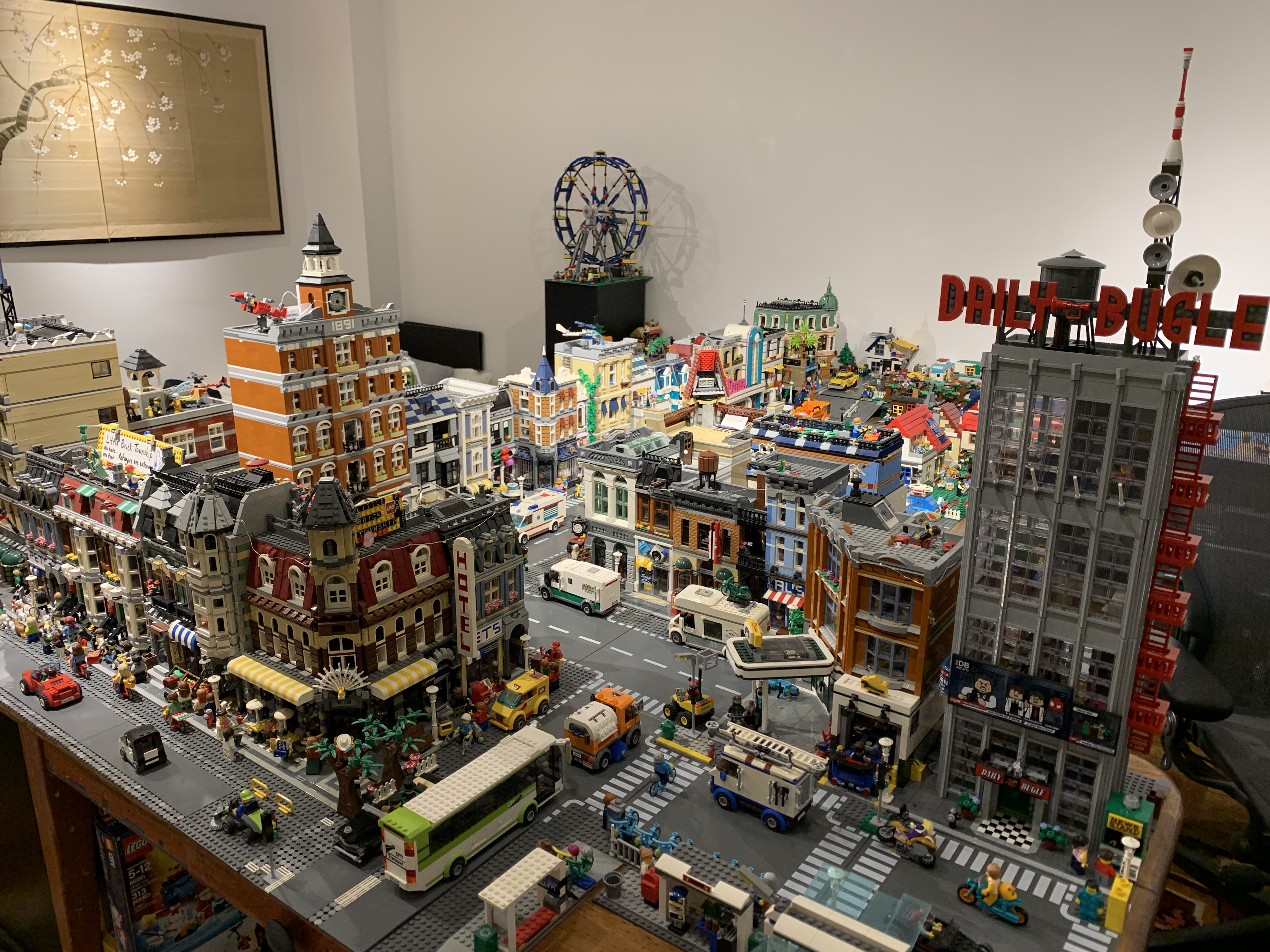
Lyn: The most unusual feature of my writing space is a giant LEGO town that I’ve been working on for 15 years. It features buildings in the LEGO Modulars series that I built according to the instructions, ones that I’ve modified to suit the needs of the town (such as adding extra floors to several of the buildings), and my original creations that I’ve designed to fit seamlessly into the display. Some of the minifigures in my town look like characters in my various books and are set up to portray scenes in those books. I have a vignette that includes JJ from Moonwalking, even though he leaves his own LEGO pieces behind when he moves from a Long Island suburb to his grandmother’s home in Brooklyn because he doesn’t have the space and has become obsessed with Joe Strummer and The Clash instead.
Lyn’s Amazing LEGO Town – photo provided by the author.
Zetta: I tend to write all over my apartment even though I do have a designated office that’s bright and sunny (and purple!). I bought an adjustable desk so I can sit or stand when working, but I haven’t tried it out yet. I mostly sit at my desk for Zooms since the bookcase behind me shows off my dragon collection and my latest titles. By noon, I’ve usually moved into the living room—it has a bay window that lets in lots of light, and I can see and hear all the birds in the shared garden. I just moved to Chicago last fall so I’m still getting to know my neighborhood. Since writing for me is 70% dreaming, I spend a fair bit of time gazing out the window, or walking by the lake, or visiting the nearby Japanese garden to gather my thoughts and hear my characters’ voices.
How (or in what ways) do you hope librarians will promote your book?
Zetta: I trust librarians to pair young readers with the right book! I think Moonwalking will have broad appeal because of the alternating viewpoints and different backgrounds of the two main characters. Verse novels are often great entry points for reluctant readers so I hope poetry fans find our book but also folks who might think poetry isn’t for them (poetry is for everyone!). I’ve seen a lot of art in the libraries I’ve visited so it would be great to have a display with work by local graffiti artists and, of course, images of tagged trains from 1980s NYC and the art of Jean-Michel Basquiat. Lyn has already assembled The Clash playlists so maybe library websites could make those tracks available to patrons.
What do you hope your readers will learn from reading your book?
Zetta: I tried to create an entire village in Moonwalking and I hope readers will think about their own communities in new ways after reading our book. JJ and Pie seem like opposites but when you go beneath the surface, there are enough similarities to sustain a connection. Pie wants more from his life, he’s outgrowing his childhood friends, and his teacher is nourishing his interest in art. For JJ, playing an instrument is a way to express himself and connect to the themes of resistance in punk music. Things were kind of hectic at home when I was Pie’s age so I hope kids dealing with family drama realize they’re allowed to BE kids and can search for and find adults in their community who can provide the help they need.
What is one (or more) thing(s) that you really want your readers to know about you?
Lyn: Like JJ, I was not diagnosed as autistic when I was in school, and I didn’t understand why I was bullied and it was so hard for me to make and keep friends. I had a whole lot of other diagnoses that tried to explain, for instance, why I never looked people in the eye, so I wore an eyepatch for months and had to do exercises that never worked. I never had a problem focusing when I read books, but eye-to-eye contact intimidated me. I also experienced selective mutism, and in fourth grade stopped speaking in school altogether for about three months. That time of being too terrified to speak, even if I wanted to, is what inspired JJ’s invisibility when he goes to public school for the first time. What do you love most about the cover art and illustrations in your book?
Lyn: I love the way David Cooper evokes early 1980s Williamsburg, pre-gentrification, with the Domino Sugar factory, the Williamsburg Bridge, the lights of Manhattan, and the graffiti murals on the sides of buildings. One can see the inspiration for the cover in Zetta/Pie’s powerful poems “Bomb” and “Sugarland” right at the beginning, and they set the tone for everything that comes after.
What has surprised you most about the characters in your book?
Lyn: The most surprising thing for me was how different from me JJ turned out to be, even though we’re both autistic and experience the same confusion and fear in new situations. There’s a saying, “When you’ve met one autistic person, you’ve met one autistic person,” and it’s true! Kiara in my earlier middle grade novel Rogue was a more autobiographical protagonist, with incidents lifted from my life, but JJ’s life, abilities, and interests are different. My parents gave me music lessons, and I hated them, but JJ embraces music as a way of communicating what he can’t express in words. Except for brief episodes of selective mutism, I was highly verbal and an A student in school. I didn’t really experience what JJ does as a struggling C student until I was out in the workplace and realized that exceptional academic skills don’t always lead to success outside of school.
Which book review or award has been most meaningful to you?
Zetta: My books don’t always get reviewed but I think the most meaningful feedback definitely comes from young readers and parents or educators who are sharing books with kids. I often hear from parents who express gratitude for the books I write because like me, they remember all too well how it felt to grow up not seeing yourself in the stories you loved. Teachers tell me that students with little interest in reading became more engaged after finding one of my books—even going on to write their own story. Awards are nice and my career in kid lit started with the Lee & Low New Voices Honor Award for Bird, but so many excellent books never get that sort of recognition…it’s nice to have shiny stickers on the cover of your book but what matters most to me is that my stories resonate with a broad range of readers.
What are you most looking forward to at our book festival?
Lyn: This festival is a first for me. I’ve always been on the other side of the table, listening to the authors’ presentations and hoping to meet them and get my books signed. I look forward to meeting young readers and their families, talking to them about verse novels, how Zetta and I came to write this book, and my process for creating a protagonist on the autism spectrum who is very different from me even though I’m also autistic. I’m especially eager to be at the Gaithersburg Book Festival because the pandemic has isolated us for the past two years and canceled most in-person book events. While going out in public can be stressful for me, I don’t do well with isolation either. It’s too easy for me to hole up with my LEGO town and let my hard-won social skills wither.
Zetta Elliott is a black feminist writer of poetry, plays, essays, novels and stories for children. Her poetry has been published in “We Rise, We Resist, We Raise our Voices,” and her picture book, “Bird,” won the Honor Award in Lee & Low Books’ New Voices Contest and the Paterson Prize for Books for Young Readers. Her latest book is “Moonwalking.” She lives in West Philadelphia.
Lyn Miller-Lachmann is an author, teacher and librarian. Her latest book is “Moonwalking.” As an adult, she was diagnosed with Asperger’s syndrome and delves into her diagnosis often in her writing. Lyn received her Masters in Library and Information Science from the University of Wisconsin, Madison, and edited the journal “MultiCultural Review” for 16 years. In 2012, she received my Masters in Fine Arts in Writing for Children and Young Adults from Vermont College of Fine Arts. She lives in New York City.
Hena Khan is a local author, having been born and raised in Montgomery County. Since she was a little girl she has had her nose in a book, so it is not surprising that she became a children’s author – and there are many, many young readers thankful she did, too! My elementary school readers love her books, especially Amina’s Voice, Amina’s Song, and More to the Story, and were excited to learn that she wrote books with boy protagonists, too. Zayd Saleem has made his appearance in my library, and his books are also becoming favorites. If you haven’t read her Muslim Book Of Concepts picture books, beautifully illustrated by Mehrdokht Amini, you need to do so!
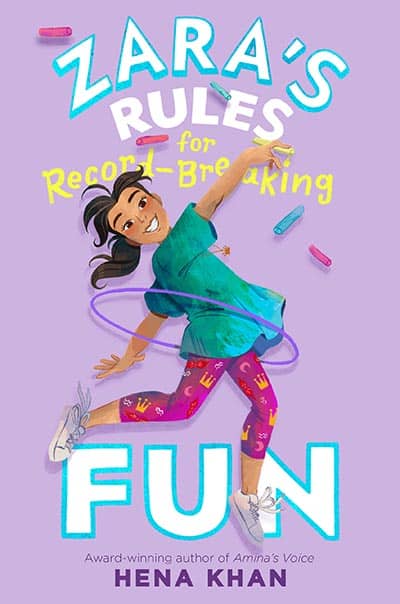
Hena will be presenting her latest book, Zara’s Rules for Record-Breaking Fun, the first in a humor-filled middle grade series starring a young Muslim girl with an endless list of hobbies who searches for ways to maximize fun for her family and neighborhood friends.
I hope you enjoy this interview with the talentedHena Khan.
What is your writing space like?
It varies! I have a home office with a desktop computer and lots of bookshelves in it where I work when I need quiet. But I also move around my house with a laptop, sitting at the dining table or even on my couch at times!
How (or in what ways) do you hope librarians will promote your book?
Librarians are amazing and do so much to support me, so I want to extend a huge and heartfelt thank you to you all! I hope you will continue to focus on the universal aspects of my books and highlight what might appeal most to all kids, in addition to the diversity component. I always appreciate the book tastings, read-alouds, book clubs, battles of the books, and the many other creative ways librarians share my work with readers!
What do you hope your readers will learn from reading your book?
I hope they are entertained most of all, and that they find a friend in Zara who they want to read more about in the next book in the series. I try not to be overly message-oriented, but there are themes of friendship and overcoming jealousy and the need to be in charge that might prove helpful to readers. And I hope kids will appreciate getting to know all the personalities in Zara’s multifaceted and fun Pakistani American Muslim extended family.
Who is the reader you are writing for? Describe them.
This book is for the reader who wants a lighthearted and fun-filled read that will make them laugh, but who also craves rich character development and some depth and substance in the story.
What is one (or more) thing(s) that you really want your readers to know about you?
I’d like them to know that many of the things that happen to Zara in this book are taken from my childhood, and that many of the characters are inspired by my real-life friends and neighbors growing up. For that reason, these books are especially close to my heart!
What do you love most about the cover art and illustrations in your book?
I adore the energy and emotion that Wastana managed to create on the cover illustration, along with the incredible design, including the fonts, color choices, turquoise foil and embossed images that make it pop. I would have gravitated toward this cover as a kid! Plus, all the illustrations in the book capture the personalities and emotions of the characters so well.
What has surprised you most about the characters in your book?
I always secretly scoffed at the idea of characters coming to life for writers and taking over the storytelling process, but now that I’ve written about these characters in six books, they are so real to me! I can picture them when I write and imagine their voices and what they would likely do or say, which makes it super fun for me.
Which book review or award has been most meaningful to you?
I’m so grateful for every review and award, but apart from kids’ reviews which are by far my favorite, the most meaningful was probably the first review I got from Publisher’s Weekly for Night of the Moon, my first picture book, way back in 2008. I didn’t know anything about the significance of editorial reviews back then, but I felt so validated when the reviewer said that I “portray Muslims as another vibrant thread in the great American tapestry, emphasizing the bonds of family, community and spirituality” since that was, and remains, a goal of mine.
What are you most looking forward to at our book festival?
I cannot wait to see people, meet friends new and old, and to talk with everyone face-to-face after so long! The festival has long been my favorite since it’s in my hometown, so well organized and run, and always such a good time!
Hena Khan is a Pakistani American writer. She is the author of the middle grade novels, “Amina’s Voice,” “Amina’s Song,” “More to the Story” and the Zara’s Rules series, and picture books, “Golden Domes and Silver Lanterns,” “Under My Hijab,” and “It’s Ramadan, Curious George,” among others. She will be presenting “Zara’s Rules for Record-Breaking Fun” at the Festival. Hena lives in her hometown of Rockville, Maryland, with her family.
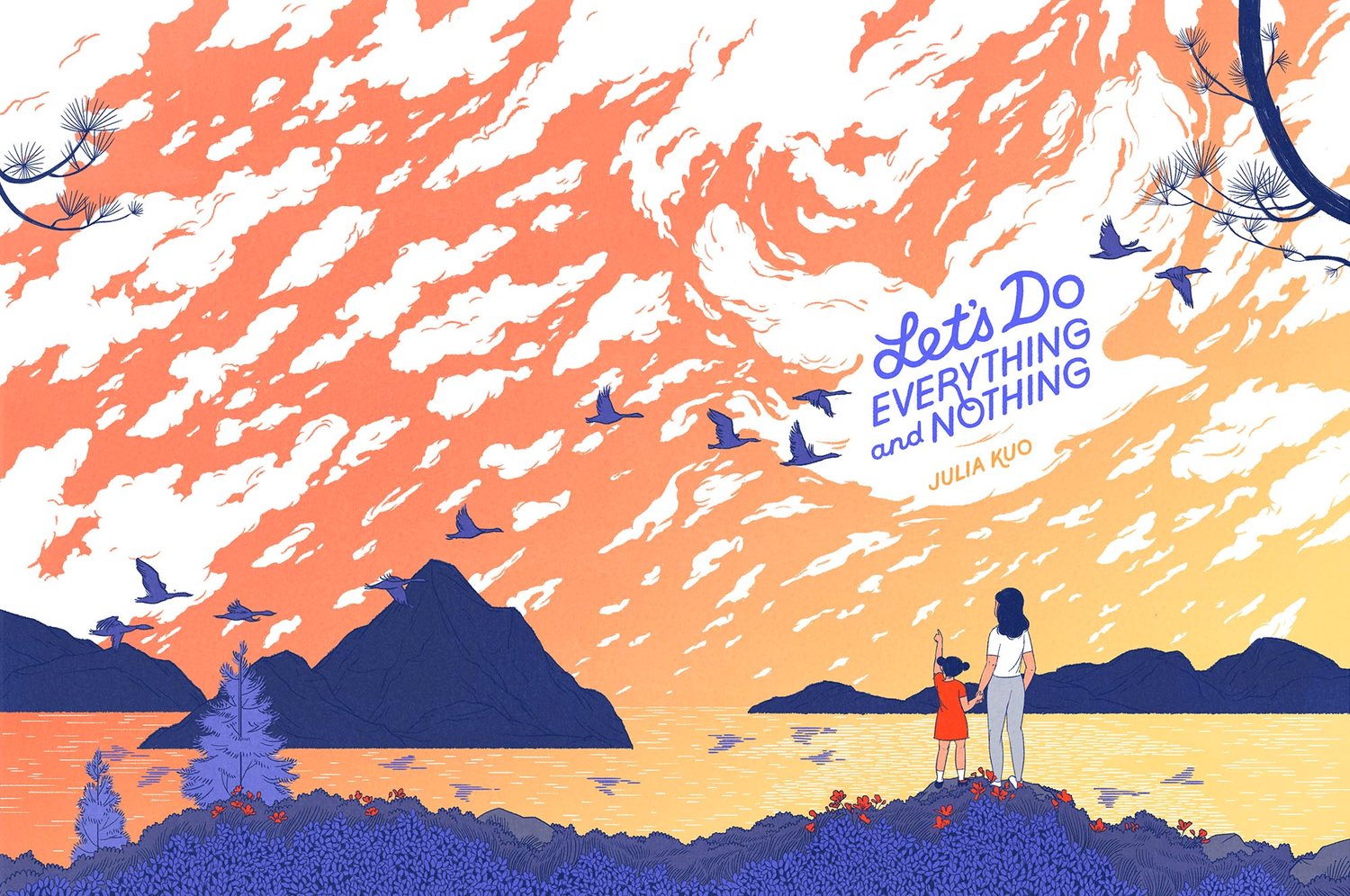
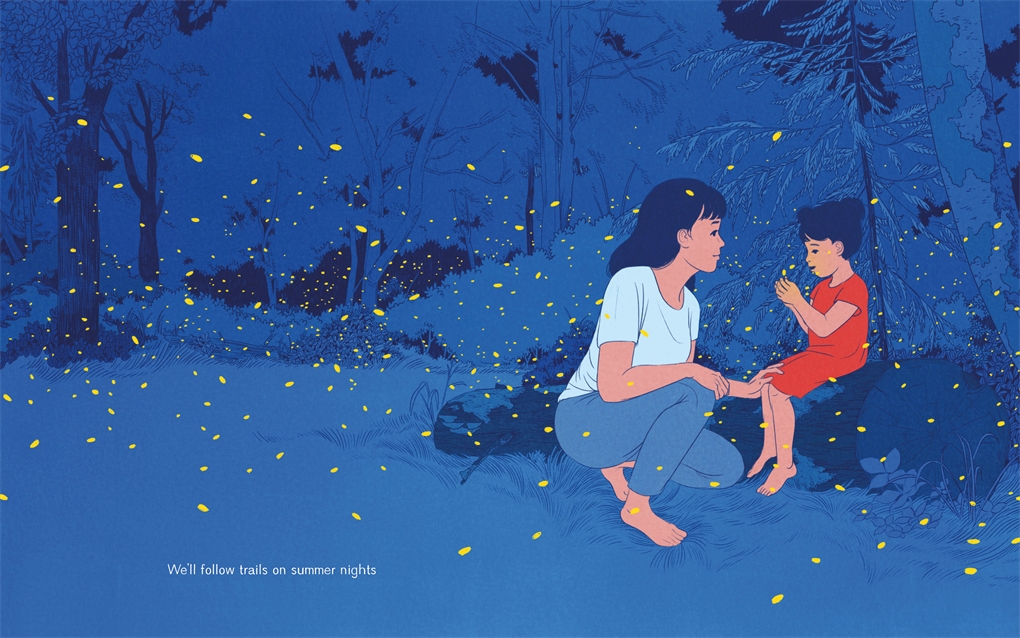
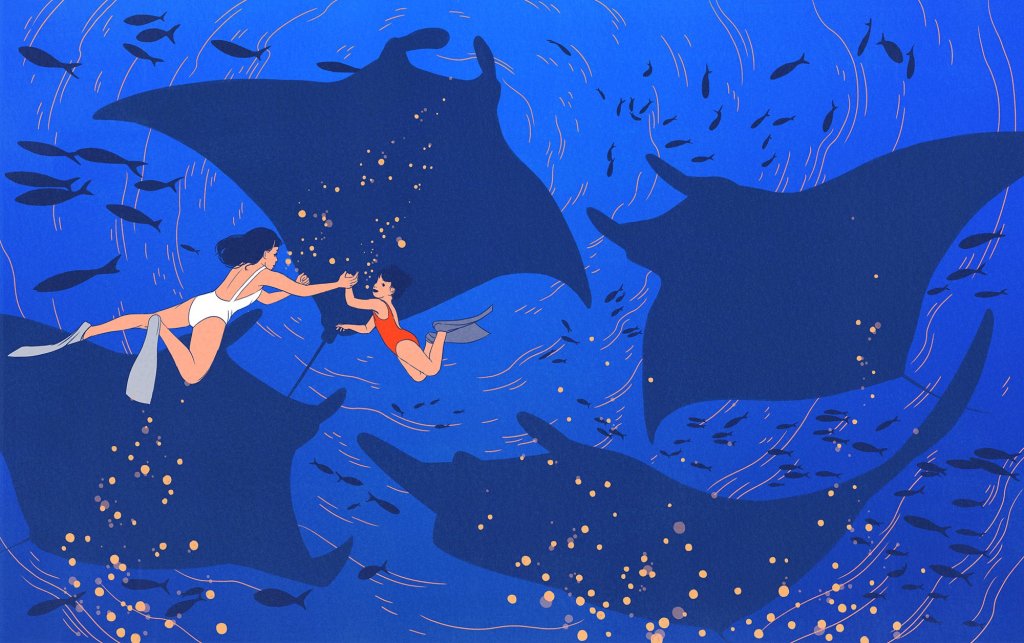
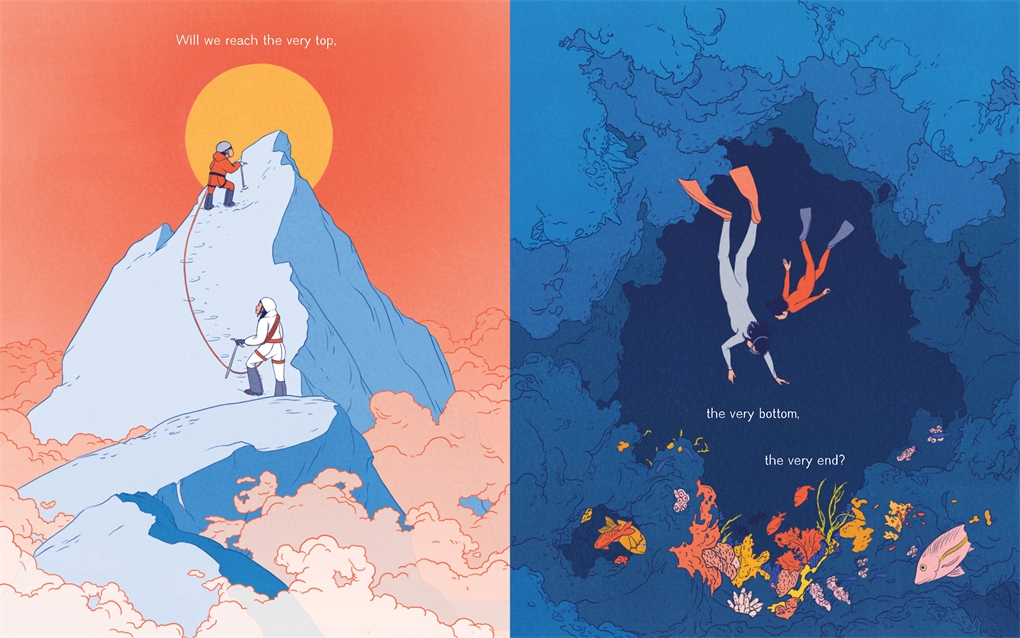
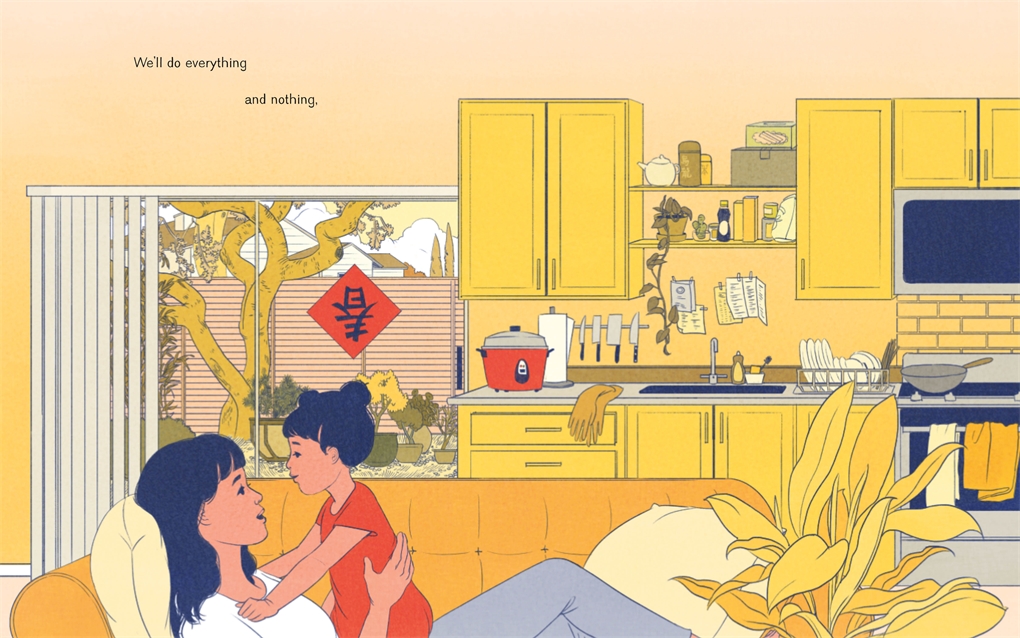
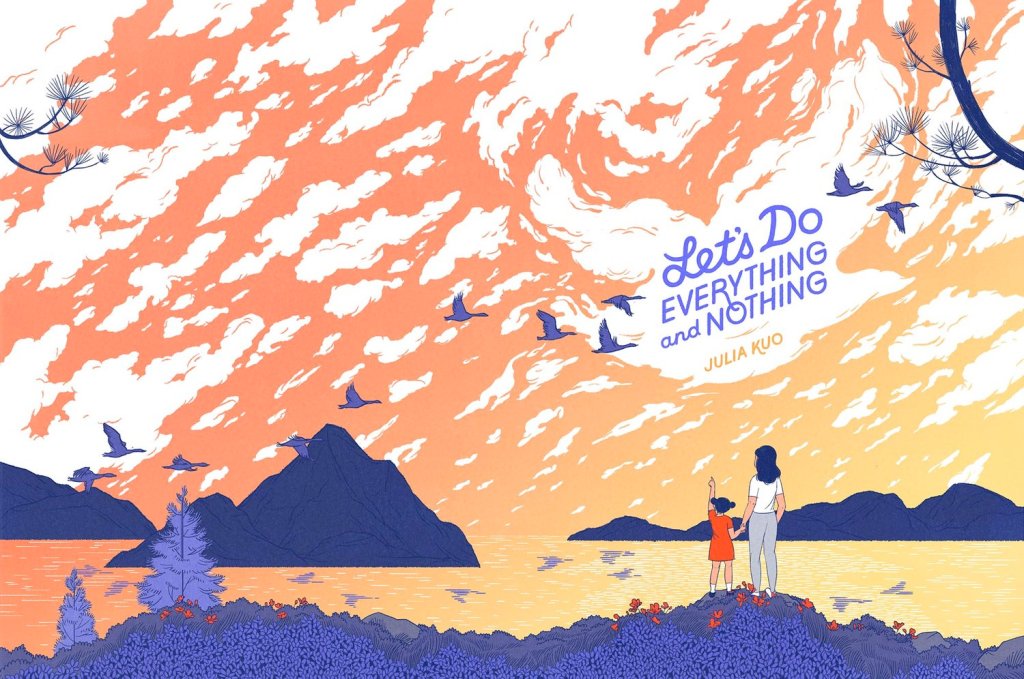
Julia Kuo’s beautiful words and art are breathtaking. The color palette is gorgeous. In her newest picture book,Let’s Do Everything and Nothing, I find a strong emotional connection because my youngest daughter, Shannon, and I had similar mother-daughter adventures when she was a little girl. I remember our quiet moments, our joyful moments, and our curious moments like they were yesterday. I am grateful that Julia created this book so that I can share it with my all-grown-up daughter.
For those interested in Julia’s process for creating this book, I highly recommend reading about it here!
What is your writing space like?
I write and illustrate in my office on the third floor of a townhouse in Seattle, Washington. Hanging behind me are two pinatas I’ve made – one of a bison, another of a rainbow – that I couldn’t bring myself to destroy. On the window ledge in front of me are 8 air plants that were extras wedding favors from getting married last summer. And down by my feet, in a dog bed nestled in another dog bed, is my snoring pup Carmen.
What do libraries mean to you?
I spent a lot of time in my local library branch as a high schooler, but it wasn’t until I was an adult that I began associating libraries with new homes. I moved to Cleveland after college and fell in love with the city; while I was there, I worked with the Cleveland Public Library to create a design for their library card and even designed a summer arts space next to a library called “Literary Lots”. When I moved to Chicago, I signed up for a library card almost immediately. I still remember walking away from the beautiful Harold Washington branch and feeling like the possession of the library card had suddenly made me a true Chicagoan.
What do you hope your readers will learn from reading your book?
This book is really about companionship and contentment, so I hope readers will take a moment to reflect on how they find these things in their own lives – whether it’s with a child, parent, partner, sibling, or friend!
Who is the reader you are writing for? Describe them.
I’m writing for mothers and daughters! I want women of all ages to see themselves reflected as bold, confident adventurers who can find energy and rest in companionship. If I’m being honest, I’m also writing for myself. This book is for my past self, as a young Asian American girl, to see myself centered in a book and daring enough to attempt great adventures. It’s for my current self, to find satisfaction and contentment in my current relationships, even if we are doing nothing – and for my future self, to see motherhood as the ultimate adventure!
What is one (or more) thing(s) that you really want your readers to know about you?
I love spending time outdoors, whether it’s rock climbing or hiking up a mountain (mostly the smaller ones). I actually wrote this story after climbing Mt. Rainier in 2019! As a 5 foot tall Asian American woman, I know that I don’t fit the typical profile of an outdoor adventurer, but I would love to change that stereotype through my writing and illustrations.
What do you love most about the cover art and illustrations in your book?
One of my favorite things about the book’s illustrations is that they center around the adventures of a warm skinned, dark haired mother and daughter who live in a home coded as Taiwanese American (rice cooker, wok on the stove). The story doesn’t explicitly address culture or ethnicity, but the characters can just be without having to explain themselves.
What has surprised you most about the characters in your book?
This book is much more poetic than it is narrative, so I expected the illustrations and characters to be quite general. But somehow, the characters in this book have still managed to unearth some of my most private thoughts on parenthood, relationships, and fulfillment. I illustrated an Asian American mother and her daughter, and I have identified with both; as a woman who wishes for a motherhood filled with adventures, and as a daughter who seeks out companionship through both the wildest adventures as well as the most peaceful of moments at home.
What part of the publishing process has been the most meaningful to you thusfar?
I’ve been continuously blown away by the collaborative aspect of publishing. I’ve worked with really amazing editors and teams who have definitely improved my work, both in the writing and illustration. It was Bethany Strout’s idea at Little Brown to shift the color scheme from bright to monotone in The Sound of Silence, and it was Connie Hsu of Roaring Brook’s idea to make the characters’ home a Taiwanese-American one in Let’s Do Everything and Nothing! This is also true for the writers I’ve had the privilege of working with, from Katrina Goldsaito to Martha Brockenbrough and Livia Blackburne. I just don’t write the way they do, and it feels like such an honor to illustrate their books. Every person I’ve worked with from the designers to the publicists makes me feel so lucky to be in this profession.
What are you most looking forward to at our book festival?
This will be my first in-person event for Let’s Do Everything and Nothing, and I am so excited to see people in person and to sit in on other author talks!
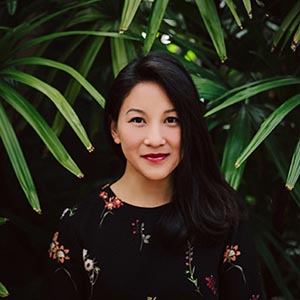
Julia Kuo is a Taiwanese-American illustrator who has worked with The New York Times, Google and Science Friday. Julia has taught illustration courses at Columbia College Chicago and at her alma mater, Washington University in St. Louis. She is the illustrator of “Drawing Leaves and Trees: Observing and Sketching the Natural World;” “I Dream of Popo,” written by Livia Blackburne; Katrina Goldsaito’s “The Sound of Silence;” Roni Schotter’s “Go Little Green Truck!;” Melissa Gilbert’s “Daisy and Josephine,” “20 Ways to Draw a Dress,” “20 Ways to Draw a Cat” and “Everyone Eats.” Her latest book is “Let’s Do Everything and Nothing.”
Creating Super Cats and Vile Villains – A Kids Comics Workshop: 10:15-10:45 am
Author Presentation (followed by book signing): 12:15-1:05 pm in the Willa Cather Pavilion
What is your studio/creative space like?
I have a home studio with a diner booth! After college, I lived with multiple roommates. Needless to say, it was hard to concentrate with so many folks running around. So I would go to the local diner and draw. I became so used to the height of the diner table, that when I moved into my open studio, I got a diner booth for use as my work space.
How (or in what ways) do you hope librarians will promote your book?
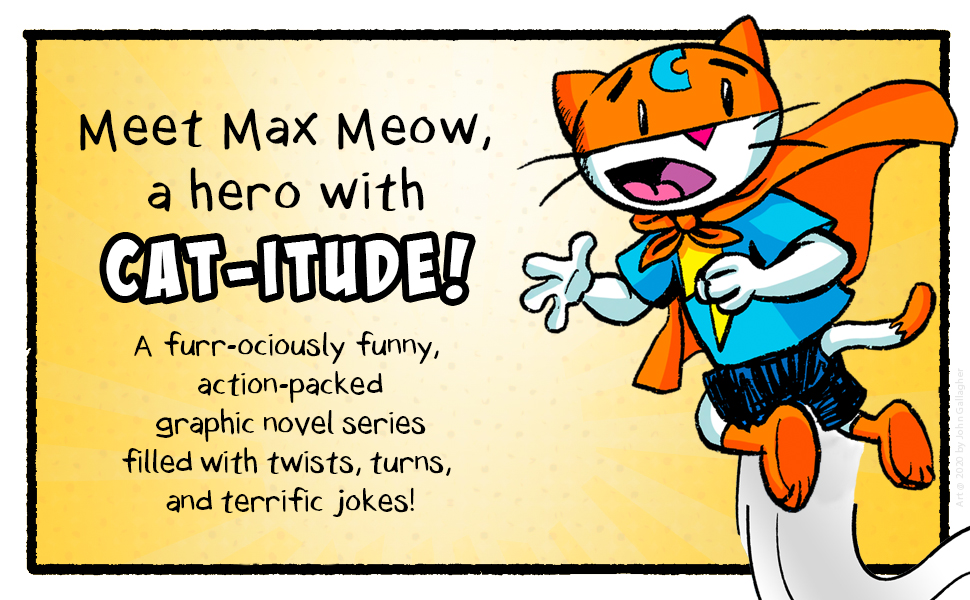
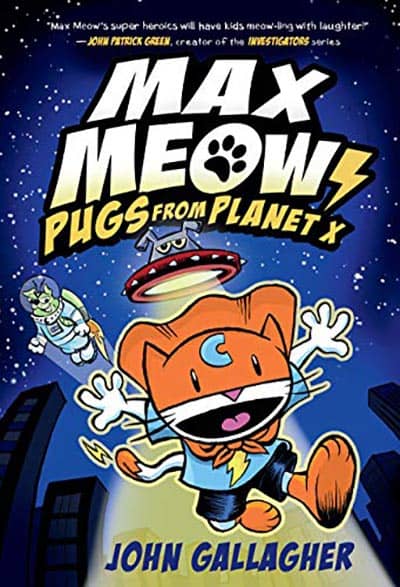
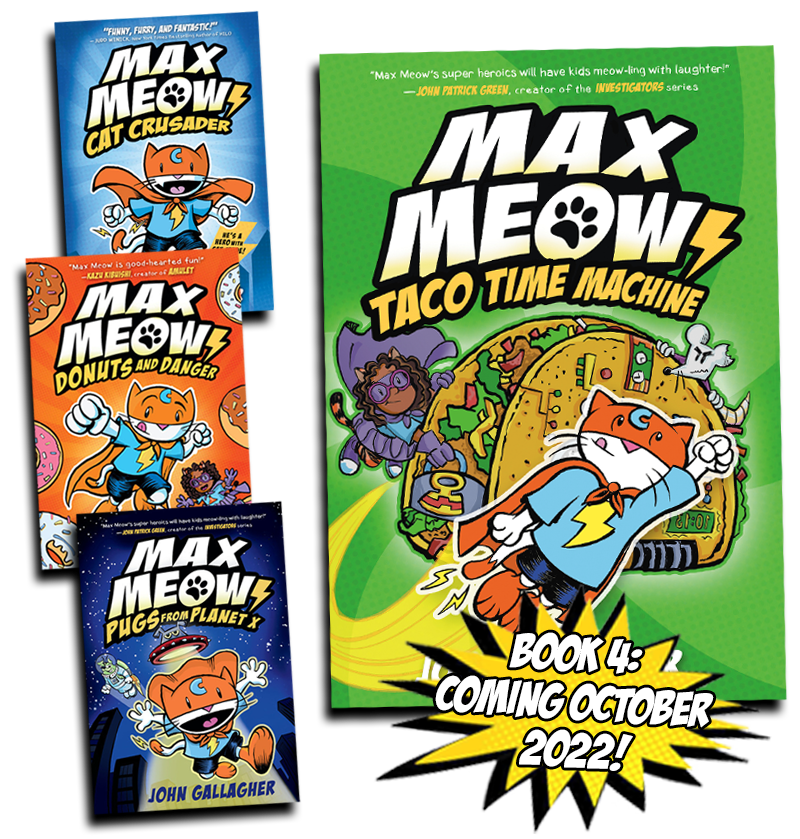
My main goal is to show young readers that reading can be fun—and librarians have done a wonderful job of promoting Max Meow (and many other books) that way.
What do you hope your readers will learn from reading your book?
I often try to impart small bits of wisdom that have helped me through life, such as taking chances, it’s okay to mess up, and that being a good person (or cat) to others is an important part of being a hero or leader. But I also like to stick in little snippets of science via Max’s best buddy, Mindy.
Who is the reader you are writing for? Describe them!
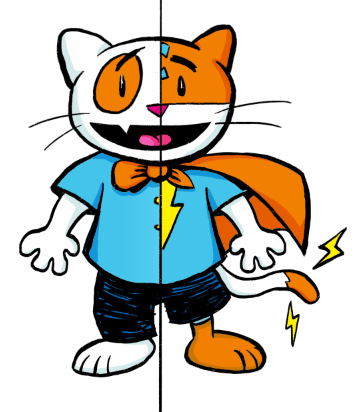
I write for the 7-10 year old I was: one part imagination, one part comedian, and maybe someone that thinks too much sometimes. But maybe also someone that might be reluctant to read, at first, but forgets that when they see a flying cat and alien wiener dog.
What is one (or more) thing(s) that you really want your readers to know about you?
I love cats AND dogs! Many kids want me to choose, or explain why Max is a cat, and I am a big fan of both. In fact, I have one cat, Millie, and a dog named Cody.
What do you love most about the cover art and illustrations in your book?
Getting to do them! I was mesmerized by comics as a kid, they really took me to whole new worlds. So trying to do that for a new generation of readers is very exciting for me.
What has surprised you most about the characters in your book?
I often start out with certain ideas about where my characters are headed in the stories—but rarely do they stay on that path. For example, Agent M, a grumpy mouse (or is he a rat?), and the first book’s villain, has grown as a character so much over the series, that he actually reformed and became something of a hero in later books.
Which book review or award has been most meaningful to you?
Reviews by librarians have meant a lot, because they are so dedicated and discerning for their young readers. But it’s the reviews that kids share online about Max Meow that have helped me to appreciate the importance of storytelling in inspiring others.
What are you most looking forward to at our book festival?
Meeting and talking to the readers and their parents is such an invigorating experience, and really reminds me why this is the best job in the world.
Creating Super Cats and Vile Villains – A Kids Comics Workshop: 10:15-10:45 am
John has a great website with interactive games for his readers, as well as coloring sheets and other activities. Check out Citizens of Kittyopolisand Videos, Fun & Gamespages!
John Gallagher is the art director of the NWF’s “Ranger Rick” magazine, cofounder of “Kids Love Comics” (an organization that uses graphic novels to promote literacy), and leads workshops teaching kids how to create their own comics. John lives in Virginia with his wife and their three kids.
Thank you for inviting me to speak on Creative Librarian: Adventures in School Librarianship, Melissa!
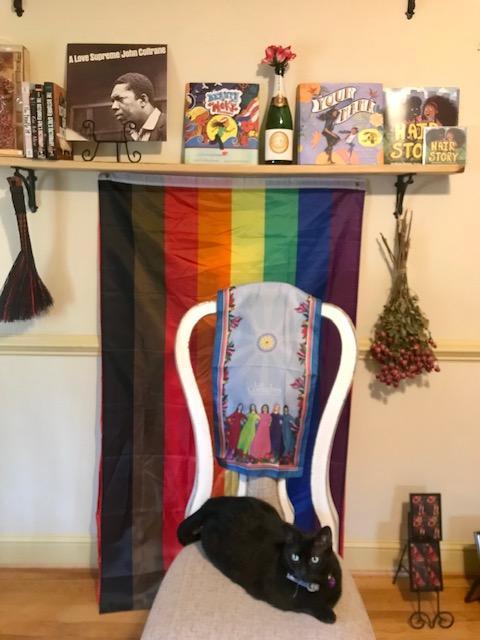
At the opening of my office, you’ll see a homage to feminine divine energy, a goddess with a crown of candles. Step further into the soft blue light and you’ll pass my altar to my ancestors, trickling with flowers. Across from my standing desk are two old school black chalkboards with outlines for a current middle grade novel-in-progress currently titled Crescent Dances with the Stars. Occasionally a beloved bow-tied kitty warms my chair.
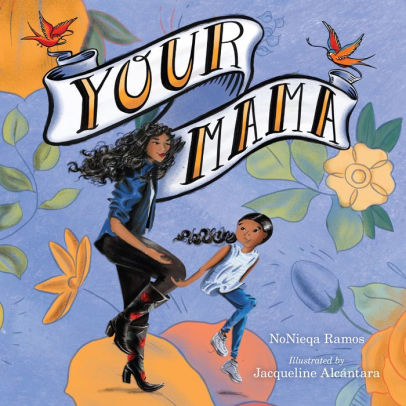
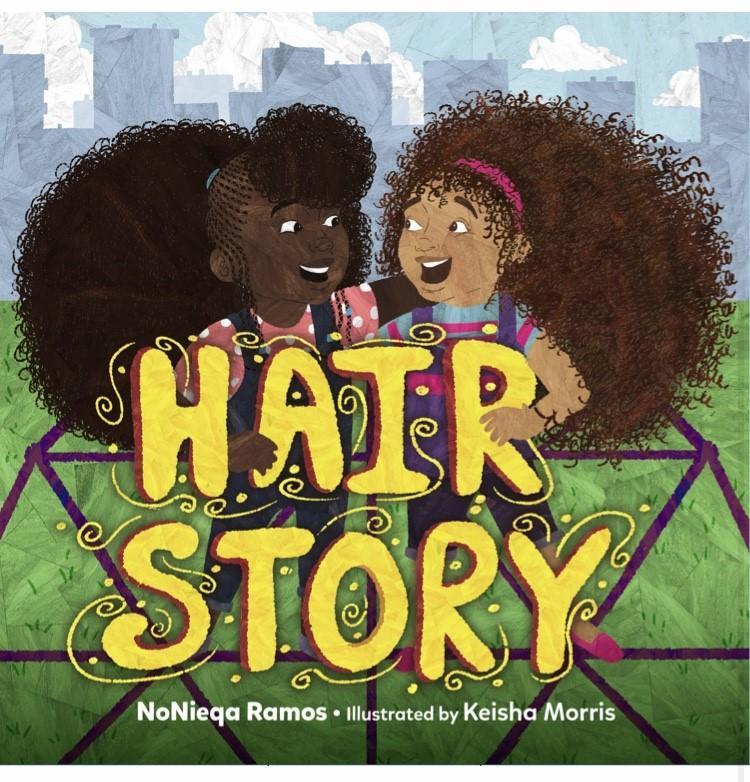
Behind me on a floating shelf sits my debut young adult novel The Disturbed Girl’s Dictionary beside the vinyl record, A Love Supreme by John Coltrane, a pivotal song in my fifteen-year-old protagonist’s journey. Adjacent to my young adult novels, you’ll see my picture books Your Mama illustrated by Jacqueline Alcántara, Beauty Woke illustrated by Paola Escobar, and Hair Story, illustrated by Keisha Morris. As a child, I fantasized about being a museum curator. Maybe that’s part of my love for picture books; they are portable museums of art and culture!
How (or in what ways) do you hope librarians will promote your books?
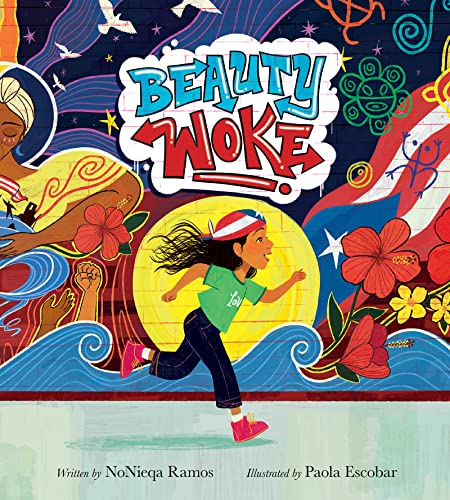
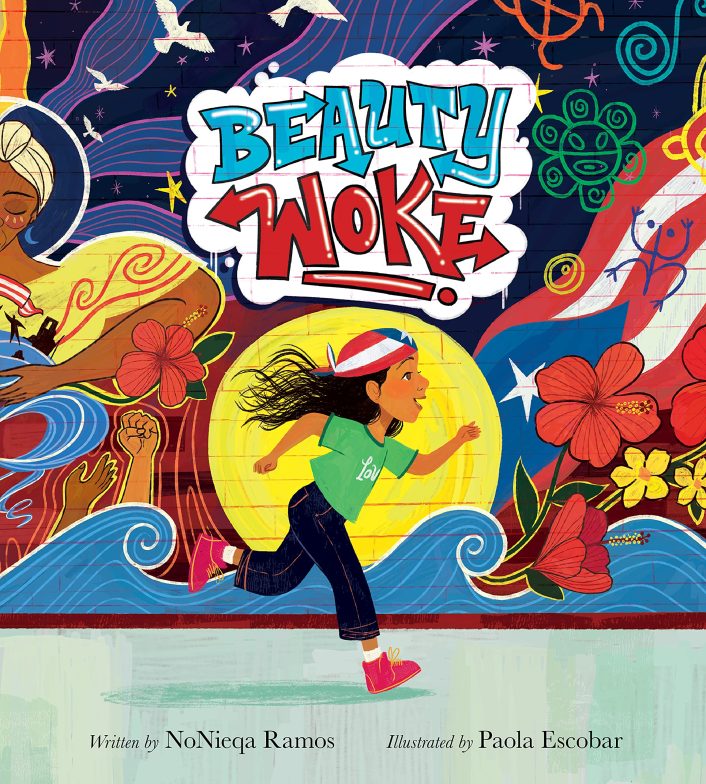
There truly could not be a more volatile and difficult time in publishing or in the current state of this country to have a book called Beauty Woke published. Wokeness is so politicized and misunderstood. In my book, wokeness refers to a marginalized child’s triumph over racism and her awakening to her beauty–inside and out.
In my book, wokeness refers to a marginalized child’s triumph over racism and her awakening to her beauty–inside and out.
~ NoNieqa Ramos
My young adult novel The Truth Is, in which my protagonist Verdad confronts her internalized racism and homophobia as she embraces her queer identity, was on Senator Matt Kraus’ banned book list and was also targeted for banning at school board meetings in my hometown in Virginia.
It’s been exhausting, but I gain strength from educators and librarians at the front lines of #FReadom. I hope librarians continue to support me by promoting my picture books with all ages.
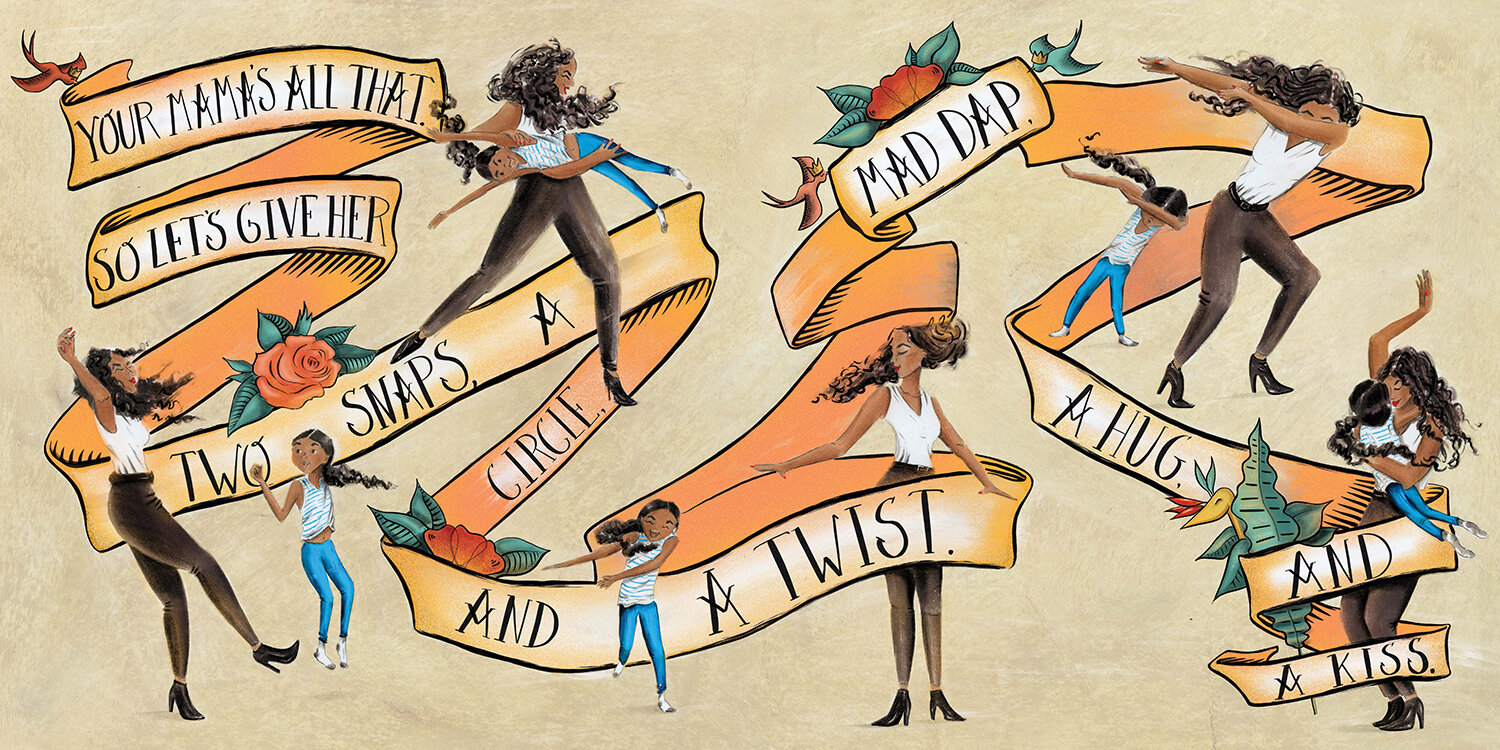
How about including Your Mama in a poetry celebration? Middle graders can use Your Mama to study free-verse poetry. High schoolers can study the misogynistic past of Your Mama jokes and how my book confronts sexism with tenderness, affirmation, and celebration.
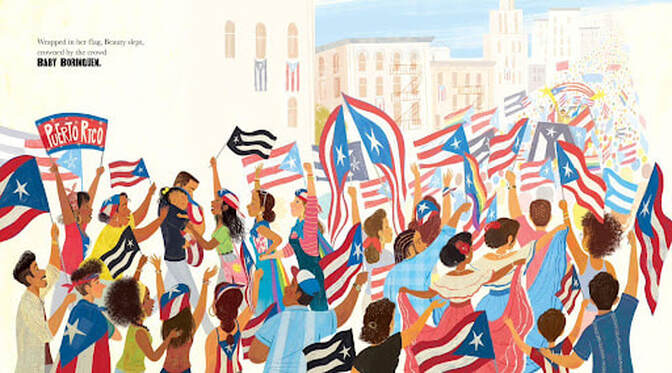
How about having a cultural pride parade after a reading of Beauty Woke with Littles? Every child can make a flag representing their own cultures. Middle graders and high schoolers can study the history of Puerto Rico and the importance of the Puerto Rican flag depicted in the book in various forms. On June 10th, 1948 Law 53 was approved in Puerto Rico. The Gag Law or La Ley de la Mordaza made it illegal to display or own a Puerto Rican flag, even in one’s own home. Police and national guardsmen could enter anyone’s home without a warrant and search and seize all property, regardless of probable cause. What an opportunity to research, discuss, and debate!
I would love to see more front-and-center book displays with unique themes. I recently enjoyed a gorgeous display of Beauty Woke, which was included in an Encanto-themed collection focusing on magic and family. I especially need librarians to share my picture books in social media postings on Twitter and Instagram and to recommend my books to educators.
How about inviting me over! I am currently working with the New York Public Library to do Caregiver Literacy Workshops! Mil gracias to every librarian who has shared my work to their readers!
What do you hope your readers will learn from reading your book?
Children start to learn about race and culture the minute they are born. And tragically, racism doesn’t “start” when you are an adult or when you are educated and prepared to deal with it. Racism blindsides you. Children witness racism against their parents, families, and friends. They see it on social media and hear about it in the car on the news on the way to school.
All marginalized children are going to be exposed to racism whether it’s through personal experiences or whether they are witnesses to it. I hope that Beauty Woke is an opportunity to recognize and validate children’s experiences, and to provide them the sacred space of a picture book and a caregiver to heal, explore, and embrace their cultural roots and seek refuge and love from their families and communities. Like Beauty in the book, I hope they experience triumph in knowing who they are and where they come from is beautiful.
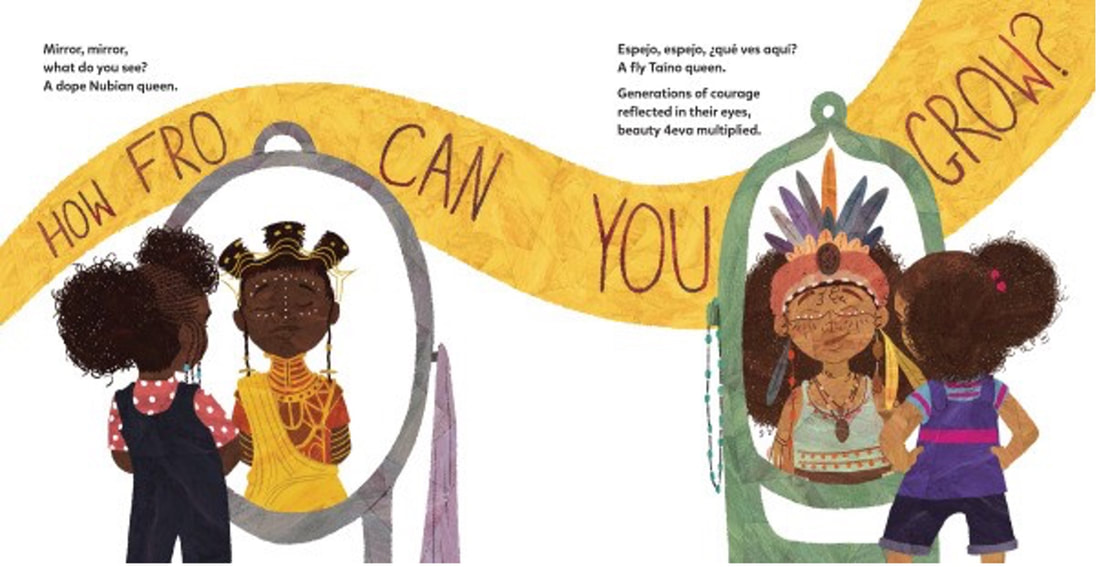
Lorena Germán, cofounder of the groups #disrupttexts and Multicultural Classroom and author of The Anti-Racist Teacher: Reading Instruction Workbook and Textured Teaching: A Framework for Culturally Sustaining Practices, writes: “This gorgeous book is about more than hair. Hair becomes the vehicle for a conversation about identity, beauty standards, bias, relationships, self-love, and more. Ramos has created a picture book that touches upon identity as it is intertwined with other elements of life, all by celebrating hair types and styles.”
Charlotte Offsay, author of The Big Beach Clean Up said, “This truth is carried in NoNieqa’s words and Keisha’s art. It’s a beautiful ode to Black and brown children, celebrating their hair and their identity and encouraging “young readers to embrace themselves just the way they are.”
As Preciosa and Rudine embrace their natural hair, readers are invited to do the same.
Who is the reader you are writing for? Describe them!
I am writing for the parents and caregivers. Just like many of them, I did not see representation of Latine and marginalized groups growing up, and by reading these books to our children, we heal ourselves and society.
I am writing for Latine children. For queer children. For Black, indigenous, and children of color. For white children. For she and hes and theys. For abled and disabled children. For children who like to climb trees, children who climb the walls, children who knock down walls like dominoes every day they wake up and smile and start fresh. All children.
What is one (or more) thing(s) that you really want your readers to know about you?
I need picture books just as much as they do! Picture books are for all ages. 0-1000. Todos.
What do you love most about the cover art and illustrations in your book?
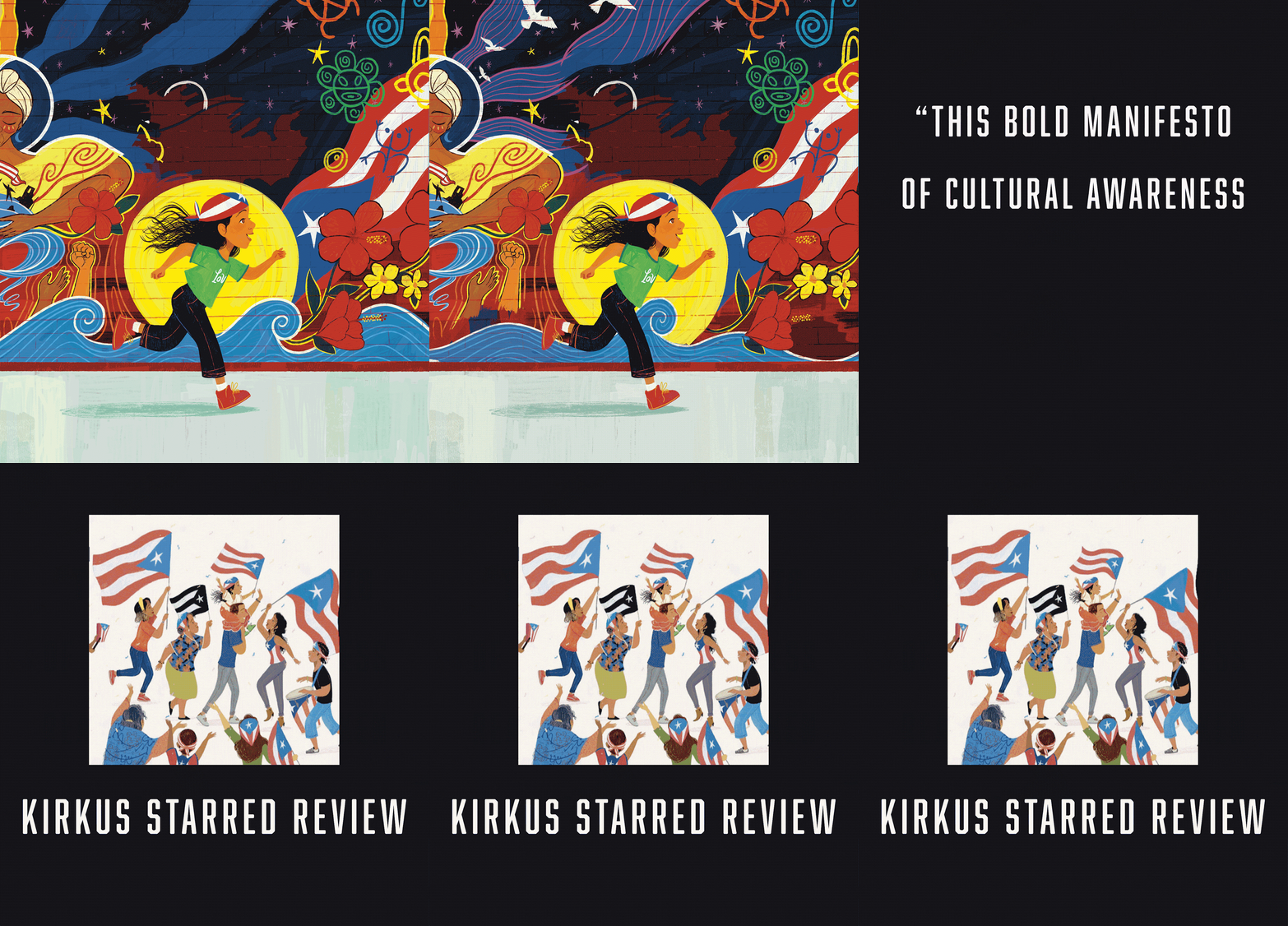
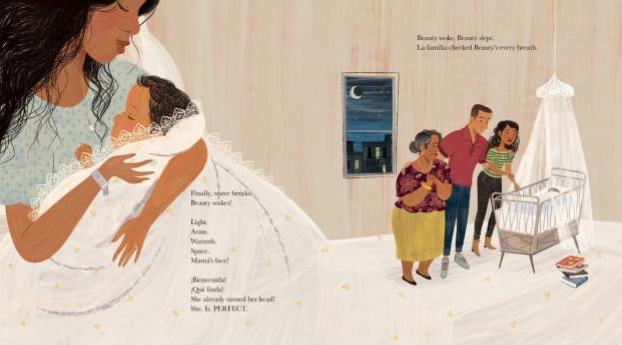
Paola Escobar created the stunning illustrations in Beauty Woke. Kirkus phrased it perfectly when they said, “Escobar’s powerful panorama of diversity is a blazing exclamation point to Beauty’s triumphant journey.” Paola brilliantly exemplifies the power of family and community.
Keisha Morris created the joyful illustrations in Hair Story. I especially love the ‘FRO-MENTS IN TIME’ page where famous icons in history and their hair stories are displayed and the back matter where Keisha and I share our own hair stories.
Which book review or award has been most meaningful to you?
I appreciate every single reader who has taken the time to review my work, and I absolutely adore every reader who has reached out to me personally through my website, Twitter, and Instagram. I take screenshots of these messages so I can remind myself why I am writing and who I am writing for.
Receiving an NCTE Notable Poetry award lit me up because of my experience teaching language arts and drama for 15 years!
What are you most looking forward to at our book festival?
This will be one of the first times since the Pandemic that I am able to interact and build community IN-PERSON with educators, librarians, families, and readers! In addition to my author presentation, I’m looking forward to leading an Affirmation workshop with Littles!!
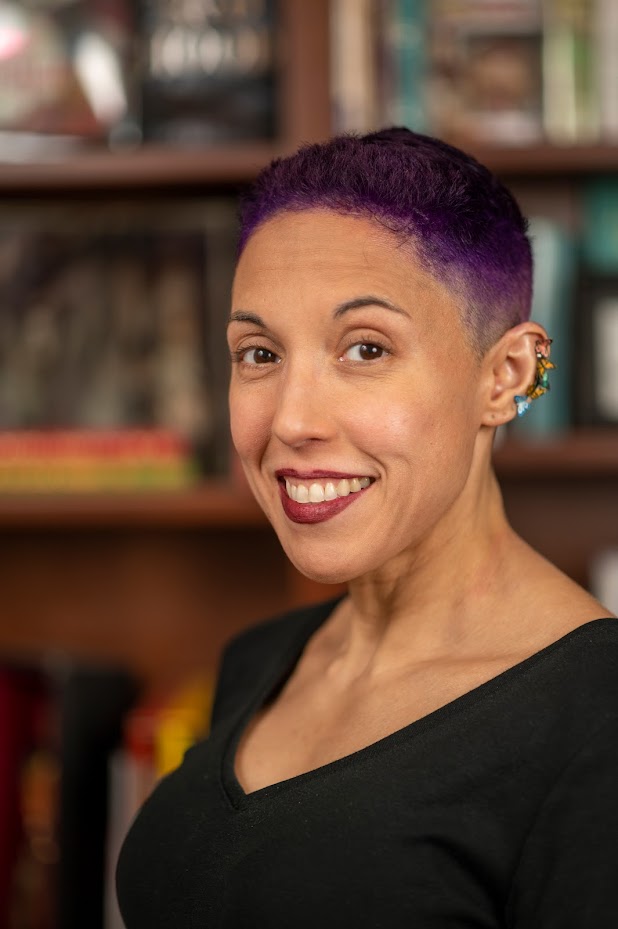
NoNieqa Ramos (they/them) is an educator and writer of picture books and young adult literature. They wrote The Disturbed Girl’s Dictionary, a 2019 YALSA Best Fiction for Young Adults Selection. Their debut picture book Your Mama illustrated by Jacqueline Alcántara was selected by The Virginia Center for the Book as Virginia’s GREAT READ for 2021. Your Mama was a finalist for the Kirkus Prize, a School Library Journal Best Picture Book of 2021, a Kirkus Best Picture Book of the 2021, a Nerdy Book Award winner, and a National Council of English Books Notable Poetry Book. Their picture book Beauty Woke illustrated by Paola Escobar has earned Booklist and Kirkus starred reviews. NoNieqa is a proud member of Las Musas Books collective, the Soaring 20s PB debut group, and Pb Tales 2022 group.You can learn more about them and the school visits and workshops they offer at www.nonieqaramos.com!
For Valentine’s Day classroom celebrations this year, our principal asked the staff to focus on friendship. Here in the library, I often have lessons that incorporate social emotional themes, so I decided to take the week prior to, and the week of, Valentine’s Day to share lots of information about what being a friend looks like and sounds like.
Using print books, ebooks, videos, and databases (and a super cute STEAM activity), I created lessons that I believe my readers truly connected with during those two weeks.
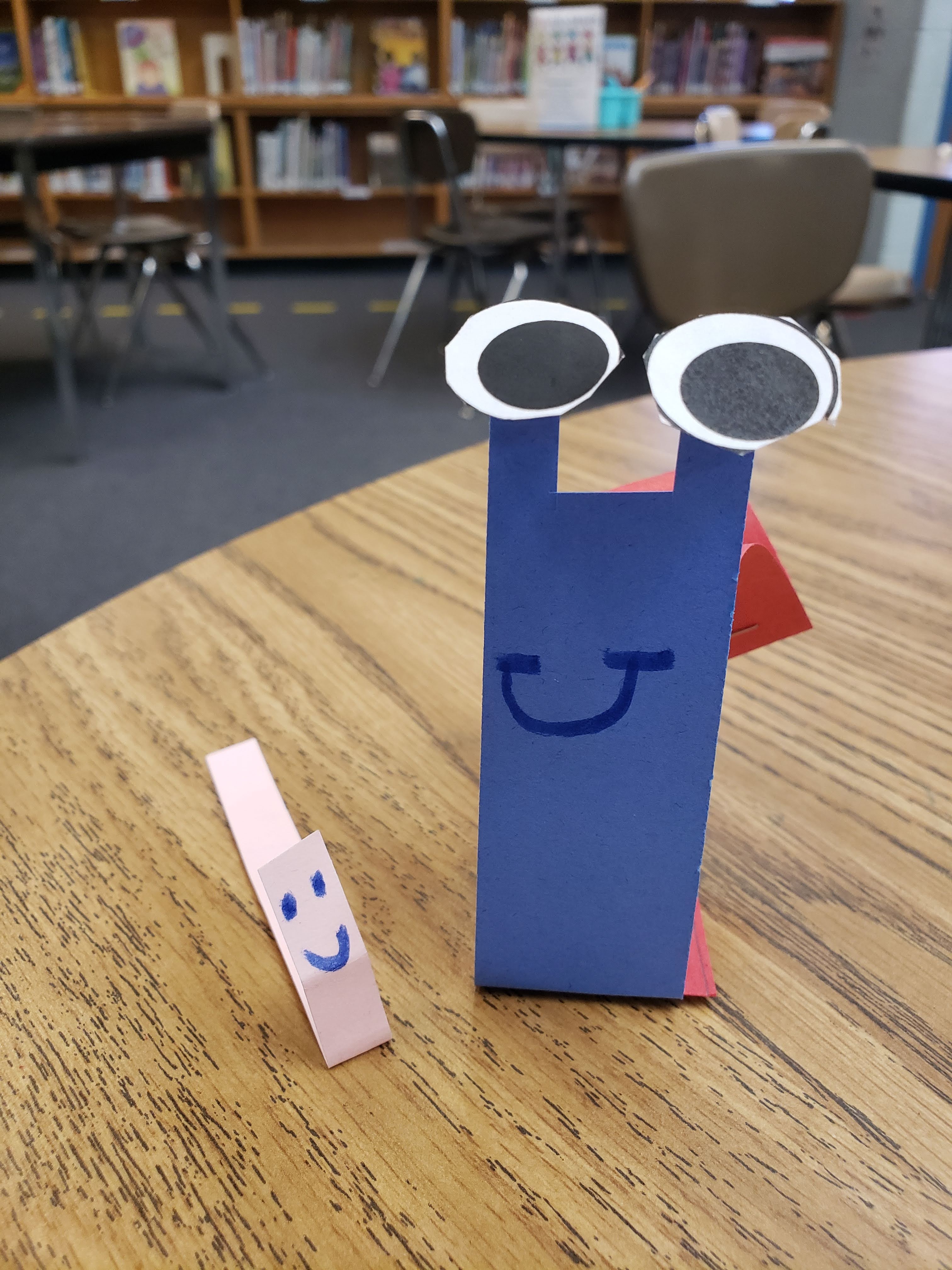
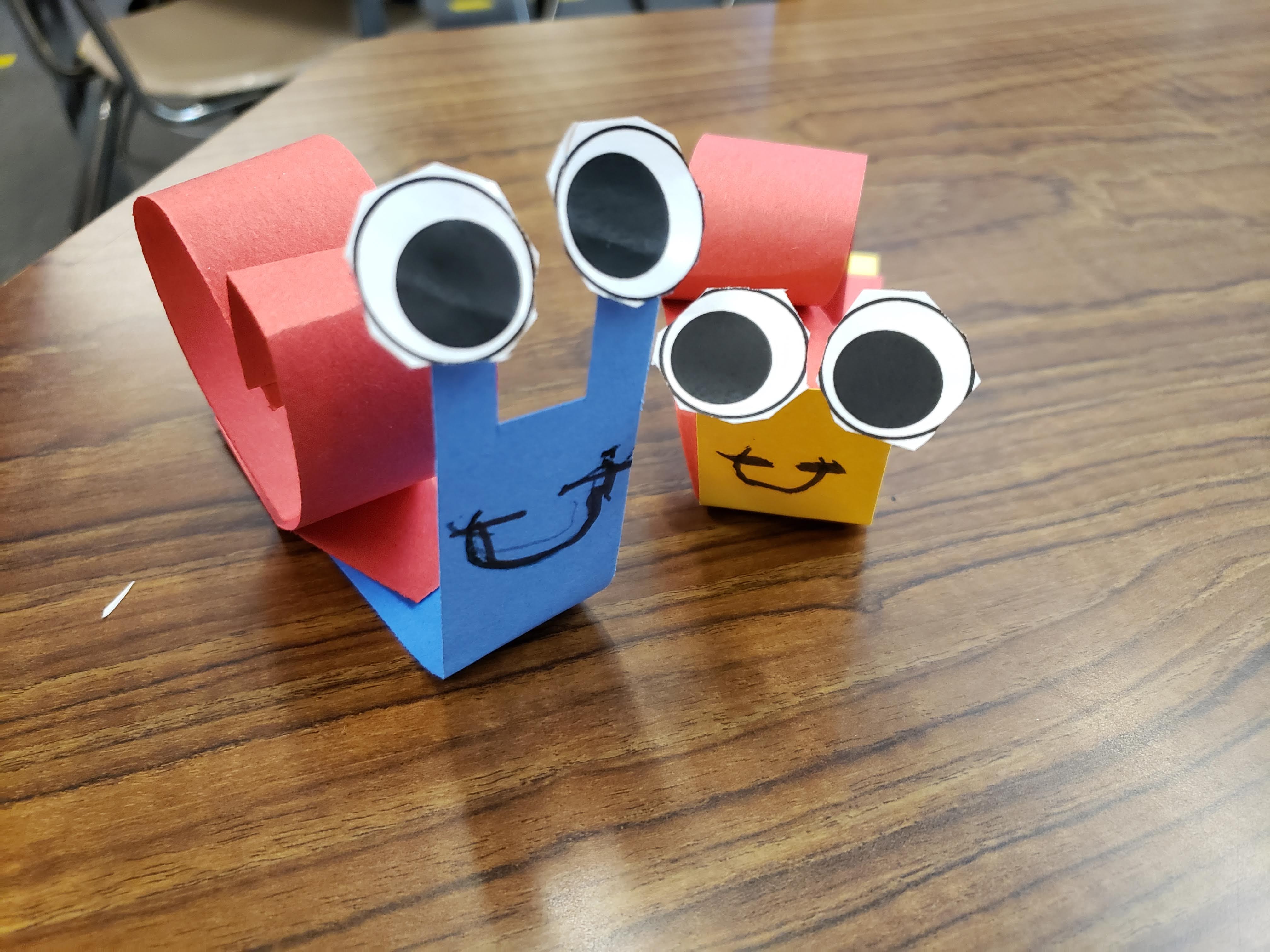
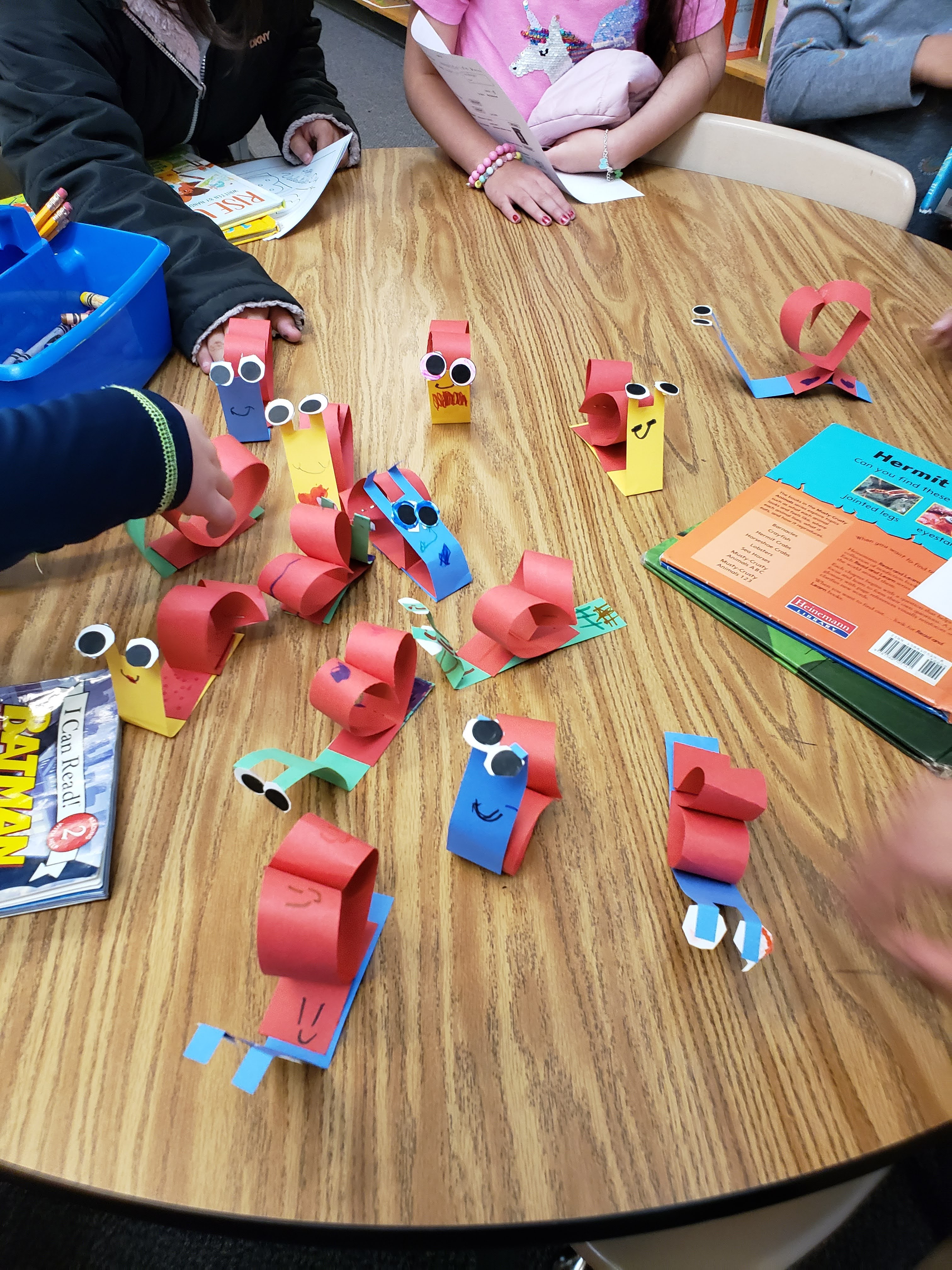
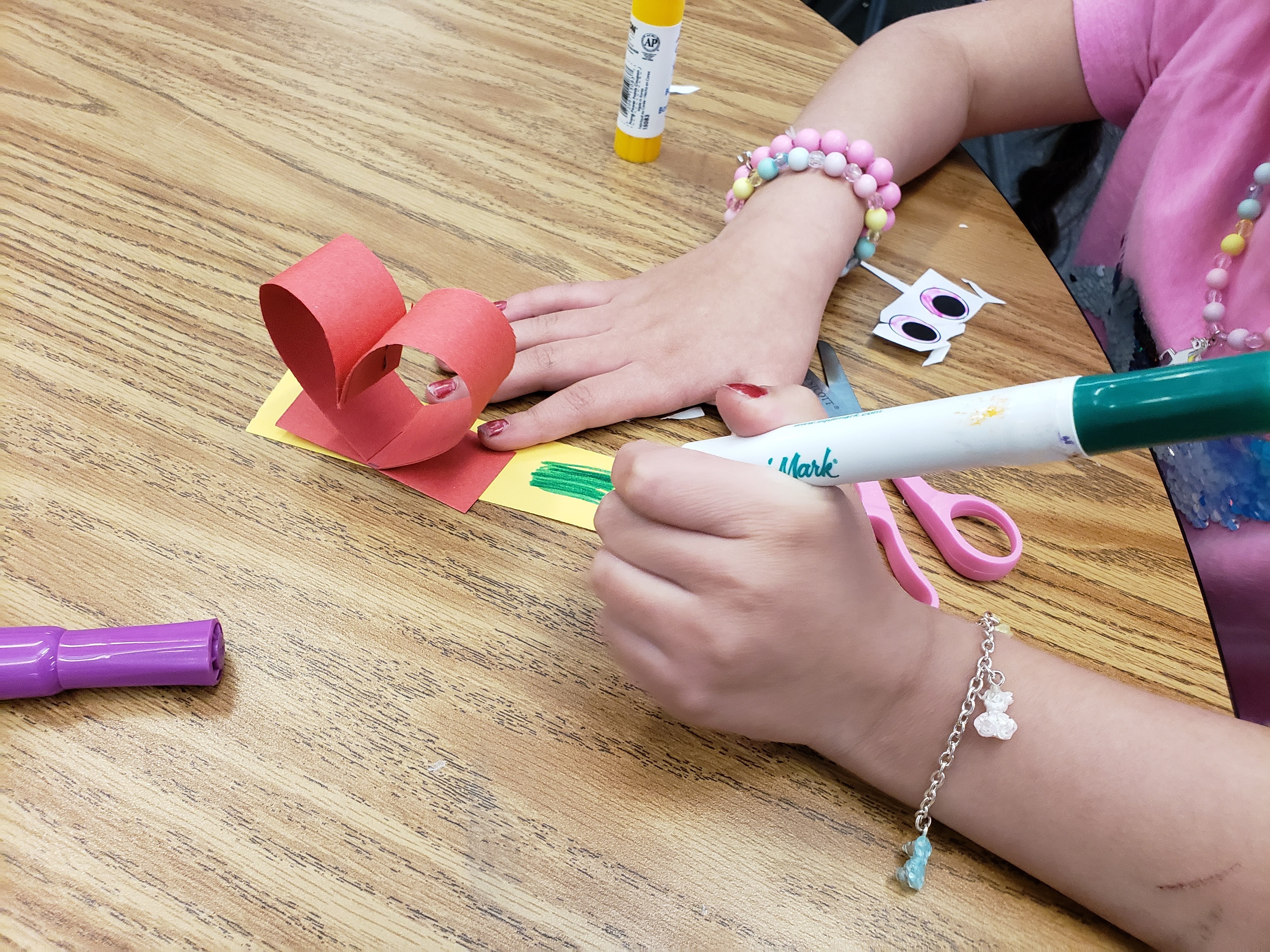
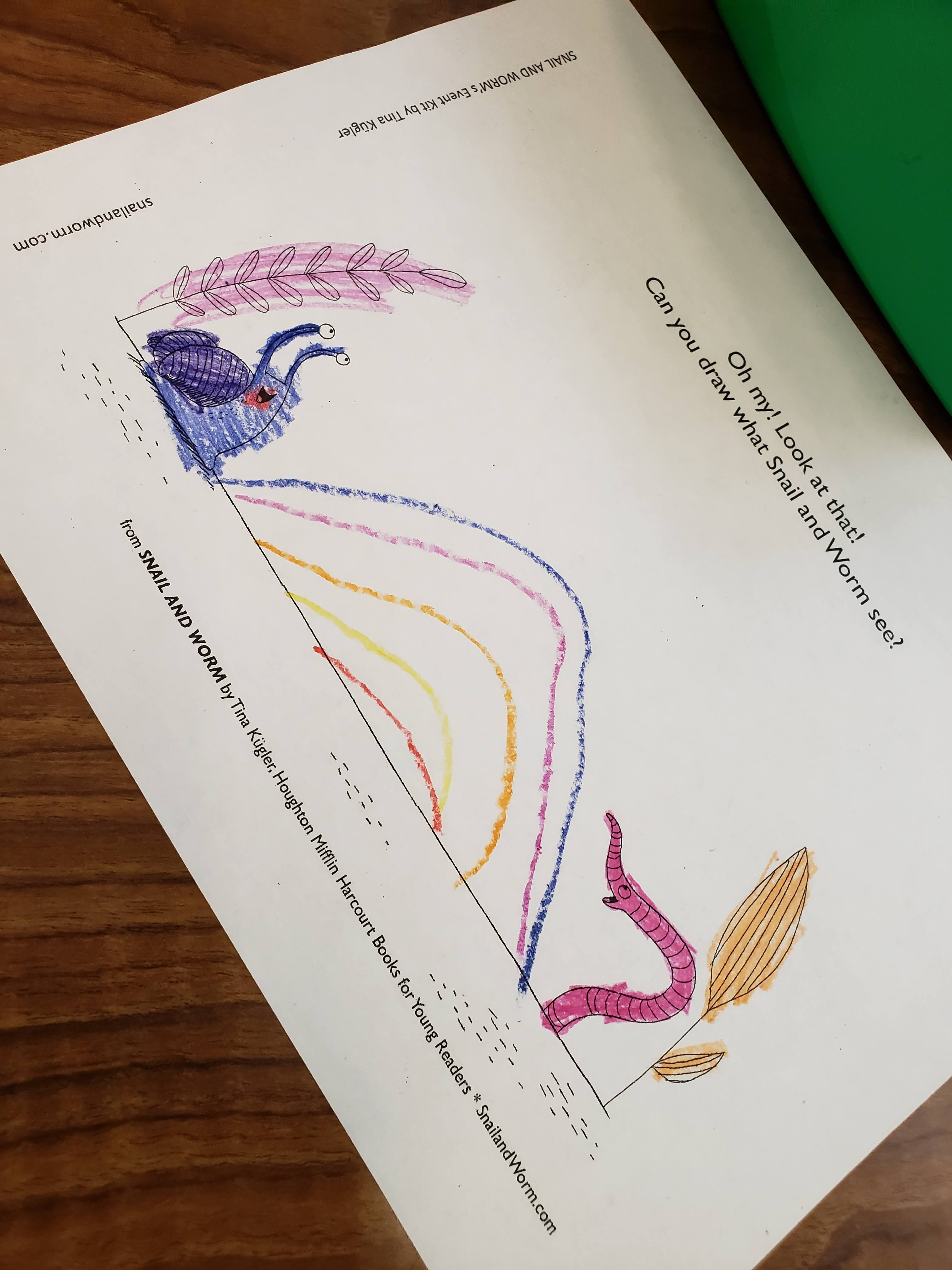
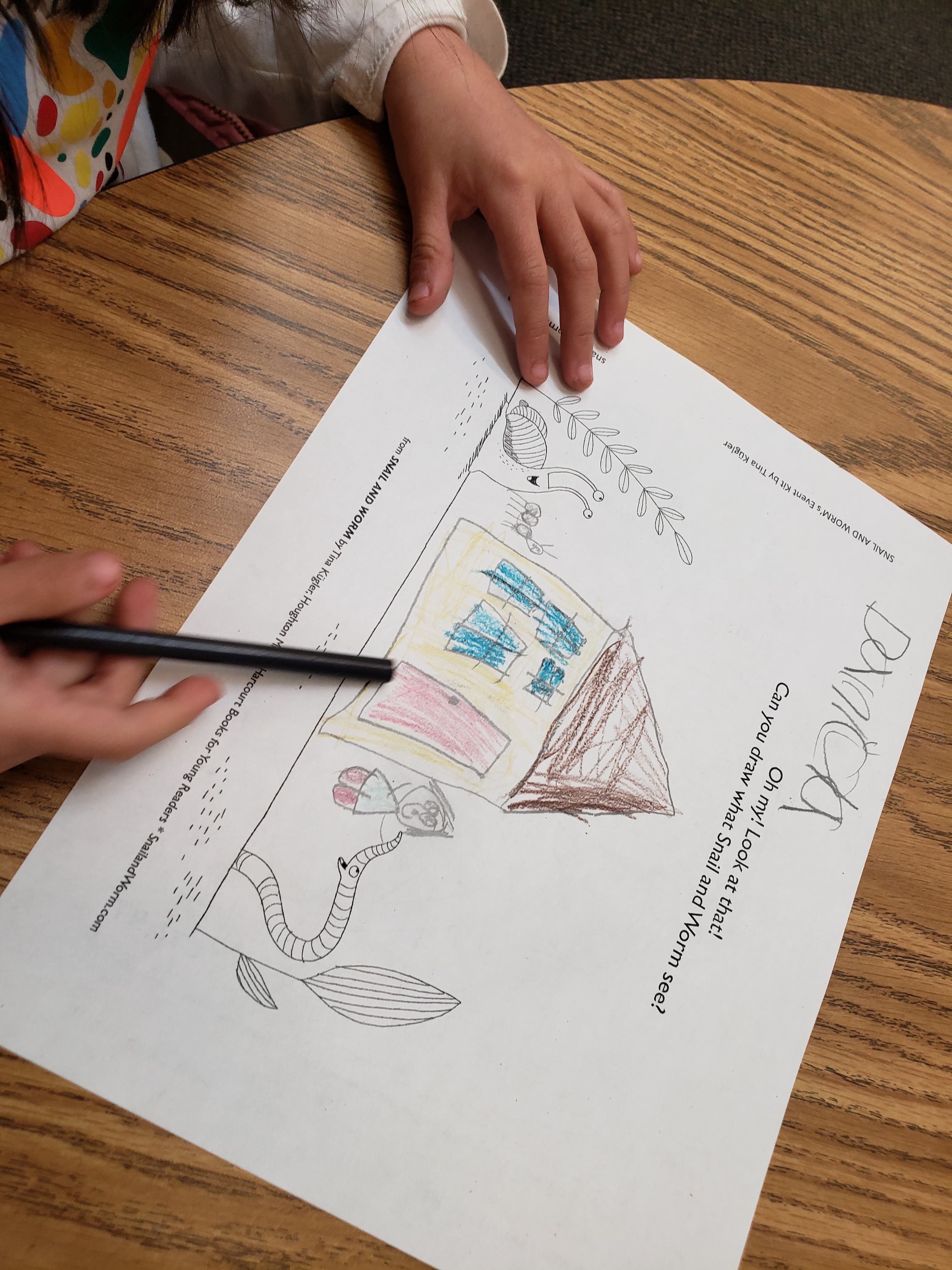
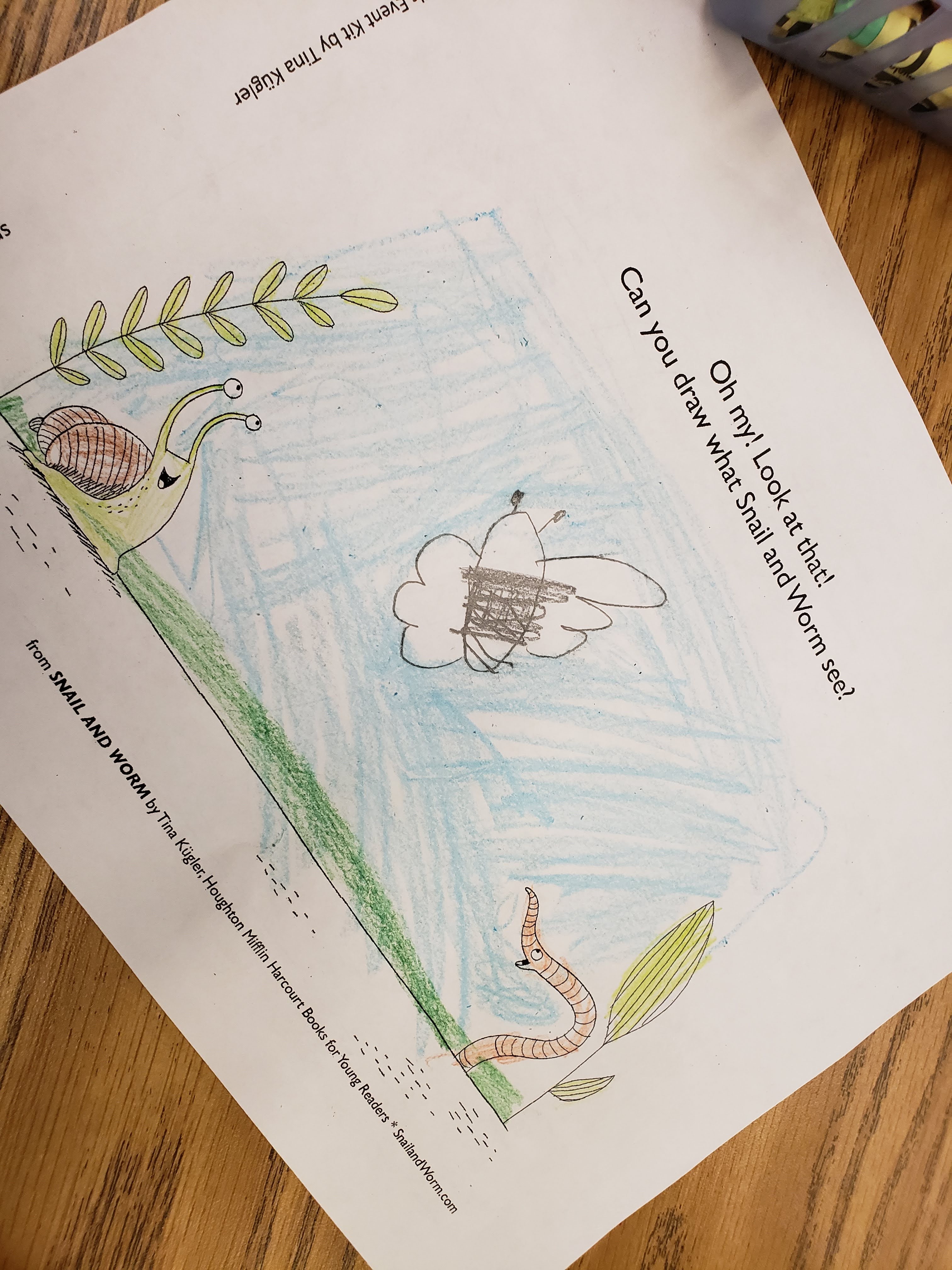
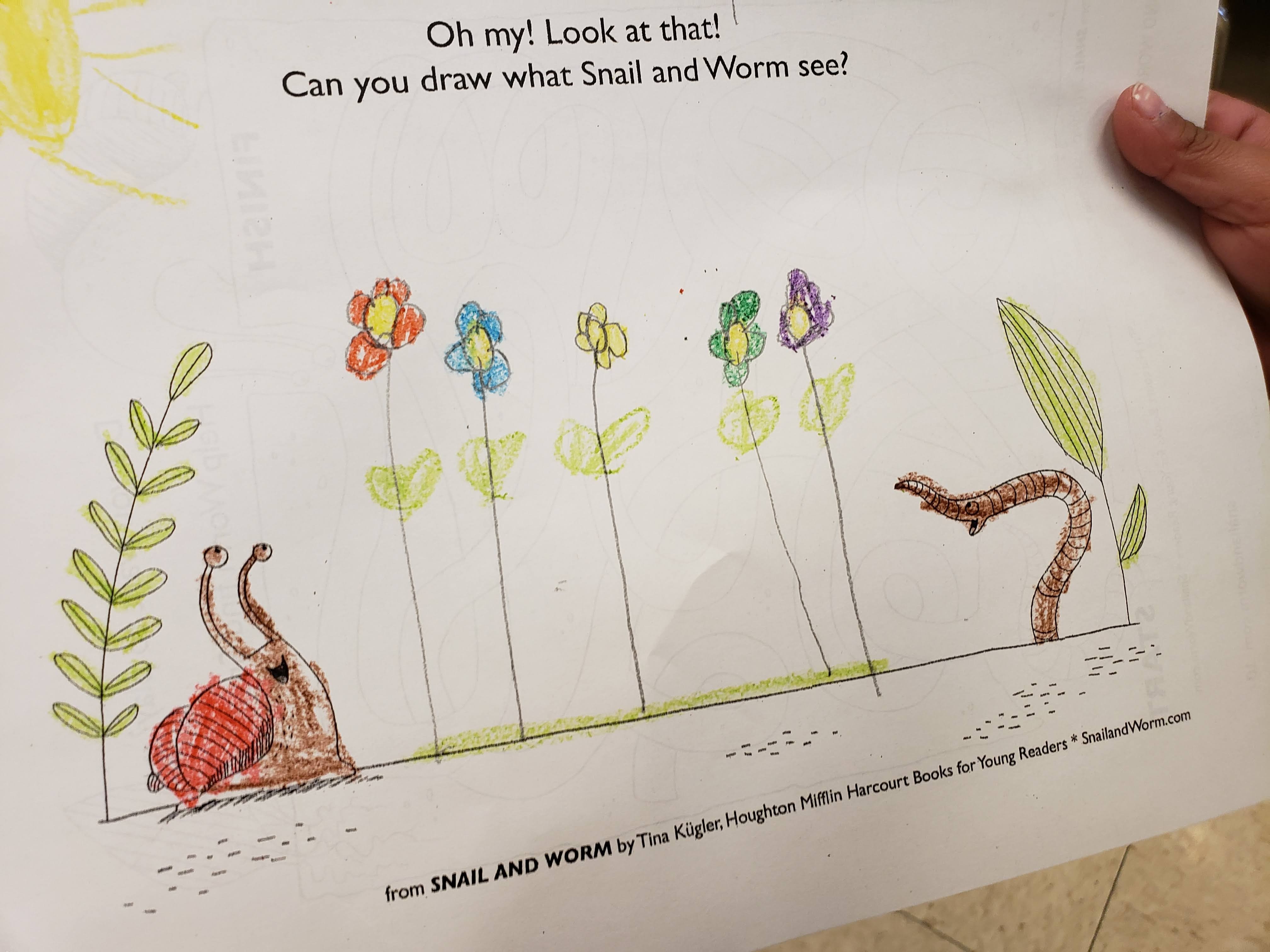
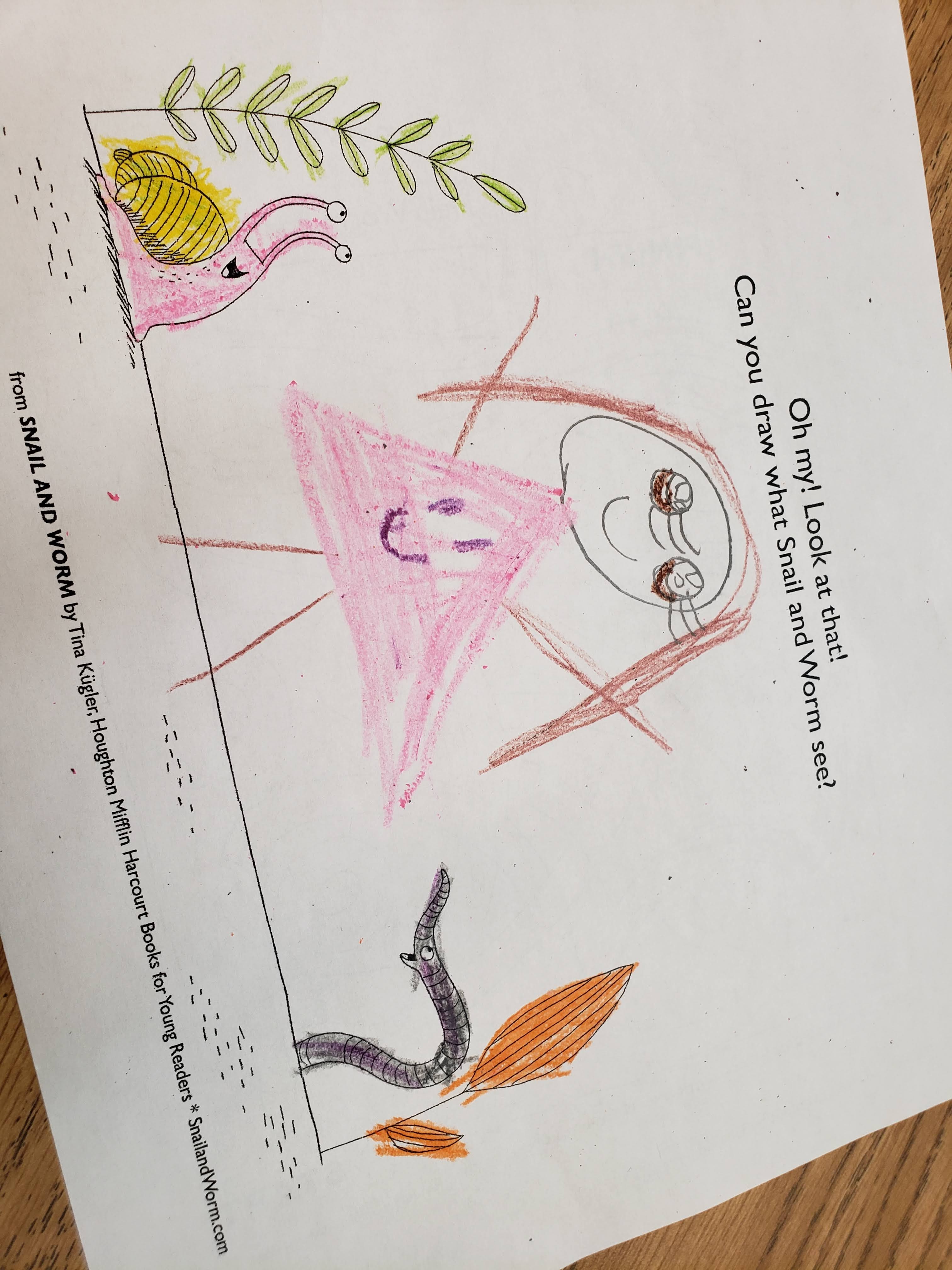
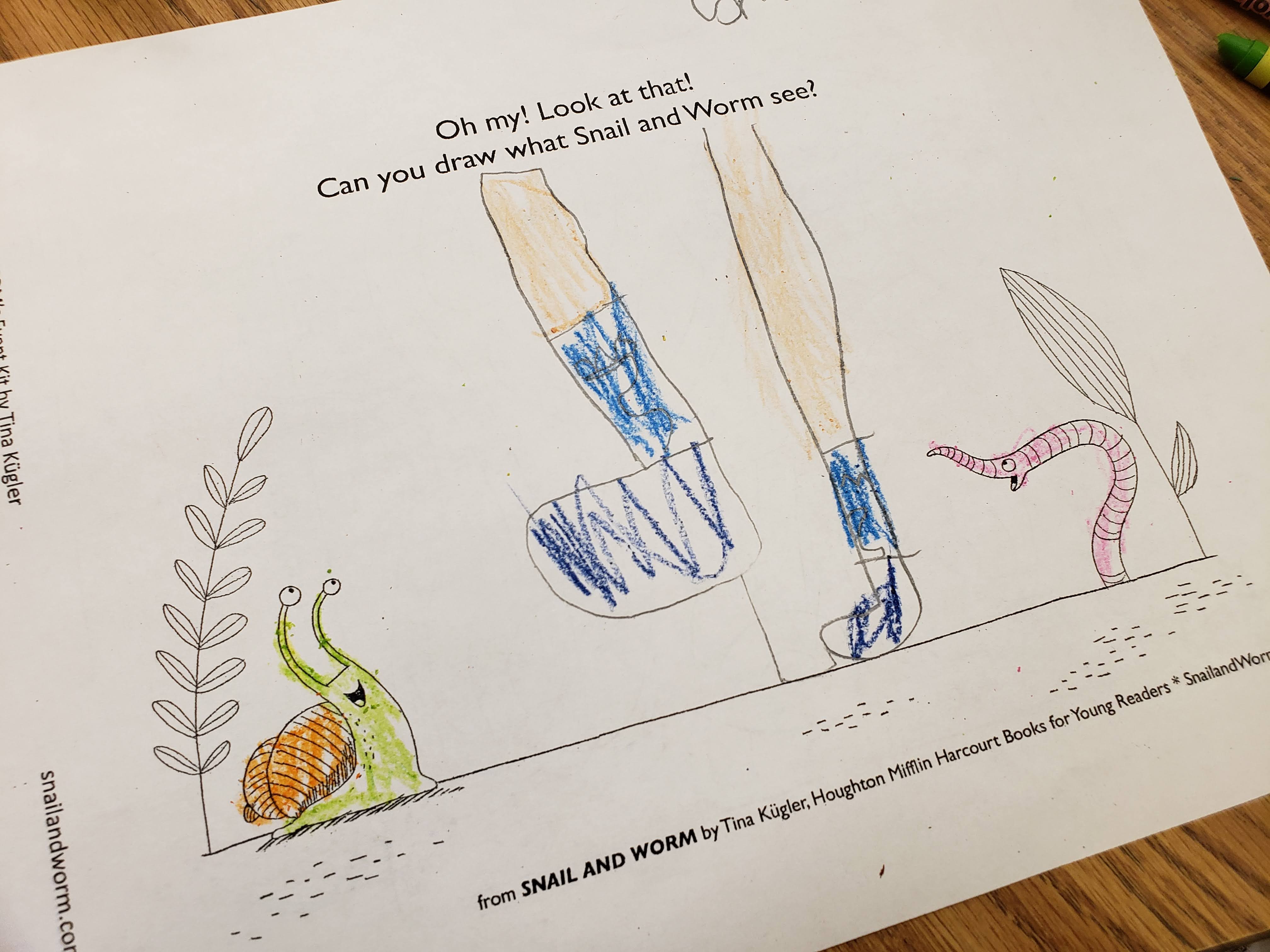
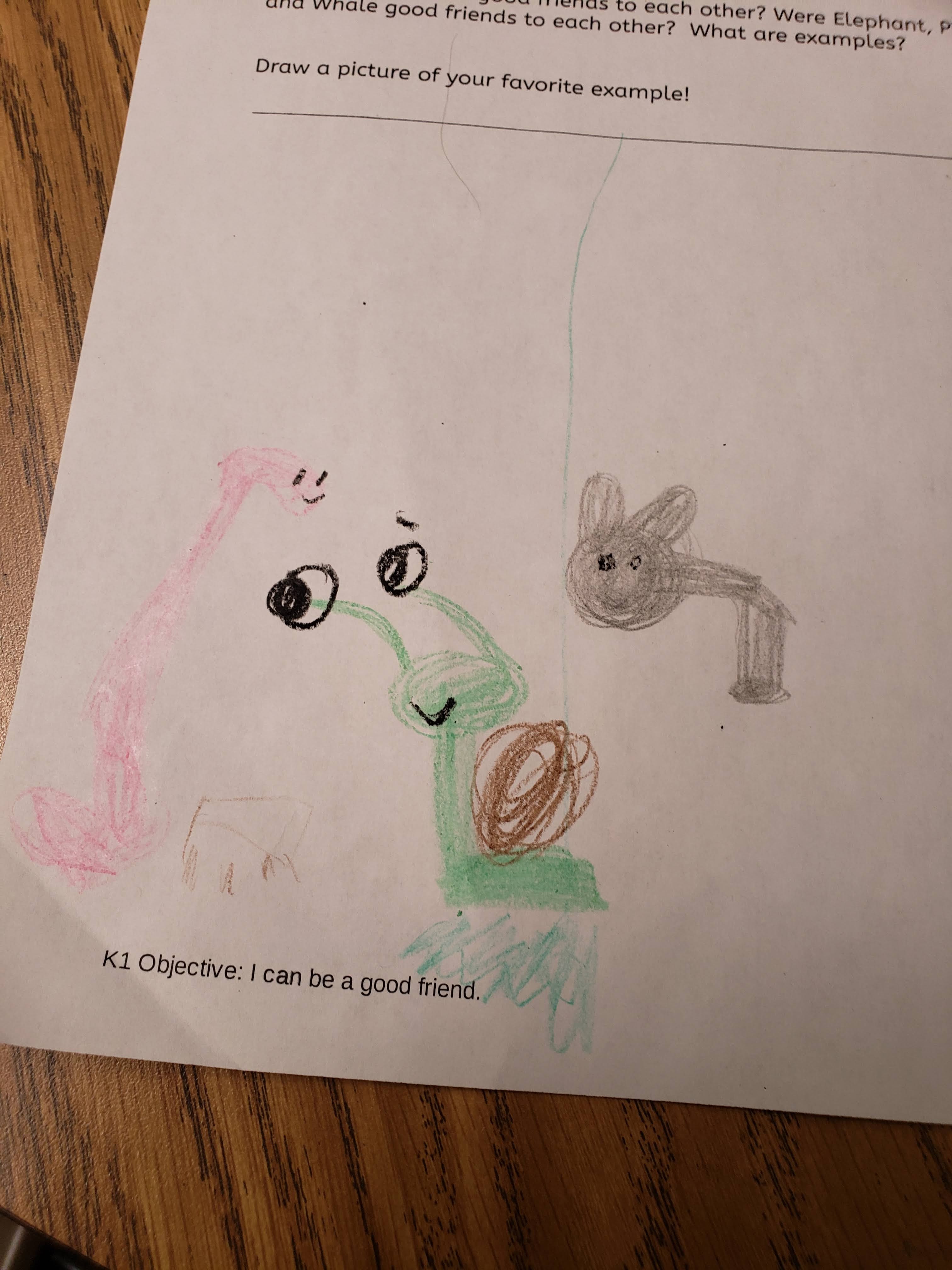
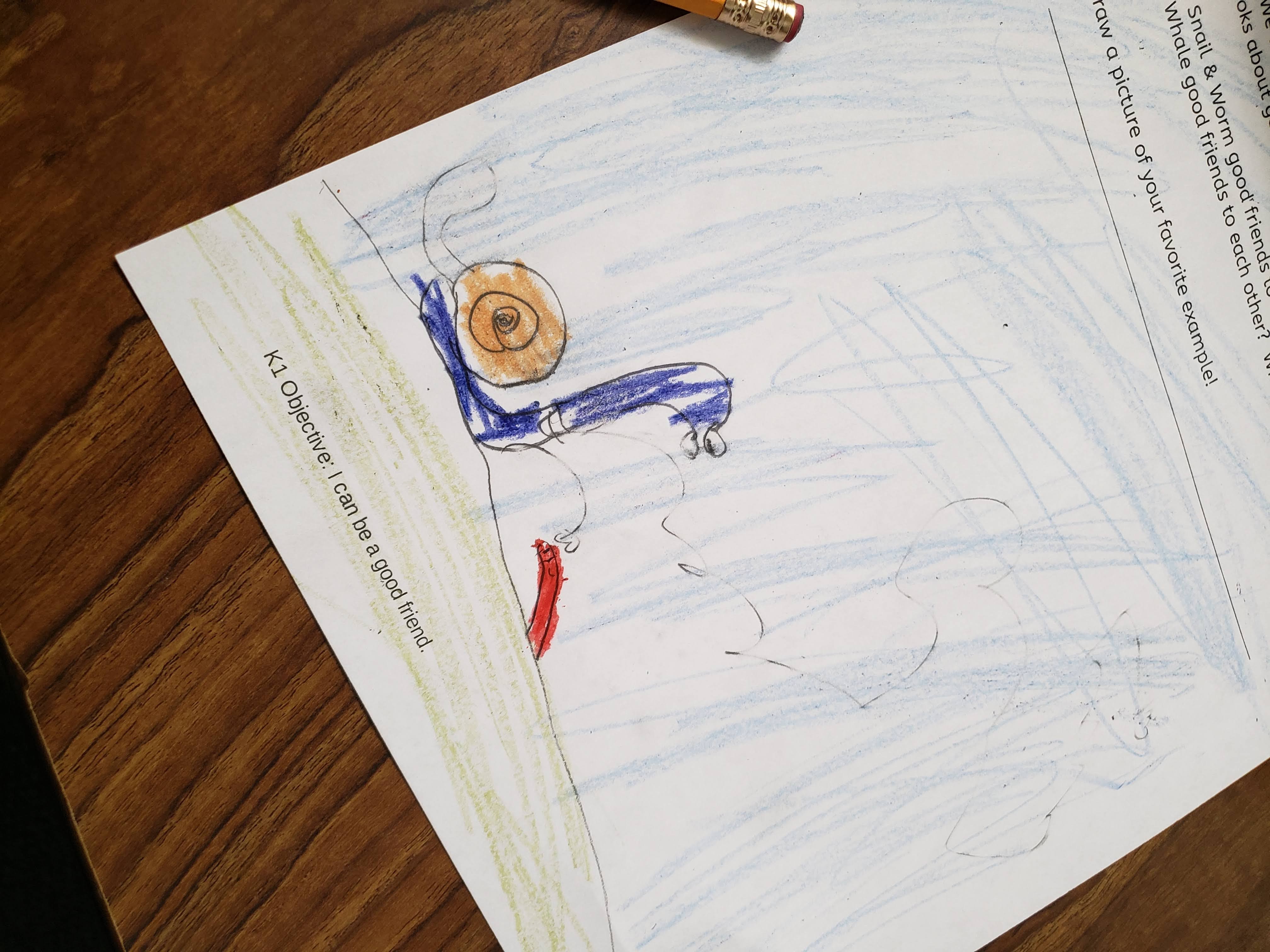
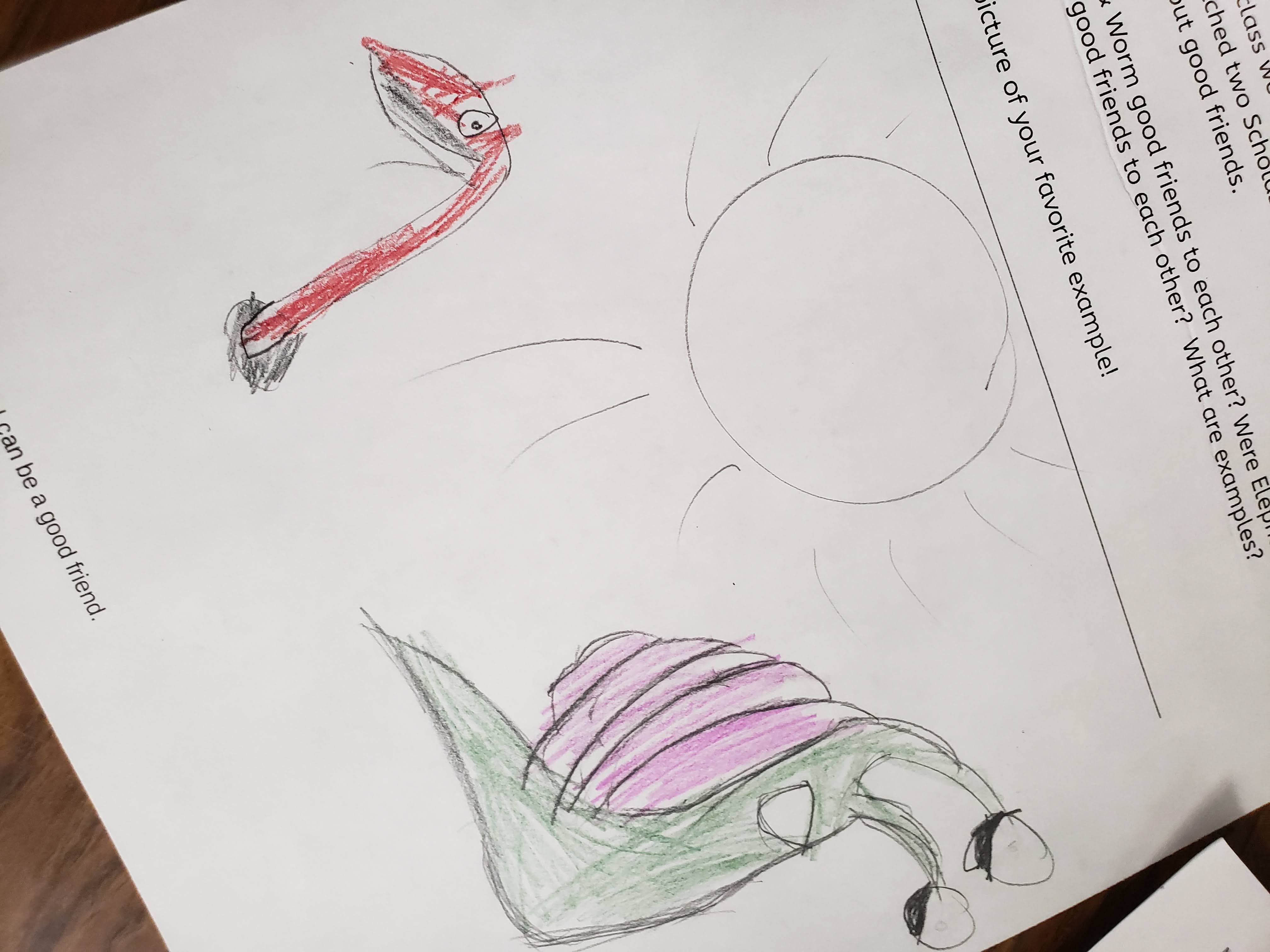
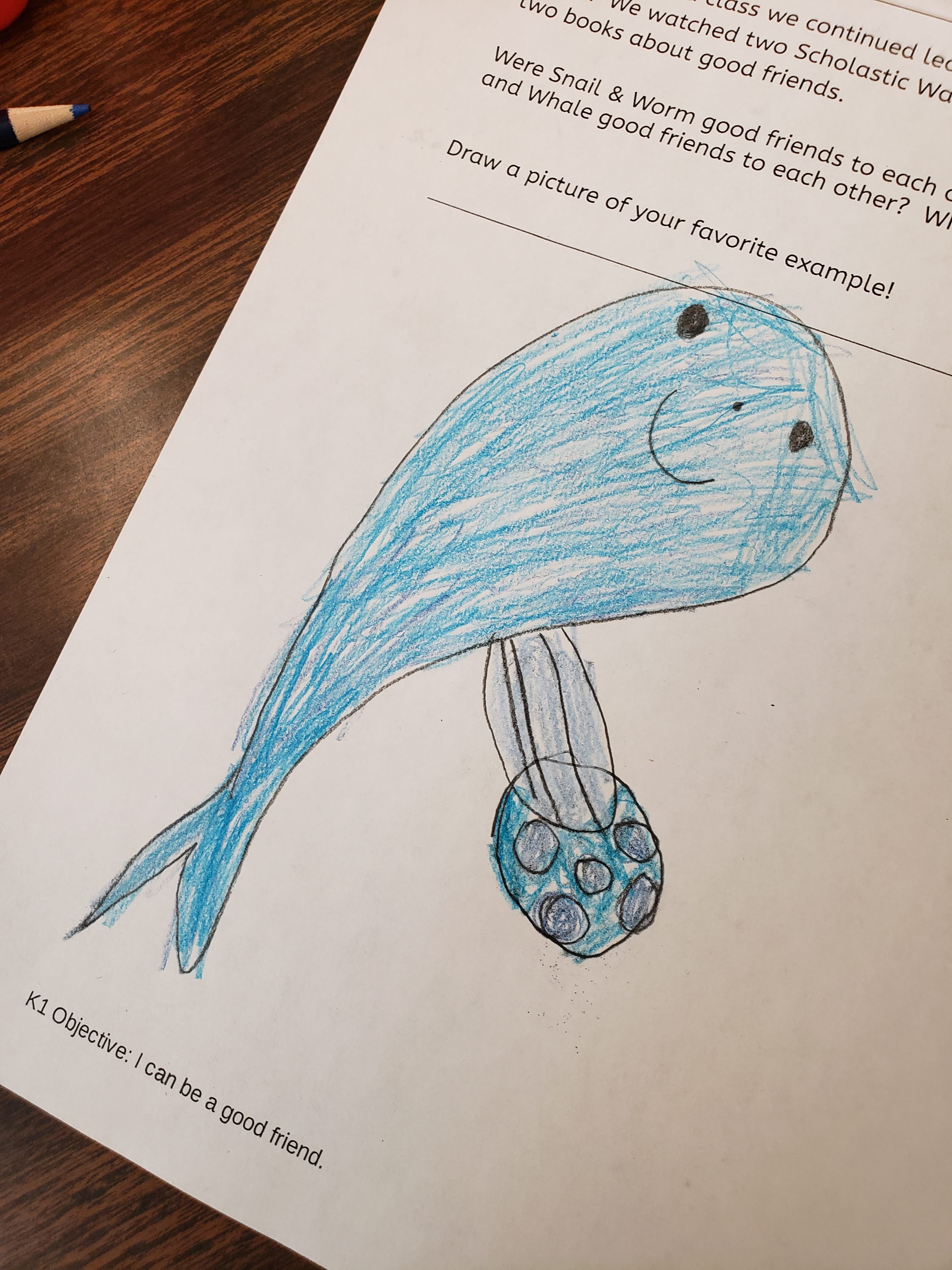
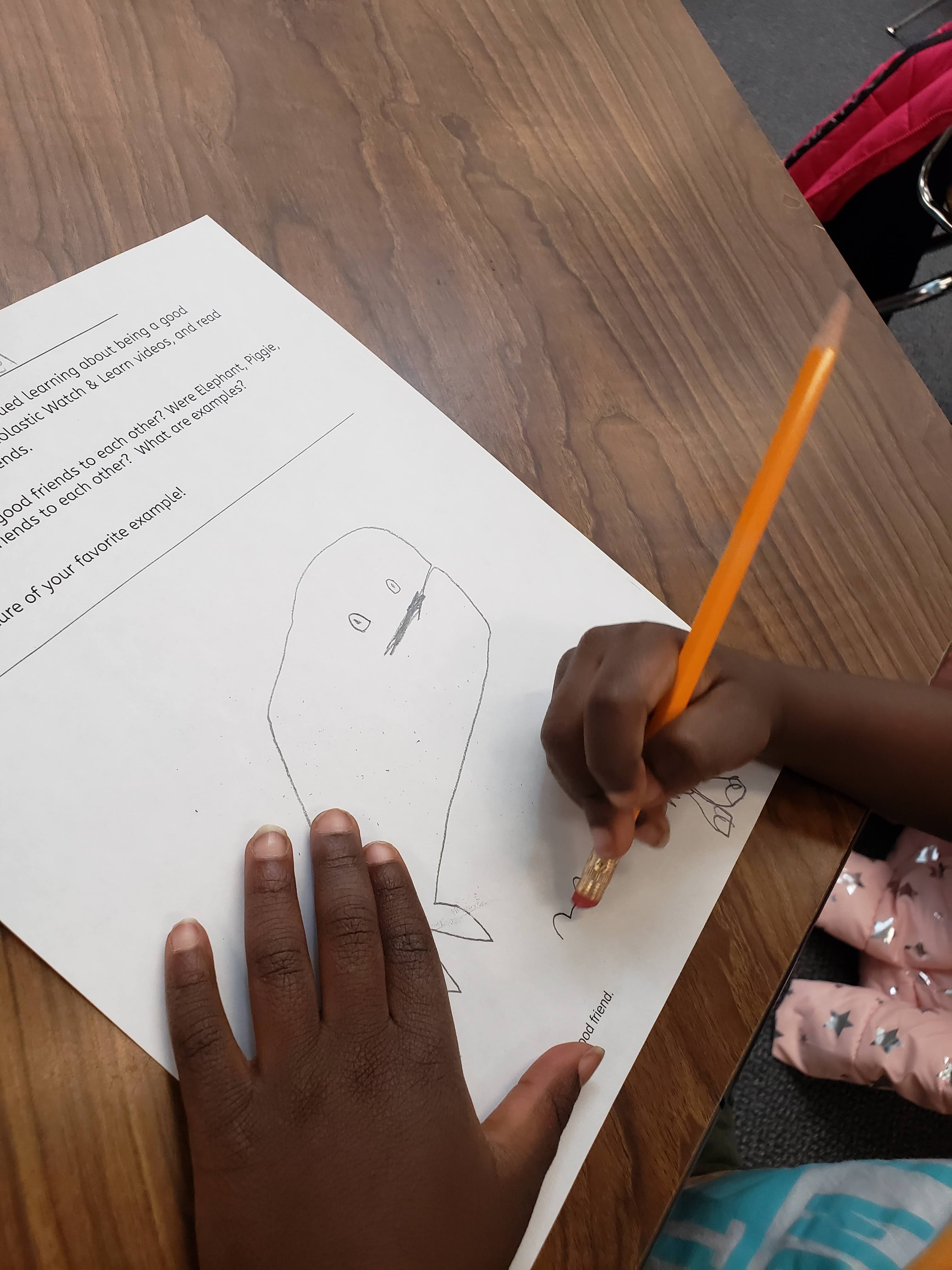
The first week, my lesson was entitled, “What is Friendship?” and the big question was, “What does it mean to be a good friend?” In the lesson I used the wonderful PebbleGo article, Making New Friends, and the books My New Friend is So Fun! by Mo Willems and Snail and Worm Again by Tina Kügler. My students and I had insightful discussions about friendship and specific ways in which the characters were good friends to each other. We also had a great time creating snail art!
The second week, my lesson was entitled “Be a Fantastic Friend” and we continued exploring what it means to be a friend. Scholastic Watch & Learn has two wonderful friendship videos: Fantastic Friend Countdown and Can You Be a Good Friend? which gave my young students some concrete examples of things that they could do in the classroom and at recess. The books I incorporated were again by author/illustrators Mo Willems (The Big Guy Took My Ball!) and Tina Kügler (Snail and Worm). I love that my young learners appreciated the humor in each of these books and laughed out loud at the characters’ silliness, while also understanding the message of friendship in each.
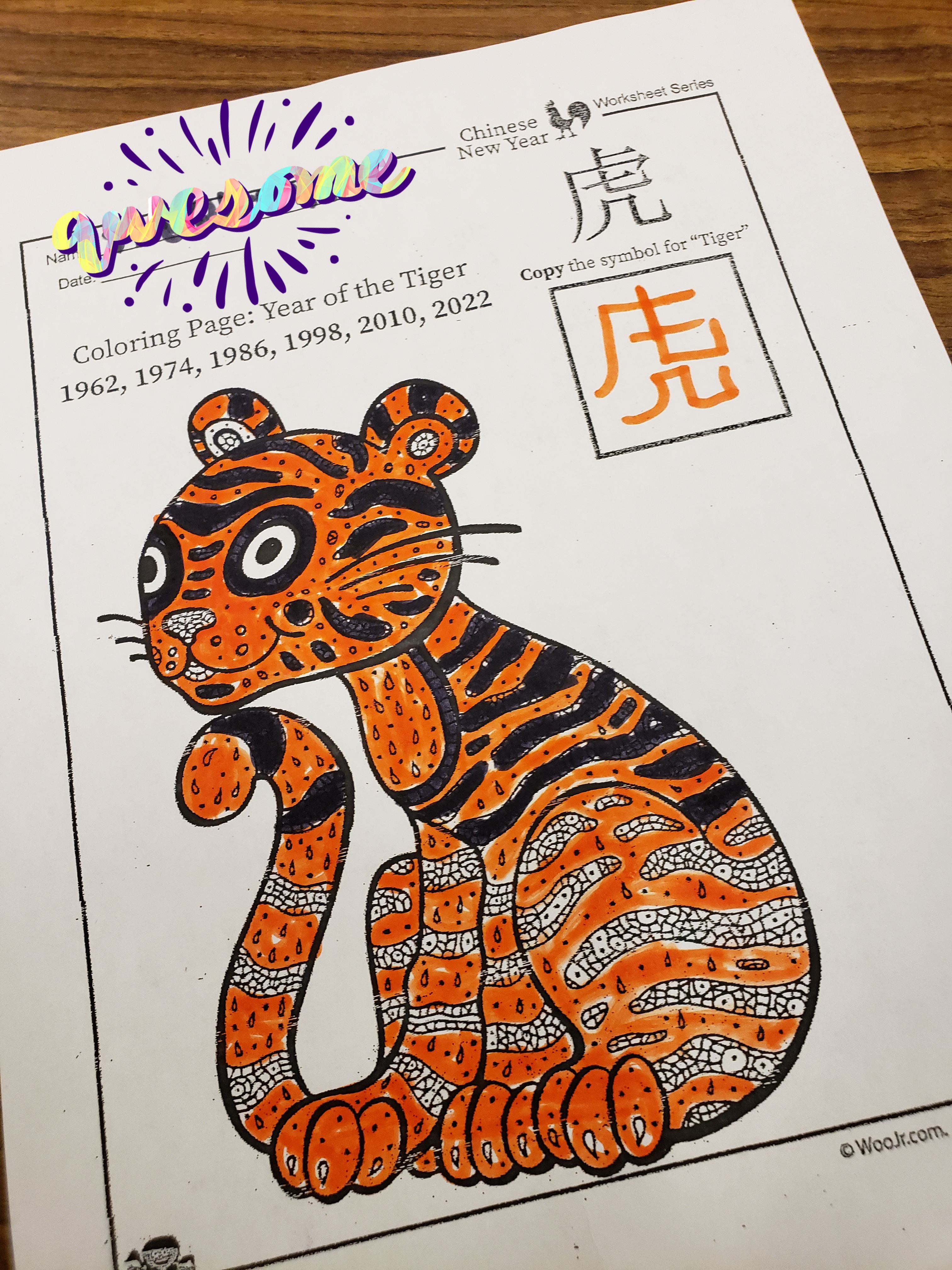
February is such a fantastic month for learning! Not only is it Black History Month, Valentine’s Day, Love Your Library Month, in 2022, we also celebrated the Lunar New Year and the Winter Olympics.
Today’s post focuses on the Lunar or Chinese New Year, which is the most important holiday in Chinese culture. Because I believe it is extremely important to celebrate the diversity of our school community, I was excited to invite my students to learn about this wonderful two-week celebration.
As I started pulling together resources for my lesson, including print and ebooks, articles in our PebbleGo database, Gale in Context – Elementary database, video in our Scholastic Watch & Learn database, and a couple of other vetted YouTube videos, I started looking for a good Google slide theme. SlidesCarnival and are two of my “go to” resources for awesome slide templates – for this presentation, I used the beautiful SlidesGo Year of the Tiger template, which also included information about the Chinese New Year.
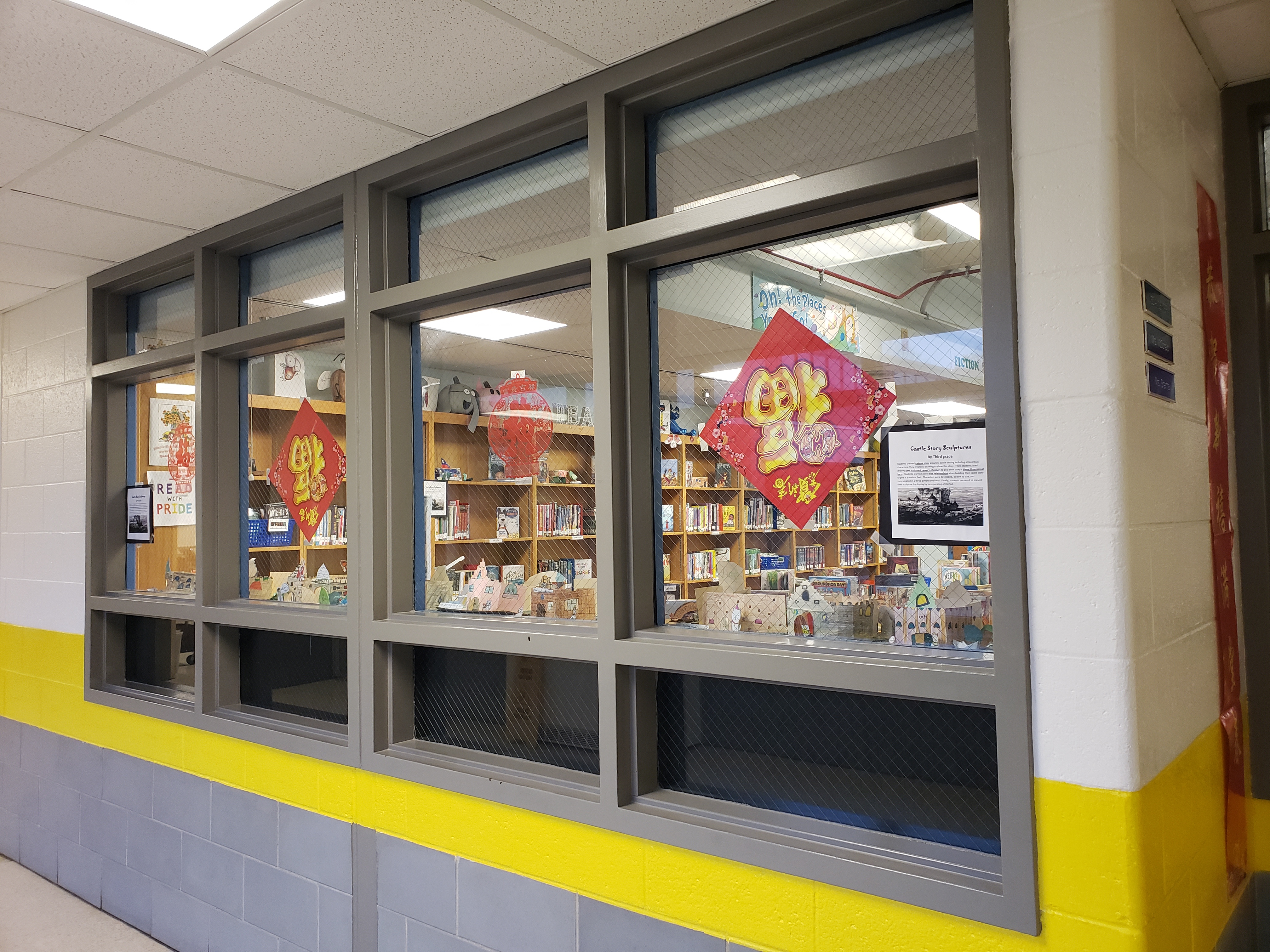
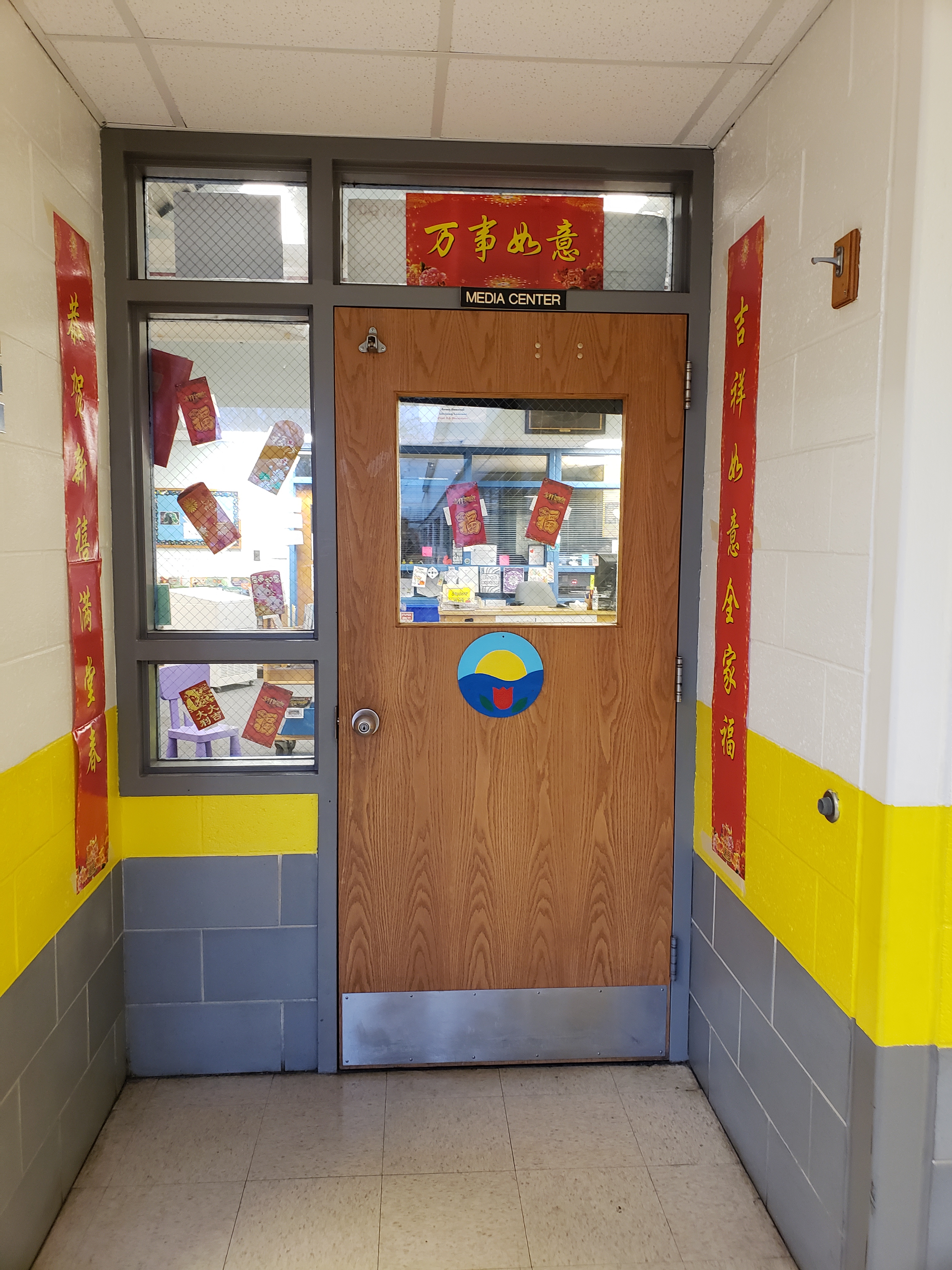
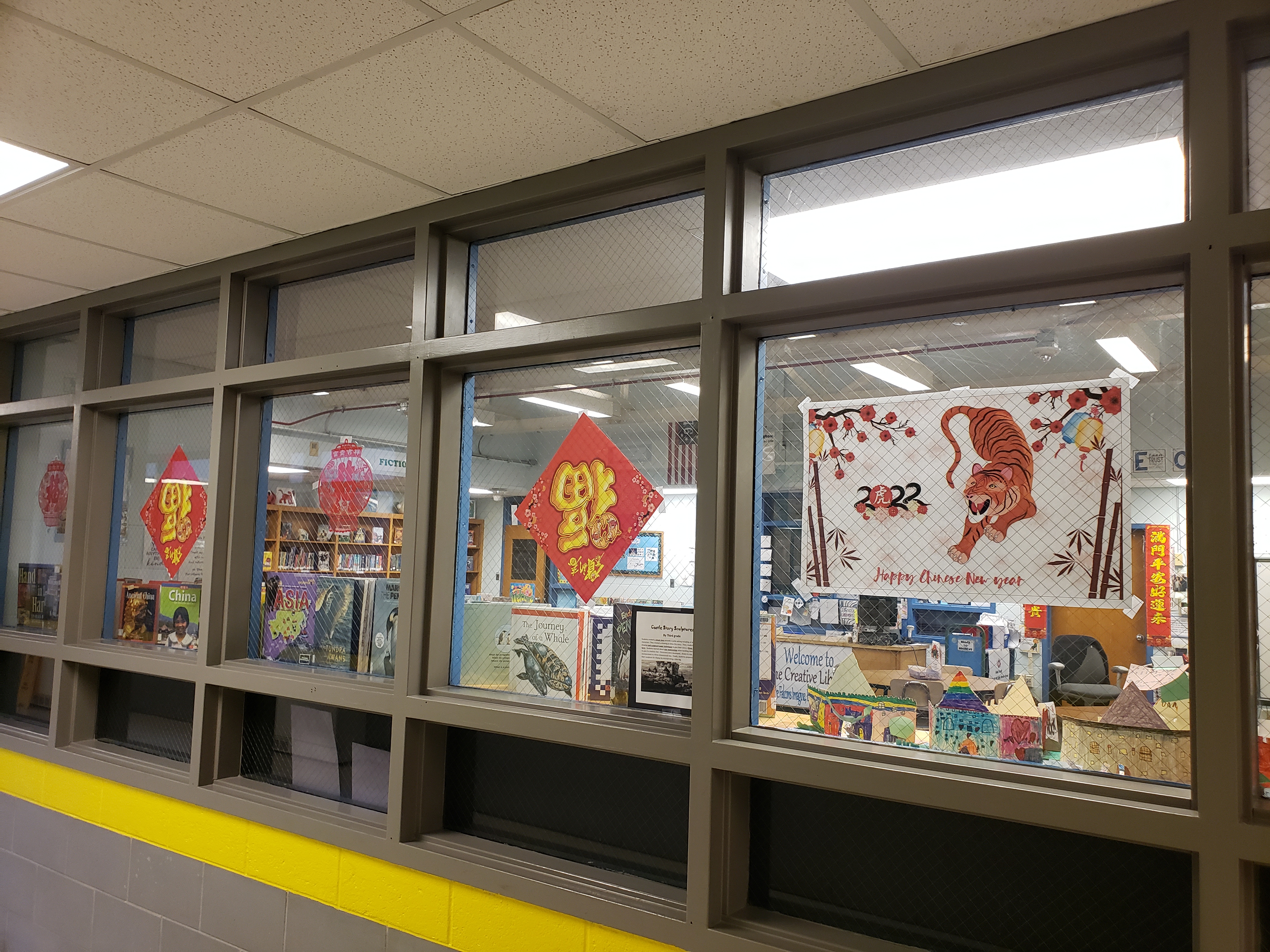
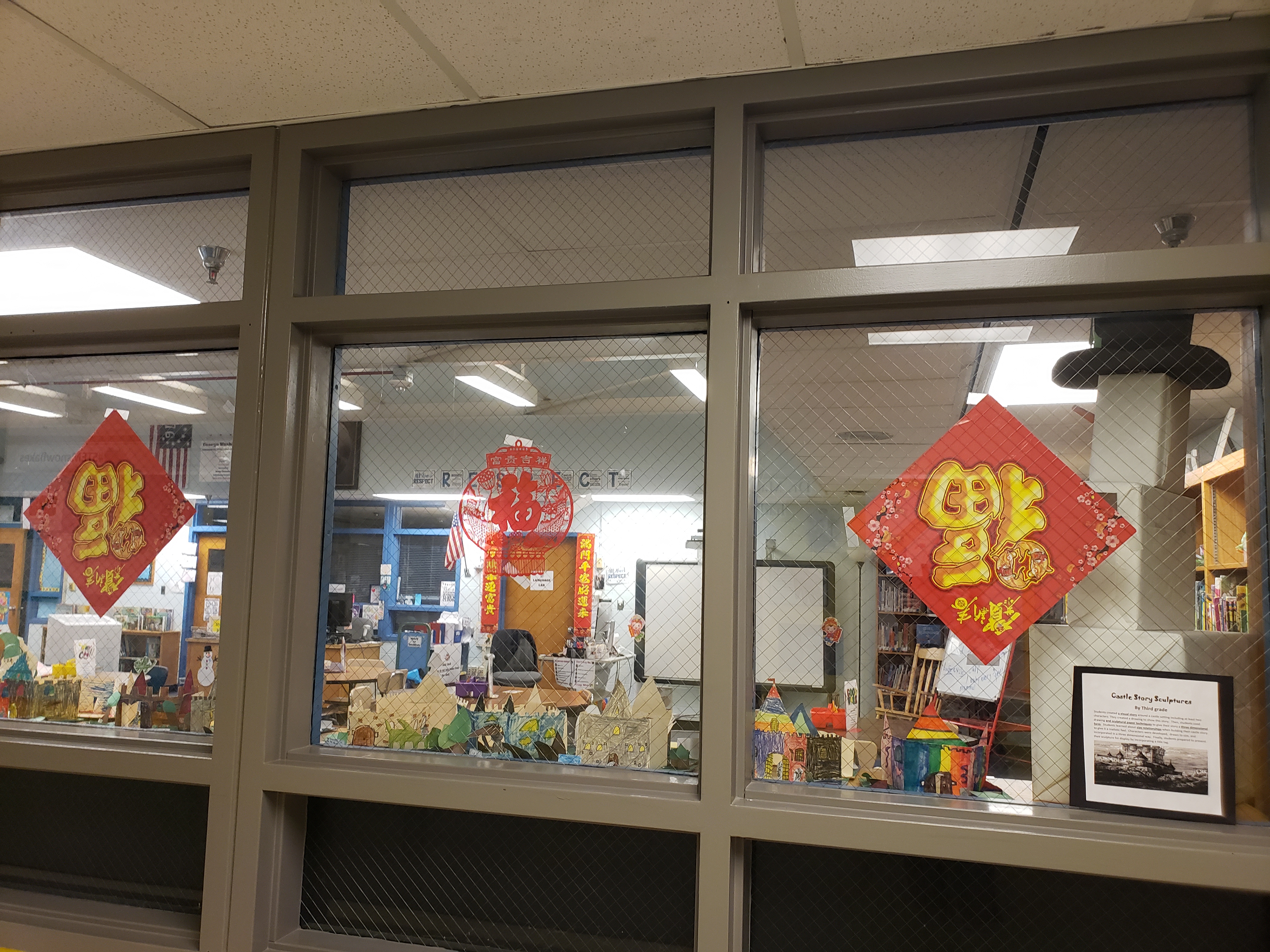
Just as I did with my Mid-Autumn Festival lesson in September, I consulted one of my colleagues, Chanru, who is Chinese-American, to have her review my Chinese New Year lesson for authenticity and accuracy. She gave me positive feedback, and also asked if she might bring in Chinese New Year decorations to help me decorate the library. While we hung the decorations, she explained what the characters on the banners and window clings meant. She has been an amazing primary resource to me!
In addition to my lessons, I also displayed nonfiction books about China and other countries where the Lunar New Year is celebrated, as well as displayed and spotlighted fiction chapter and picture books written and illustrated by Asian-Americans.
Our principal calls for weekly “Shout Outs” to include in his Monday morning newsletter, and Chanru and I gave each other kudos that week. I shared how thankful I was that she reviewed my lessons and shared her decorations. Her comment to me was, “Shout out to Melissa, for you spent your time making the amazing Chinese New Year lesson slides for all grade levels and are willing to set up the Media room with all theme decorations. I feel so embraced and represented.” This was a timely reminder that while we are helping to expand knowledge of our students by honoring the culture of our diverse community, a delightful outcome is that our colleagues can also feel the love.
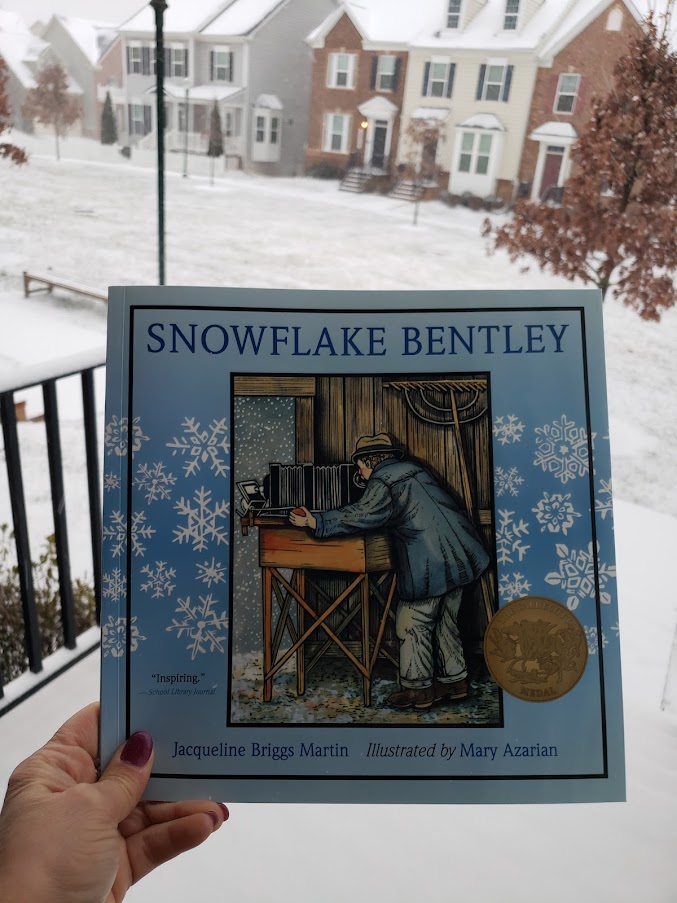
I was born in upstate New York and my parents moved our little family to Maine when I was 3 years old, so as you might imagine, I love the beauty in the change of seasons, and in particular,the magic of a snow storm. As a young girl, I remember intently listening to the radio after (or during) a snow storm, hoping to hear my school listed on the Snow Day – School Closed Announcements, so that I could play in the snow, and then come inside to drink hot chocolate and read a good book (or two).
Fast forward through many four-seasons (and lots of books) …
Within a year of moving to South Carolina with my new husband, Hurricane Hugo slammed into Charleston, and that winter we had a snow storm that dropped 8-10 inches (very unusual for the Lowcountry), and never again in the 7+ years I lived there. The January after moving to Maryland, a blizzard dumped 36 inches. In the 27 years I have lived in Maryland, we have had 5 or 6 blizzards with major snow accumulations. I have enjoyed every snowfall, be it a light dusting or a thick blanket.
I particularly love the snow storms that leave the ground covered in a blanket of snow, decorating the trees and their branches with snowy lace. I savor the peace that follows a thick blanket of snow – and enjoy taking photographs of the natural beauty that surrounds me when the world is glistening with beautiful white snowflakes. In all seasons, taking closeups of the amazing beauty in our natural world is a fascination of mine.
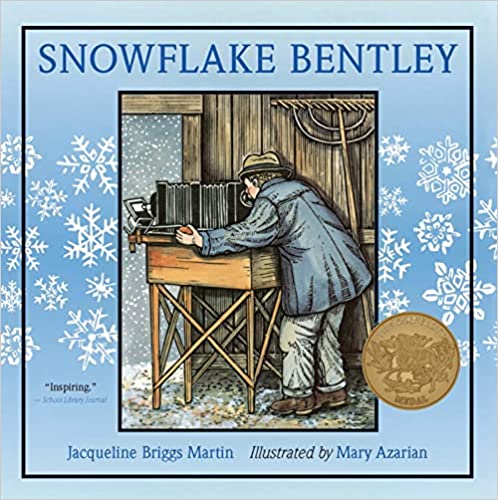
Being a New Englander, I was interested in learning about Vermonter Wilson “Snowflake” Bentley and his spectacular snowflake photographs. I created a lesson around the picture book, Snowflake Bentley, written by Jacqueline Briggs Martin and illustrated by Mary Azarian. Her lovely woodcut illustrations were awarded the Caldecott Medal in 1999. At the time of the award announcement, the American Library Association Caldecott Committee Chair Barbara Barstow said,
“Snowflake Bentleyhas a beautiful and thoughtful design, a poetic and informative text, distinguished illustrations, universal appeal and resonance. Mary Azarian, a Vermont artist who loves snow as much as Wilson Bentley, has created strong and skillfully carved woodcuts that portray sensible, sturdy characters and a timeless rural landscape.
“Of all the forms of water the tiny six-pointed crystals of ice called snow are incomparably the most beautiful and varied.”
Wilson A. Bentley (1865-1931)
Bentley’s process for photographing snowflakes, and his persistence to keep doing it despite the challenges he faced and the difficulty in taking the photographs, is admirable, and a wonderful lesson in itself. There are many lesson resources that focus on the social emotional aspects of Wilson Bentley’s story. You can find many resources on TeachingBooks here.
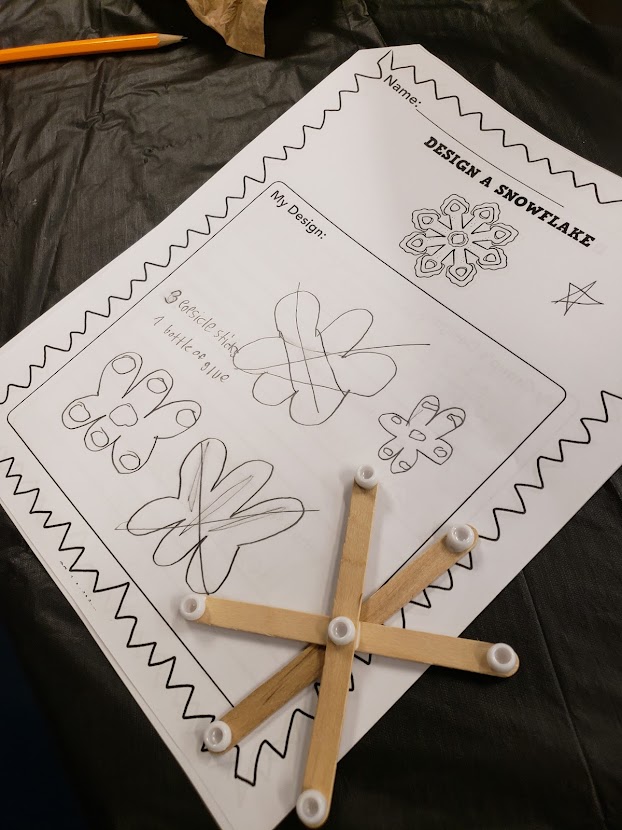
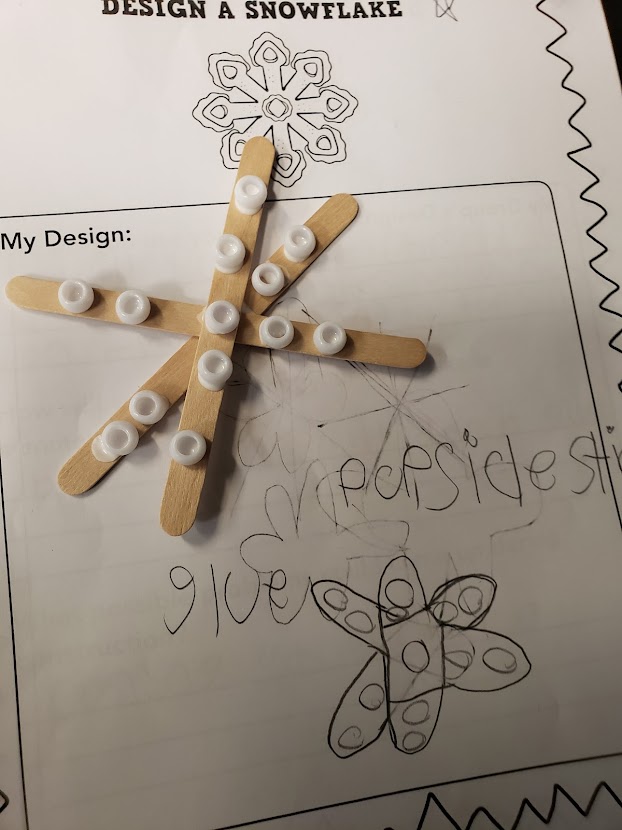
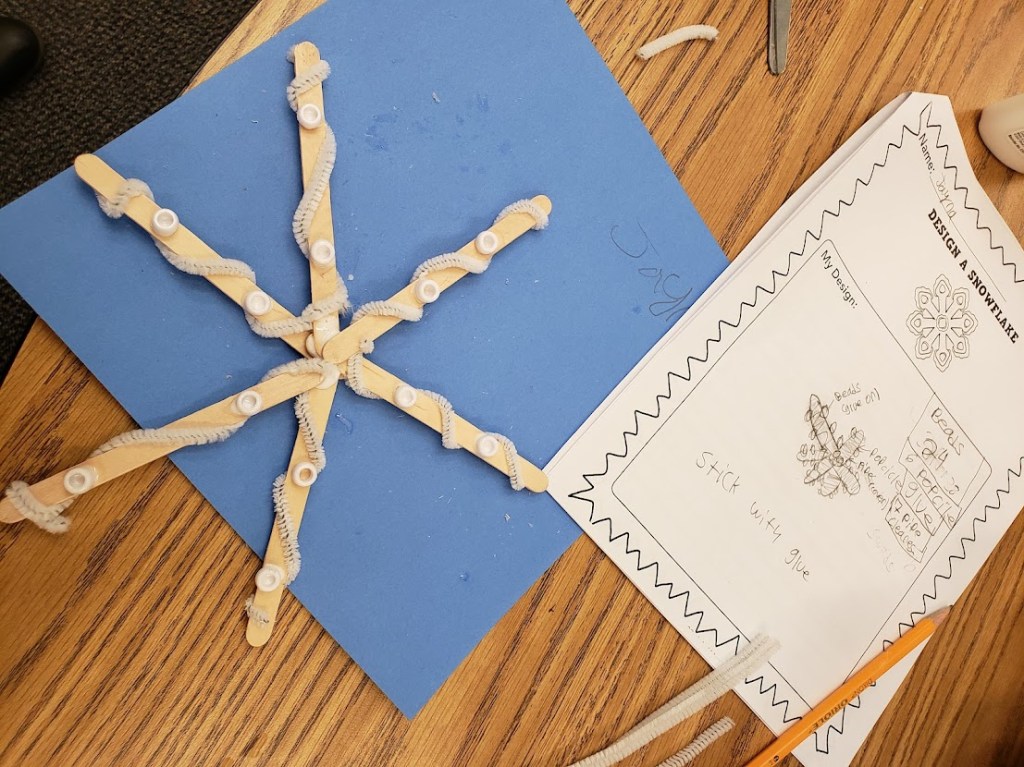
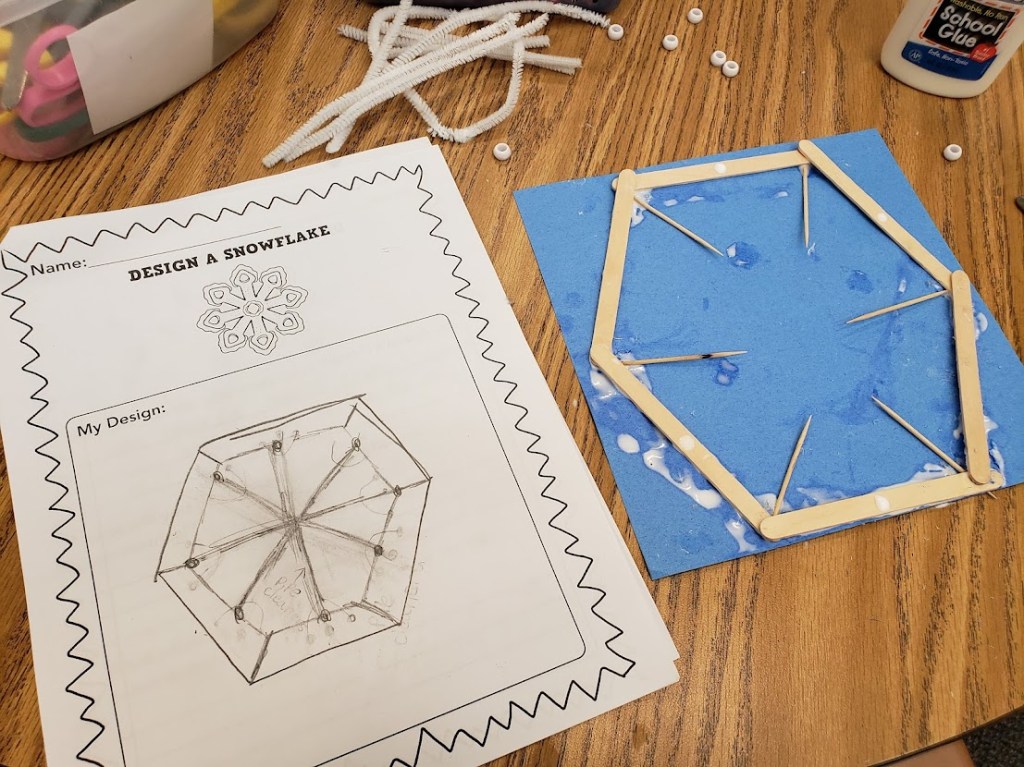
Although I touched on the social emotional aspect of Wilson’s story, I really hoped to get my students excited about the fascinating process of snowflake’s creation. As I was creating my lesson, I was very excited to discover the Carly and Adam’s Snowflake Bentley (literacy-based) STEM Activity and related Design a Snowflake STEM Challenge in their Seasonal STEM Challenges library (January and Winter STEM Challenges).
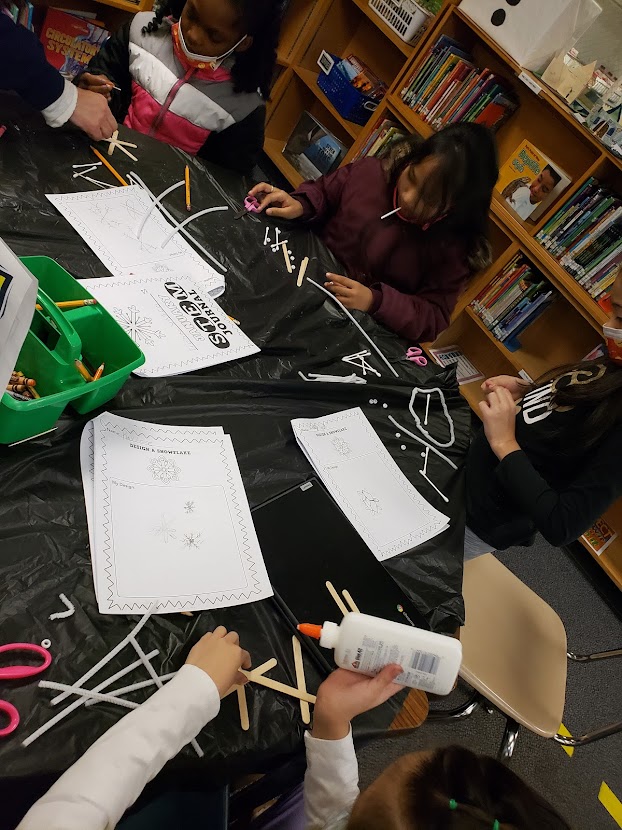
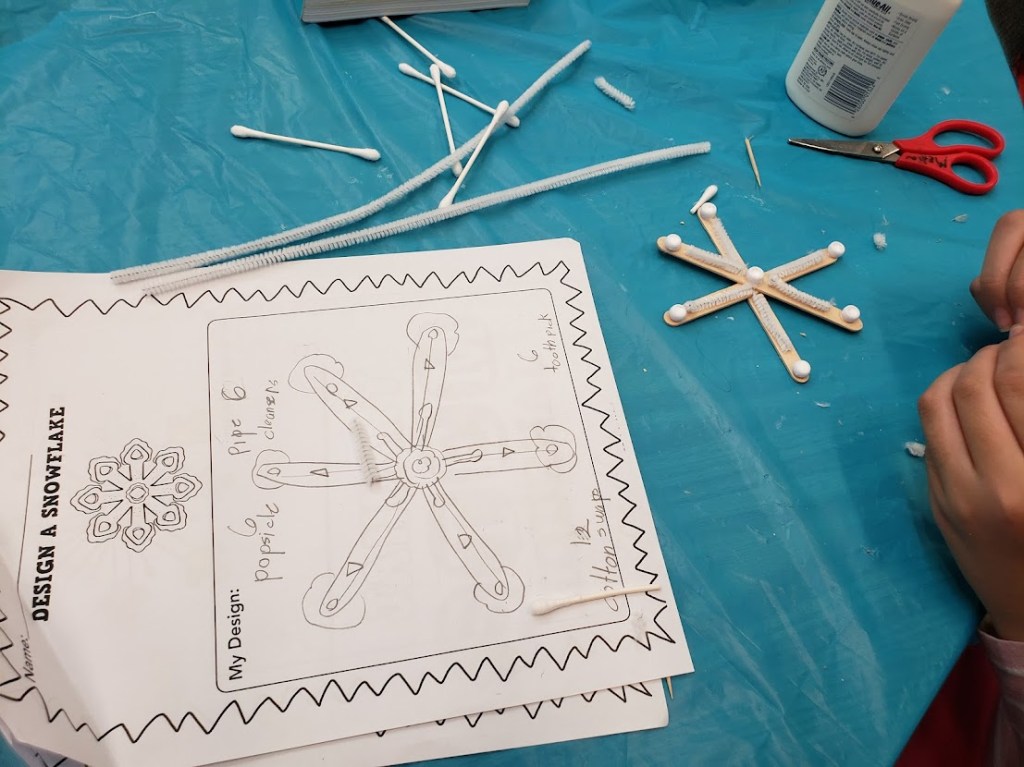
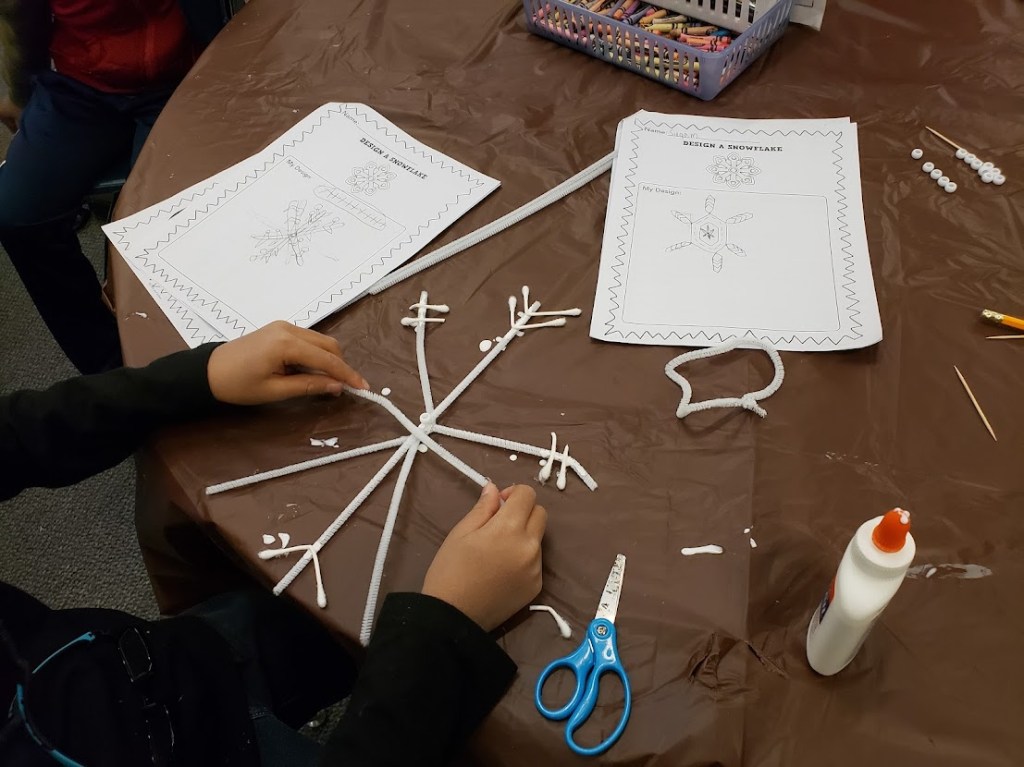
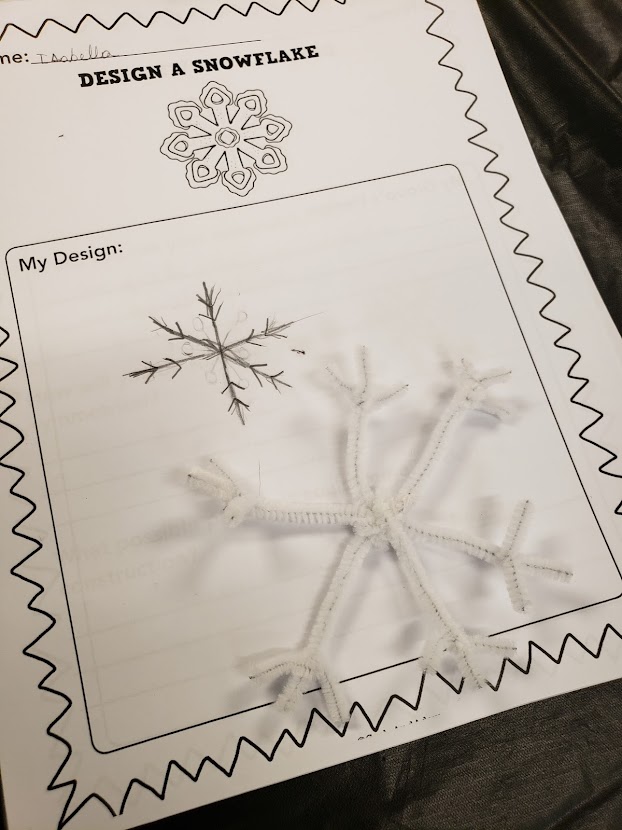
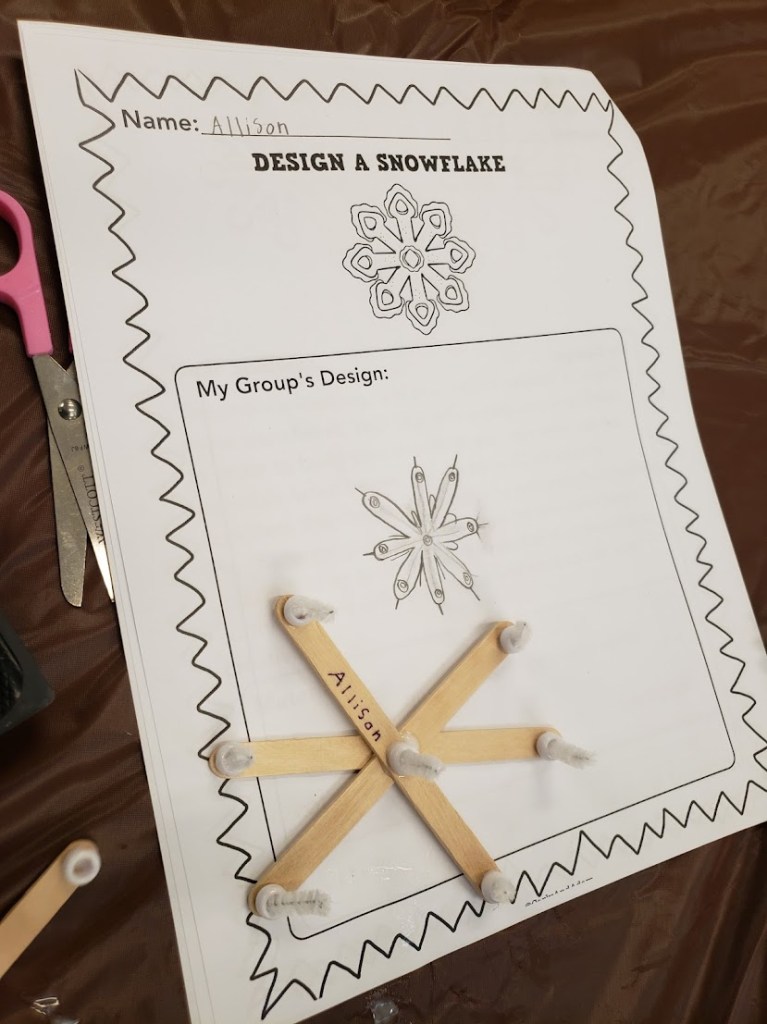
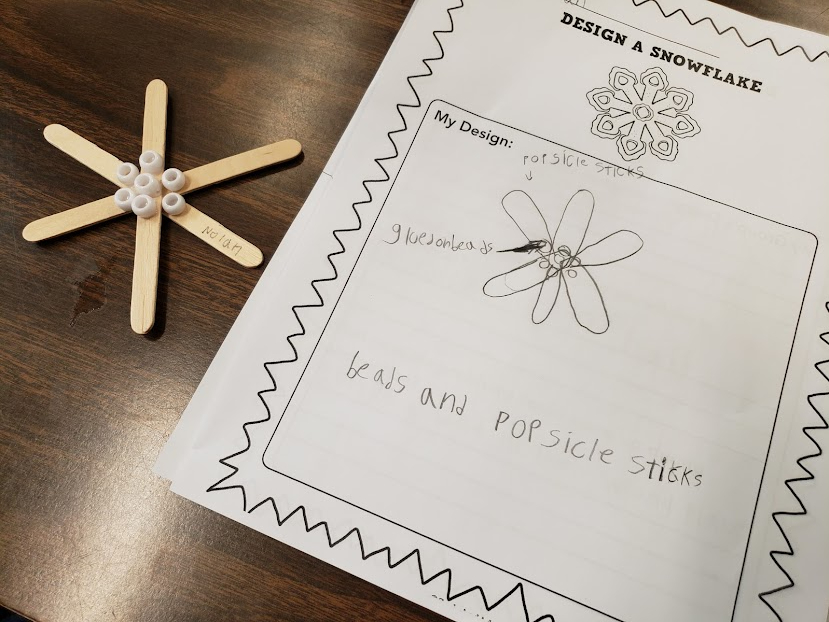
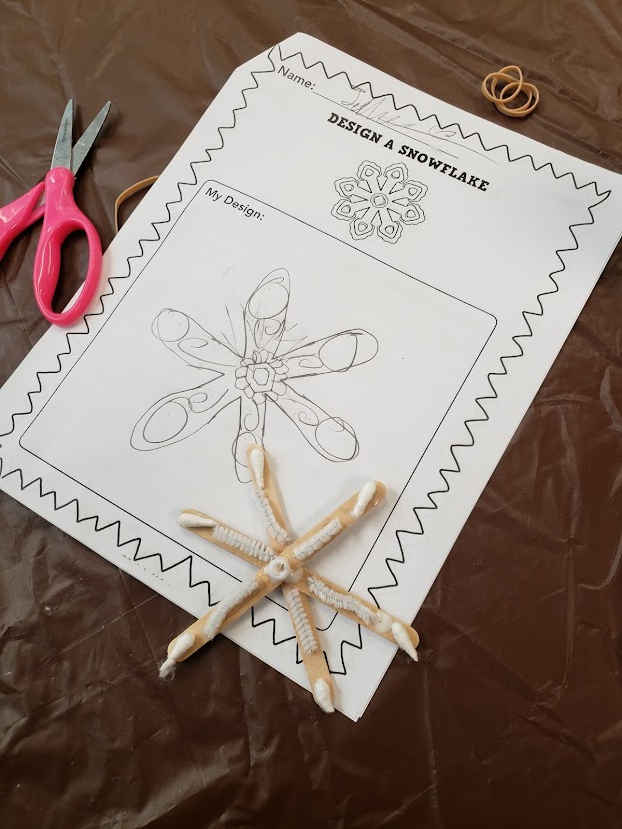
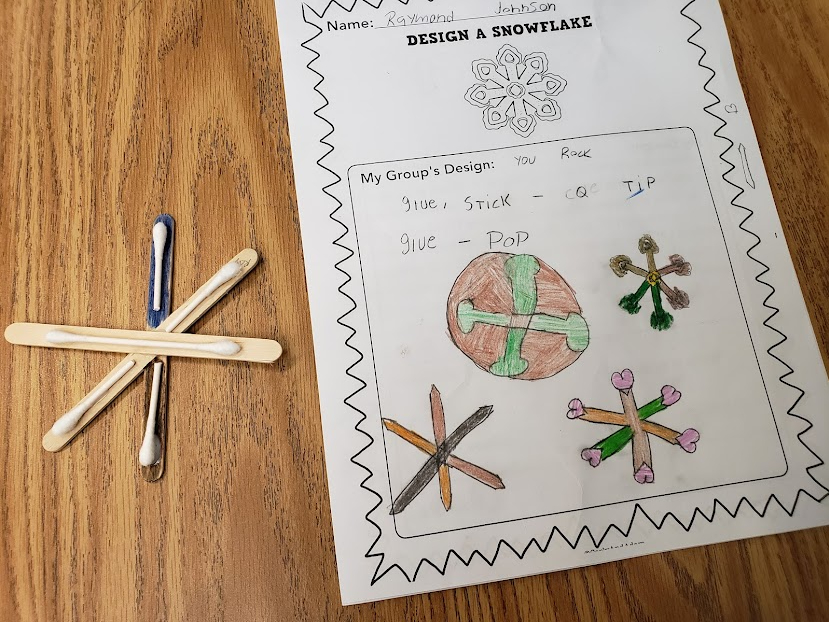
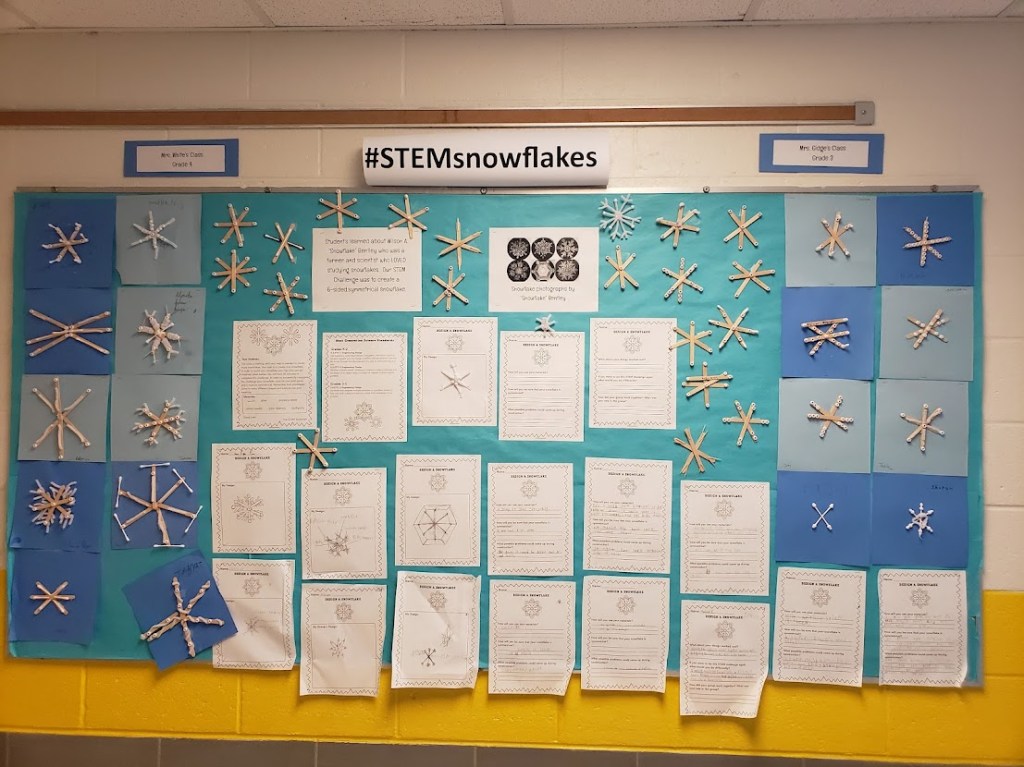
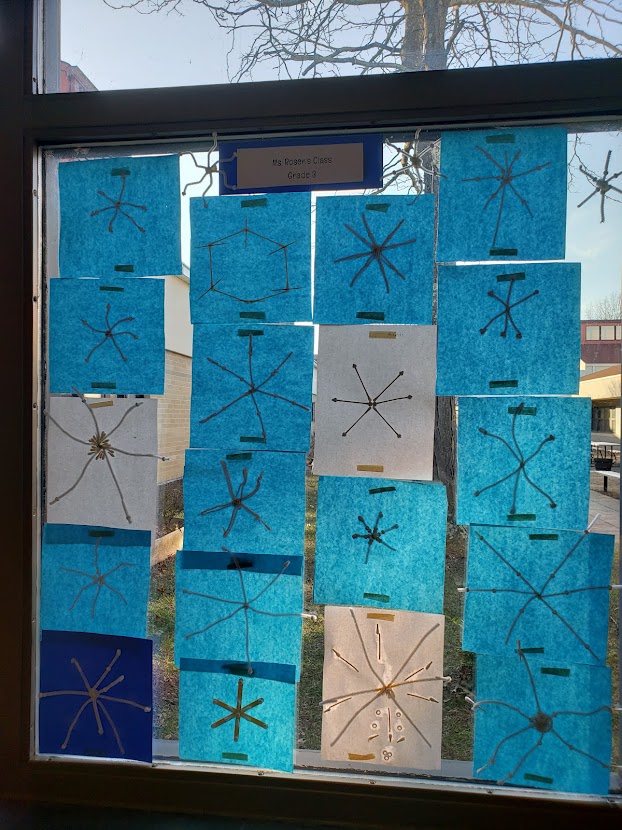
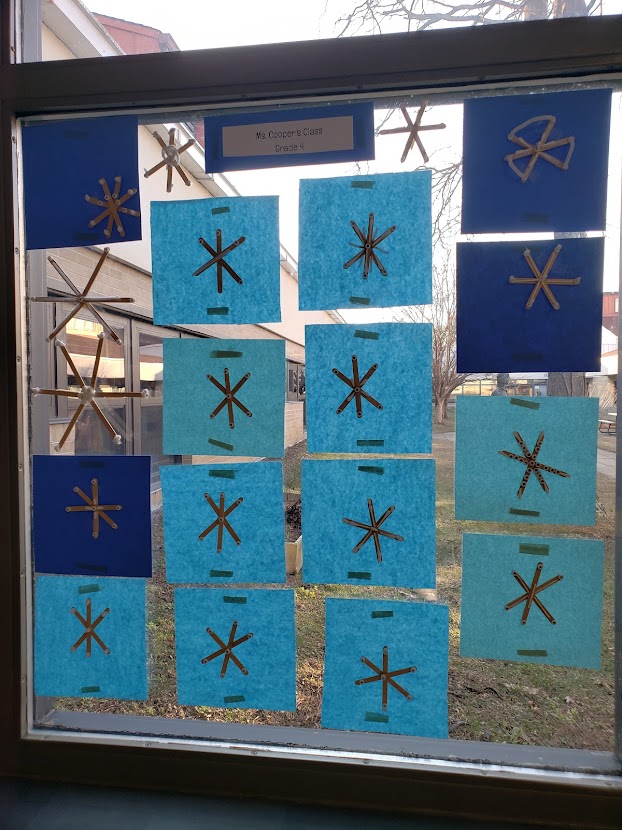
Because I wanted to make a hallway display of their snowflakes, I combined the two challenges and shared them with my 3rd and 4th grade students. It was a multi-week lesson. During the first lesson, we read Snowflake Bentley, studied some of Bentley’s photos, and watched videos about Wilson’s photography and the process of snowflake creation. In the second lesson we reviewed symmetry, watched a video about high-speed snowflake photography, and began the snowflake design process. In the last lesson we reviewed the engineering design process to allow my young engineers plenty of time to design, reflect, and create their snowflakes.
In the slide show below you will find some awesomely “cool” snowflakes that my students created using pipe cleaners, popsicle sticks, cotton swabs, pony beads, and glue.
Feel free to use my lesson, but please give me credit. I have included links to Carly and Adam’s website so that you may purchase their lessons on Teachers Pay Teachers or join their STEM Teacher Club. If you try the lesson with your students, please let me know how it went!
In October, my students enjoyed learning about U.S. Supreme Court Associate Justice Sonia Sotomoyor by reading her picture book biography, Turning Pages: My Life Story, and completing the Carly and Adam Tower of Knowledge STEM Challenge.
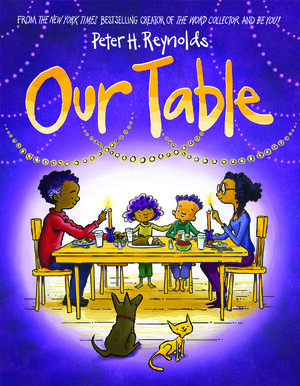
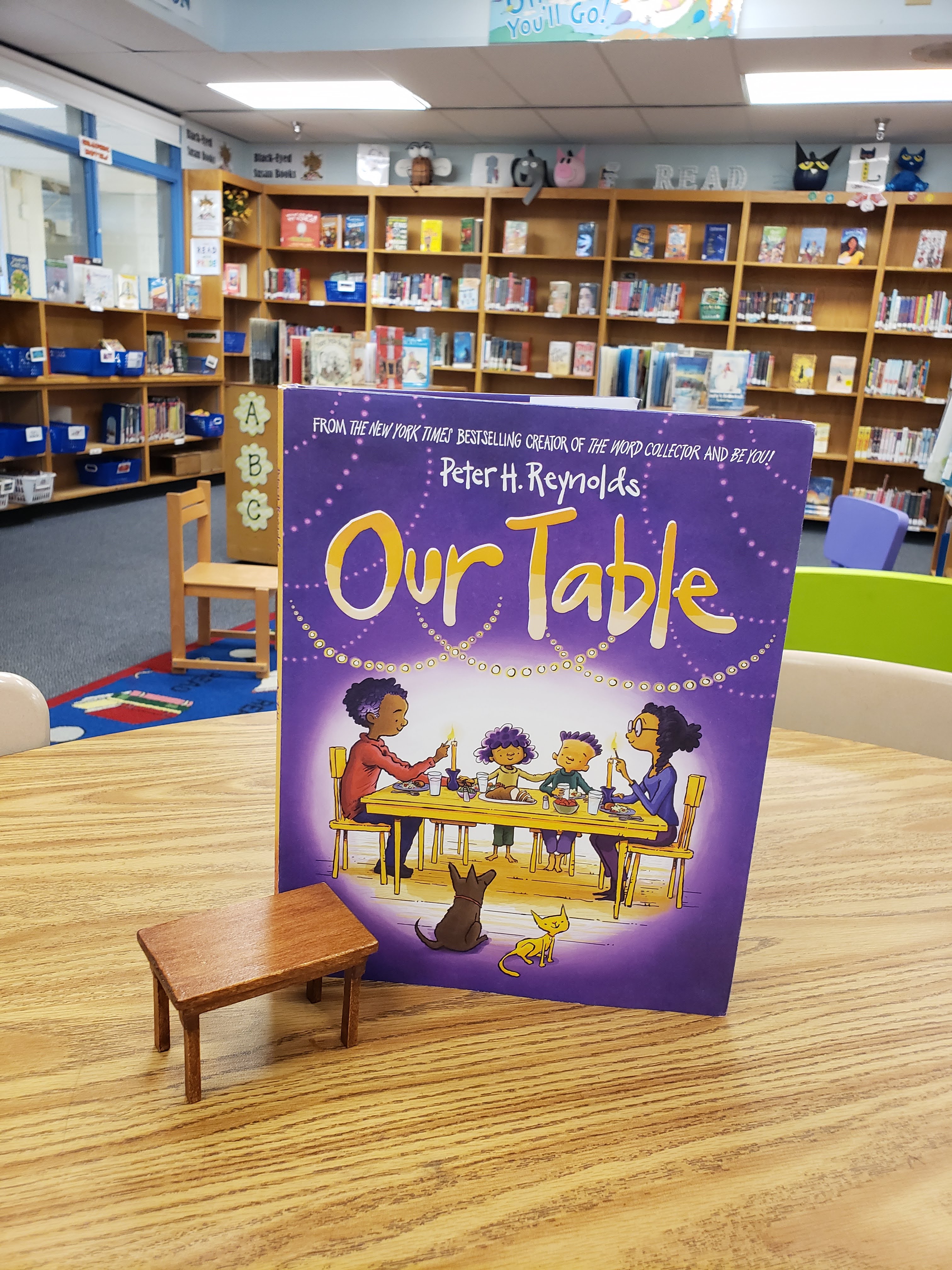
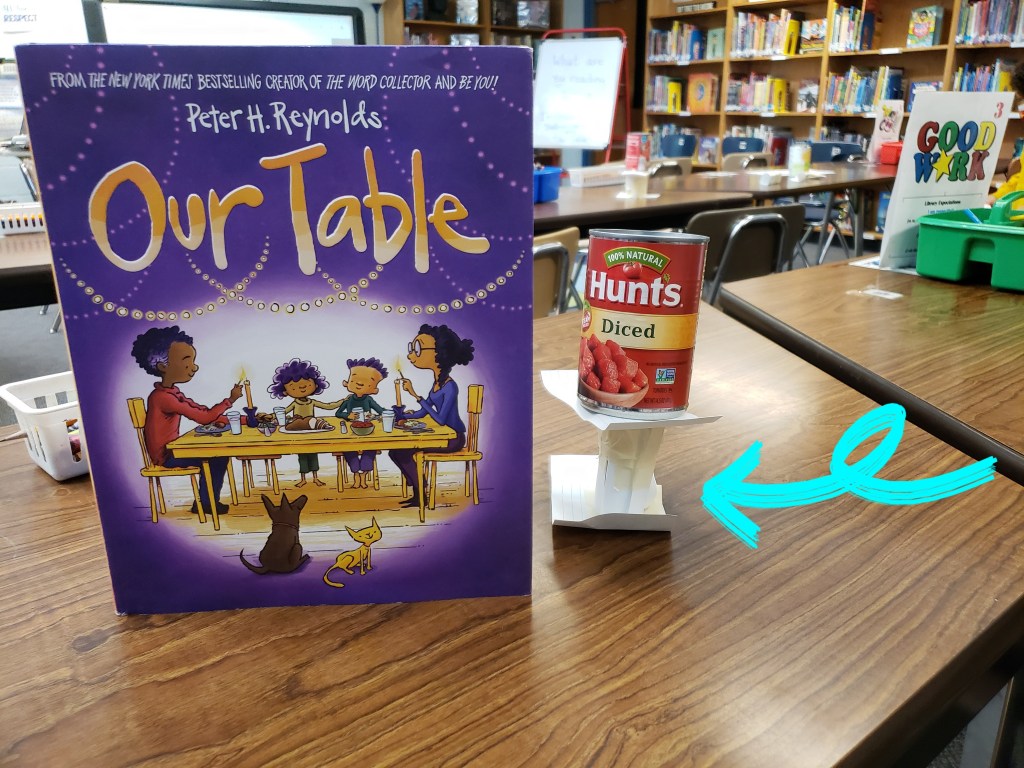
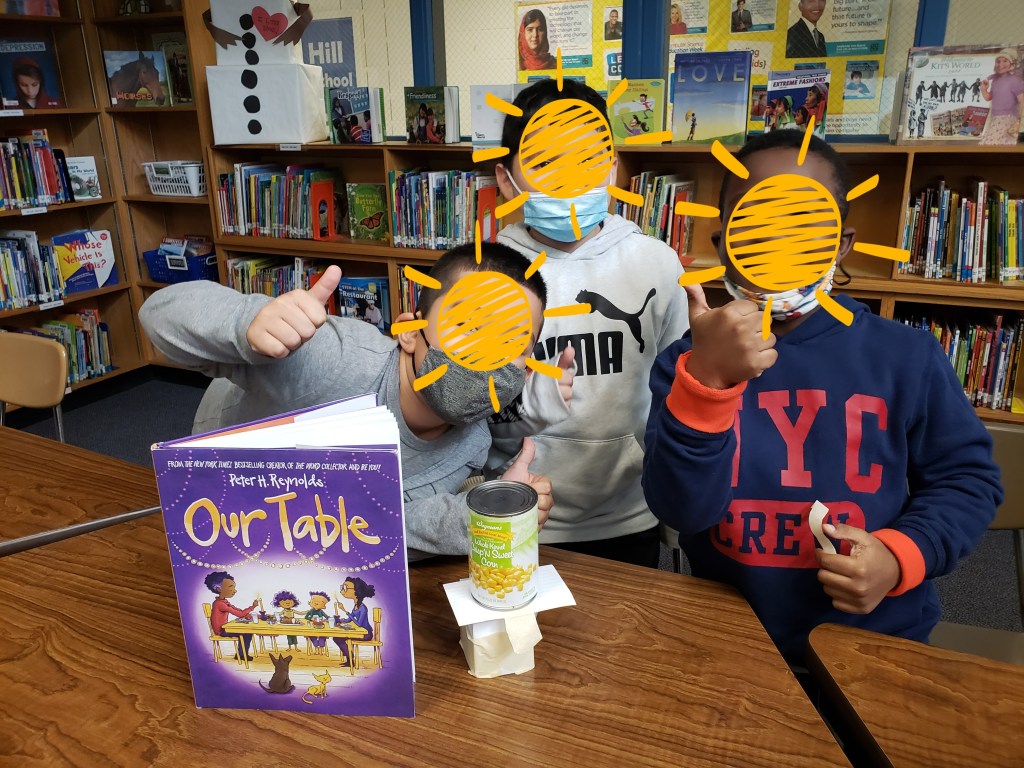
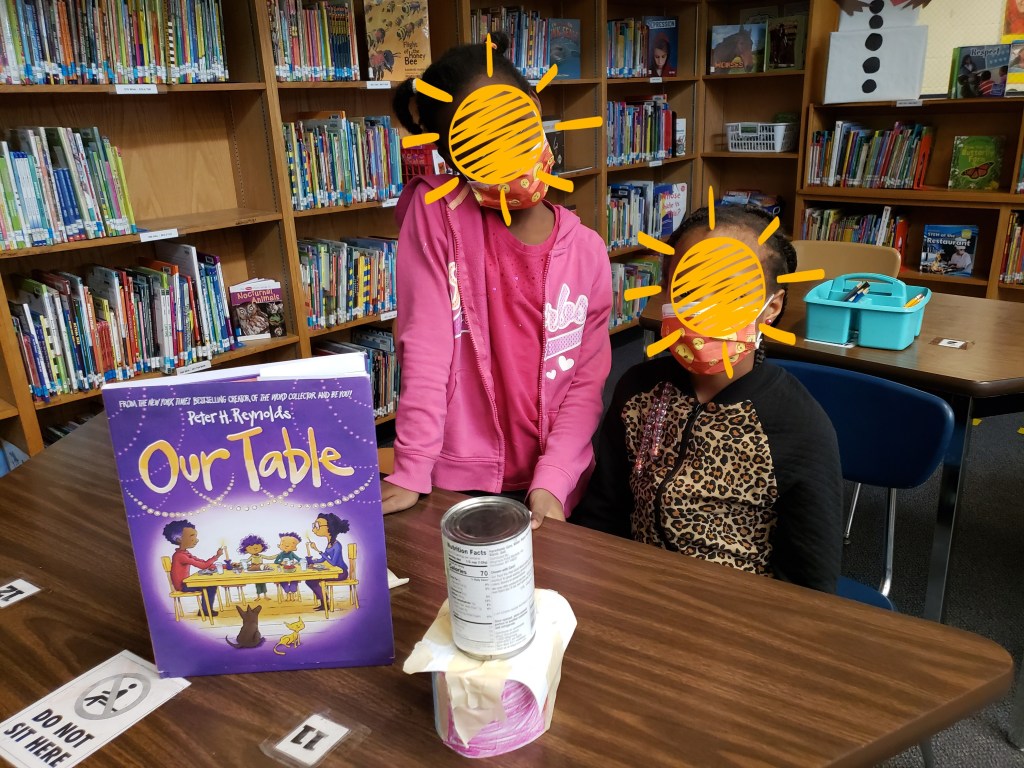
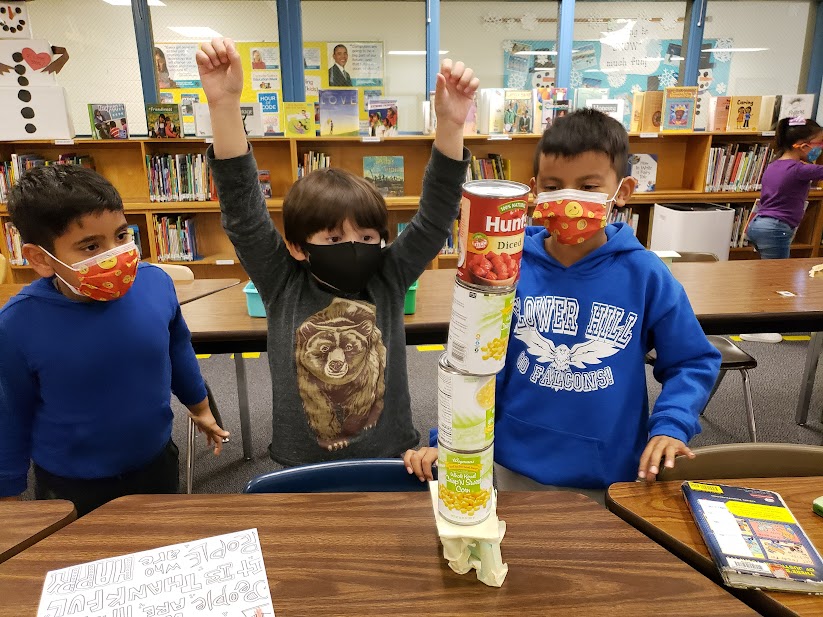
Since I am a long-time reader of Peter H. Reynolds’ books, I had pre-ordered Our Tableas soon as I found out about it, and received it on its book birthday in early November. I thought it would be a good story to share with my students during Thanksgiving week, when my students would have a special meal with their families. Because the Tower of Knowledge STEM challenge was so successful, I was inspired to create a similar STEM challenge for my students to help them extend their learning.
Our Table is a reminder that our family time together is precious and in the book, Peter asks us to “rediscover the gift of time shared together.” The message of this picture book is particularly poignant to me because my four children have all grown and flown from the nest. The times that I do have all four of my children around the table is precious to me. The publication of Our Table was ten days before my father passed away, and knowing that we will never share a meal with him again added to the importance of its message to my family.
In my media lesson, I focused on students finding a text-to-life connection with Our Table and reflecting upon how their own family shares a meal at their table, discussing Peter’s use of color to visually explain the separation Violet was feeling and her happiness when they came back together.
Lesson slides: Our Table STEM Challenge. You are welcome to make a copy of my lesson plan, but please give me credit.
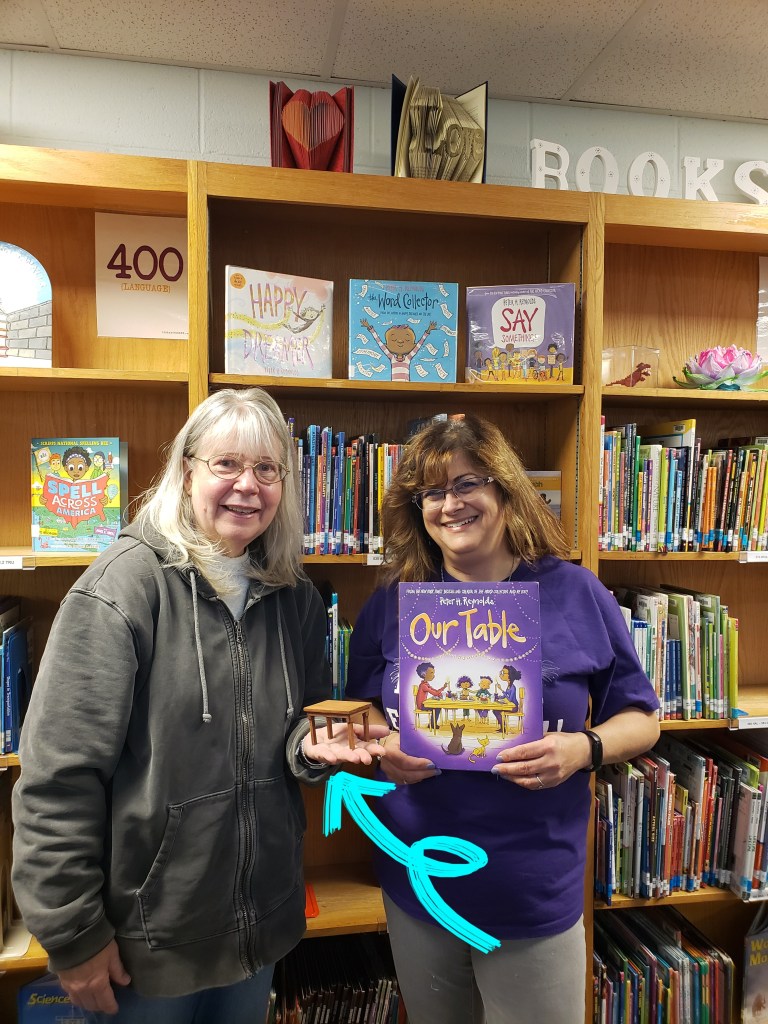
My friend Georgann made a tiny table for me to use as a prop when I read the book to my students and it helped them to make a connection with the idea of the disappearing table.
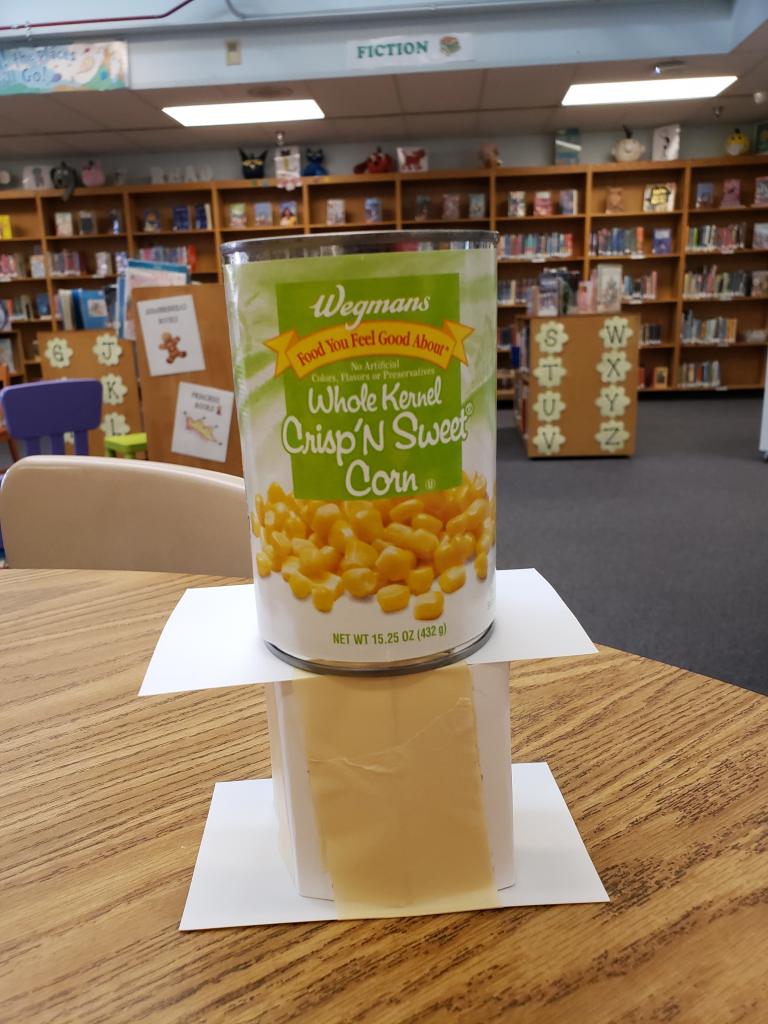
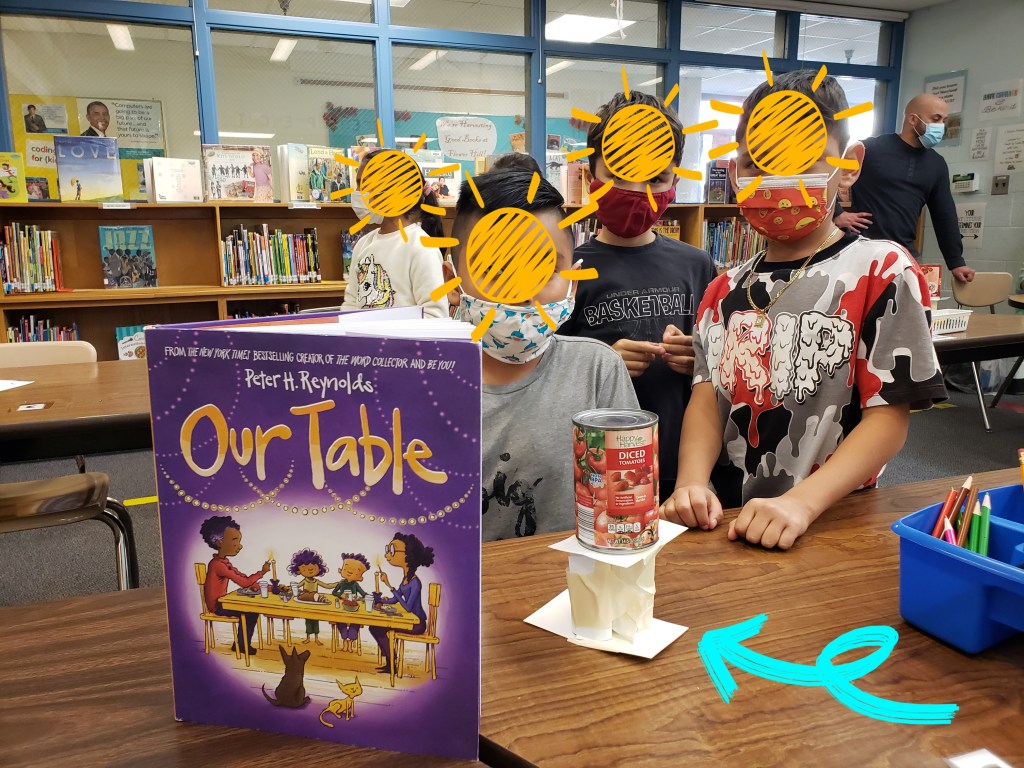
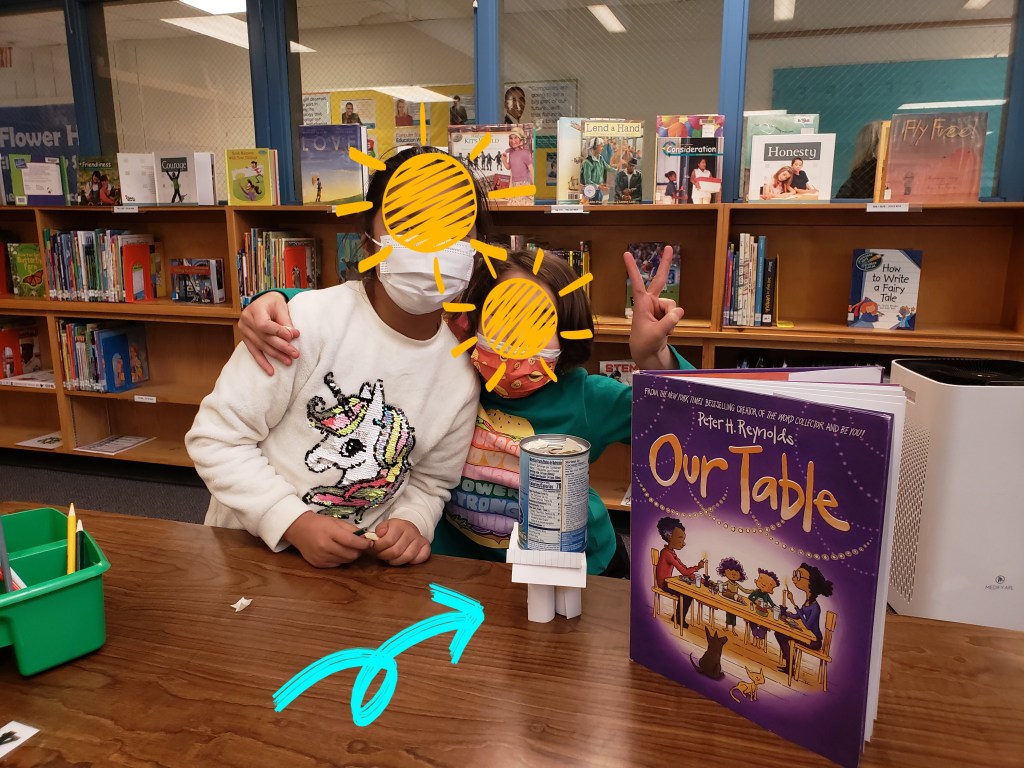
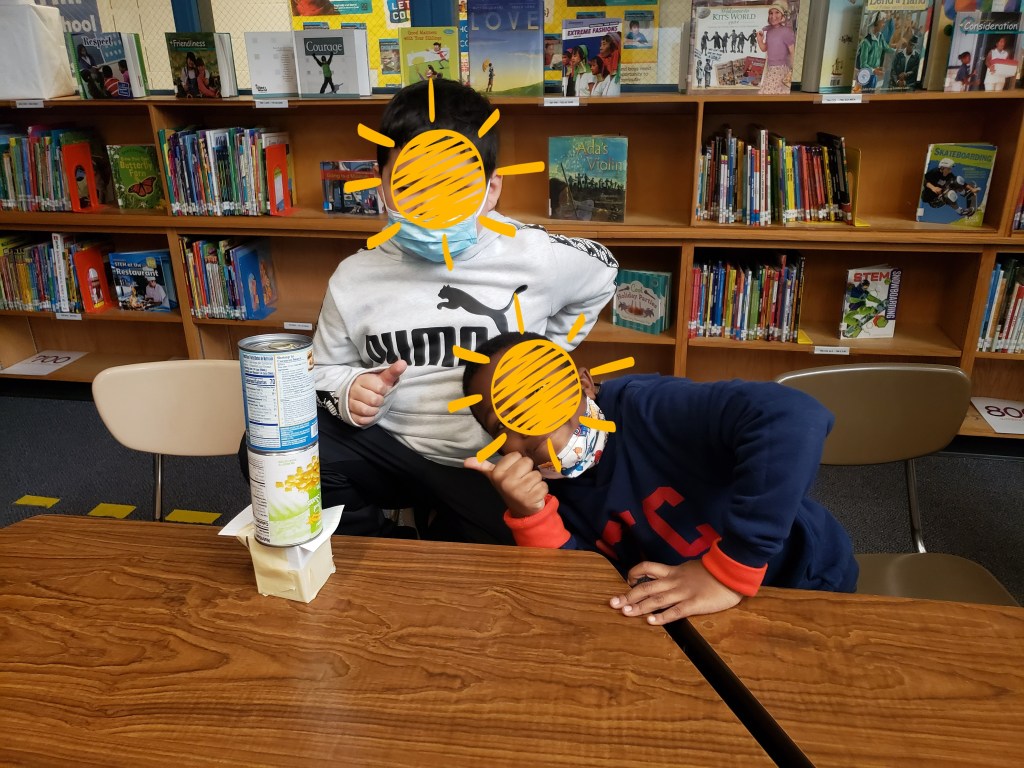
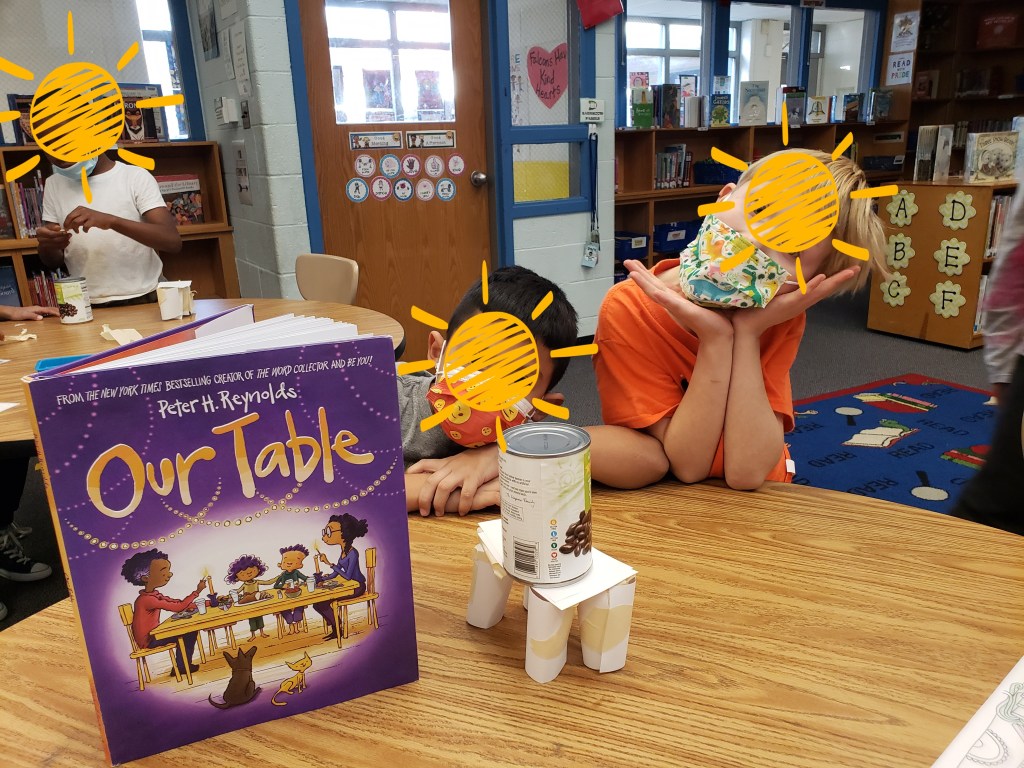
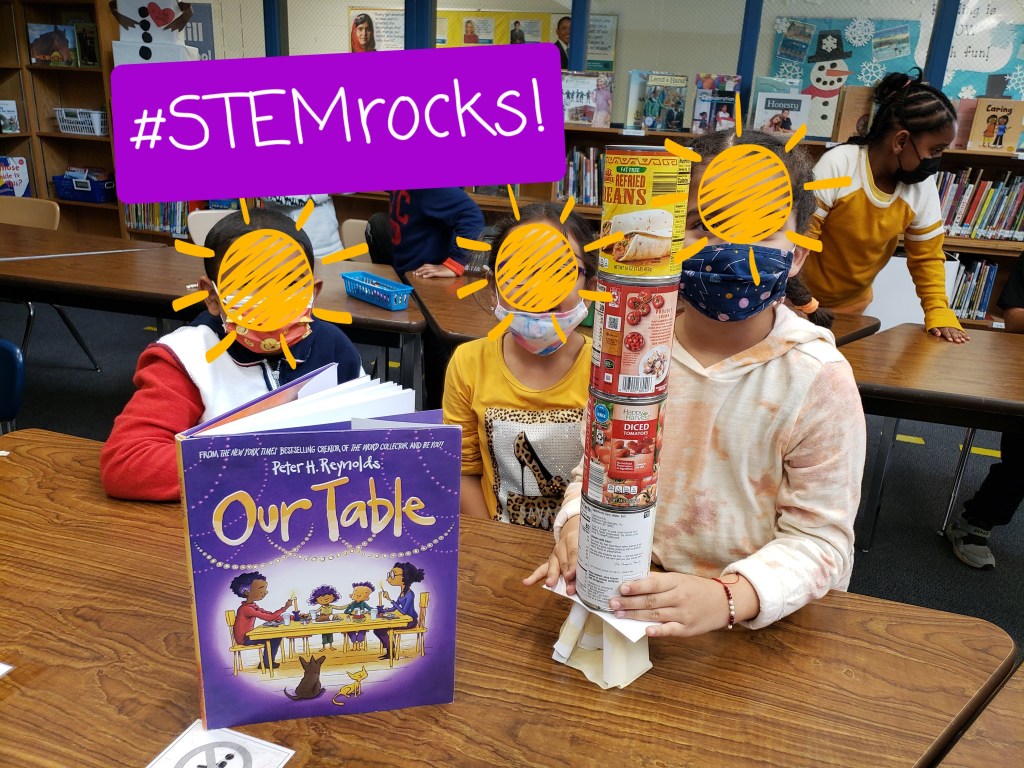
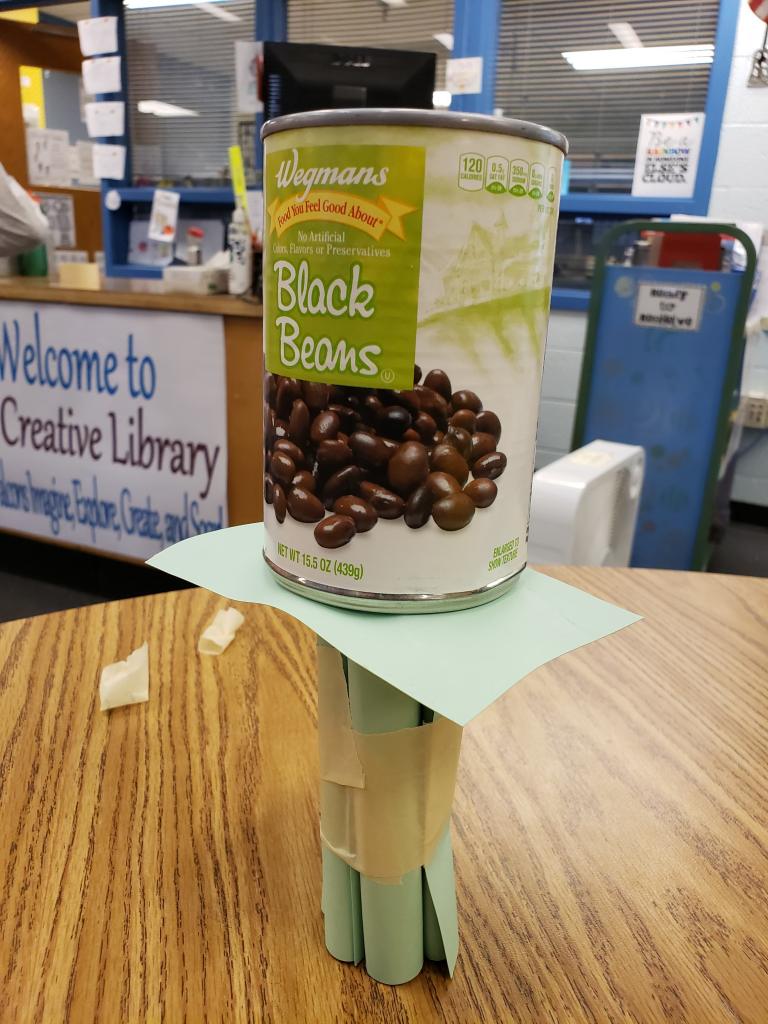
The STEM challenge was simple: build a table that could hold a can of vegetables with only 6 index cards and masking tape. Since I was doing this challenge with my 2nd graders, I did not give them a specific limit on the tape, but none of the teams used more than 18 inches. If I were to do this challenge for upper elementary students, I would limit tape to 12 inches in 6-inch increments (and encourage them to use the least amount of tape that they can).

 I was mesmerized by comics as a kid, they really took me to whole new worlds. So trying to do that for a new generation of readers is very exciting for me.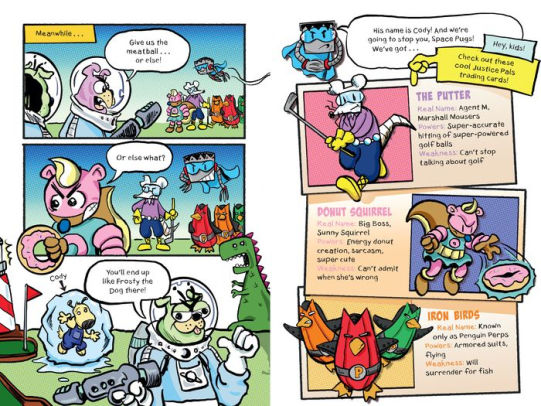
 The Creative Librarian